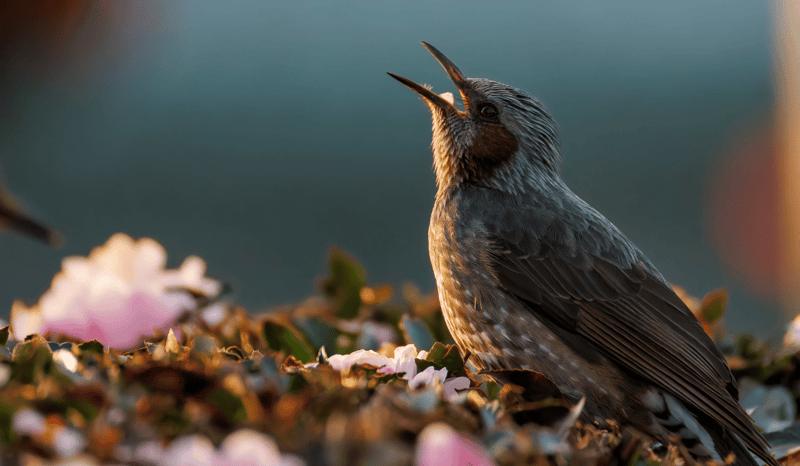
Birding has surged in popularity across the United States, with countless articles documenting its rise. But what about the birds we choose not to see?
I didn’t ask for it to happen. It just sort of crept in.
It began with evening walks with my husband after we moved to a small town. Without the constant hum of city life I’d known for decades, something new emerged: birdsong. At first, it was just a pleasant backdrop. But soon, I found myself listening more closely, wondering about the animals behind the melodies.
Curiosity led to research. Research led to recognition.
Before long, I could identify multiple species by sight and sound. I downloaded the Merlin app to help me discover new ones. For my birthday, my husband gave me a pair of binoculars. And then it hit me: I had become a birder.
And I’m certainly not alone.
Birding has surged in popularity across the United States, with countless articles documenting its rise and its benefits. It’s a peaceful, grounding hobby—one that reconnects us with the natural world and, often, with each other. Birding groups have blossomed nationwide, bringing people together through a shared sense of wonder.
As an animal advocate, it’s been a joy to see so many people appreciating birds for all that they are. They’re stunning. Their songs, often produced by tiny bodies, can carry for blocks. They migrate thousands of miles with astonishing precision. And perhaps most fascinating of all: they are living dinosaurs!
But as birding continues to grow, I find myself asking a difficult question: What about the birds we choose not to see?
In the United States alone, more than nine billion chickens are slaughtered for food every year. In fact, chickens make up roughly 99 percent of all land animals killed for consumption in this country.
These birds are bred into lives of suffering. Engineered to grow unnaturally large, unnaturally fast, many collapse under their own weight, their legs unable to support their bodies. They are confined in filthy, windowless sheds, packed tightly together, until they are loaded onto transport trucks and sent to a brutal slaughter.
And here’s something every bird lover should know: the Animal Welfare Act, the primary federal law governing the treatment of animals, excludes these birds. That means the overwhelming majority of animals killed for food are denied even the most basic legal safeguards.
Would you ever subject a bald eagle to this treatment? A cardinal? A blue jay?
Of course not.
But here’s the truth: in all the ways that matter, a chicken is no different. Chickens are sentient, sensitive, and complex. They communicate through a rich range of vocalizations. They feel pain. They experience fear. They are capable of joy. And they deserve lives free from cruelty.
So if you’re someone who loves birds—who pauses to listen to their songs, who marvels at their migrations—consider this the next time you sit down to eat.
If you wouldn’t bear to see the birds you identify on your Merlin app treated this way, extend that same compassion to chickens… and turkeys, too… and ducks, geese—you get the picture.
And the good news is, you can. From chickpea “chicken” salad and cauliflower wings to the ever-growing array of plant-based chicken products, it’s entirely possible to enjoy the flavors you love—without the suffering.
Let’s extend our appreciation and compassion to all birds, not just the ones we notice on our walks.