
Top bird watching tips, America’s best birding spots, migratory flyways, and how to enjoy bird watching in your own community.
There is a moment in early spring—just before the city fully wakes—when the air over a park, a backyard, or a quiet stretch of shoreline fills with sound. Not traffic. Not voices. Wings. Billions of birds are on the move, and if you know where to look, that ancient, extraordinary spectacle is happening right outside your door.
Bird watching—or “birding,” as devotees prefer—is one of the fastest-growing outdoor pursuits in the United States. Whether you live in a major city, a small town, or a rural area, bird watching is accessible, free, and endlessly rewarding. All it takes is curiosity, a little patience, and the willingness to slow down and look up.
This guide covers the best bird watching tips for beginners, the top birding destinations across the United States, a guide to America’s migratory flyways, the viral woodcock phenomenon happening right now in New York City, and practical advice for enjoying bird watching in your own community—wherever you live.
Understanding America’s Four Migratory Flyways
To understand where birds go—and where the best bird-watching opportunities are—it helps to understand the routes they take. In North America, ornithologists and the US Fish & Wildlife Service have identified four major migration corridors, known as flyways. Think of them as interstate highways in the sky, each supporting distinct species, habitats, and premier birding hotspots.
1. The Atlantic Flyway
Stretching from Greenland to the Caribbean and South America, the Atlantic Flyway is the most species-diverse corridor in North America, supporting over 500 bird species annually. The eastern seaboard acts as a funnel, concentrating migrants in parks, wildlife refuges, and coastal headlands from Maine to Florida. New York City sits squarely within this flyway, making even its smallest parks important stopover habitats during migration.
2. The Mississippi Flyway
Following the Mississippi, Missouri, and Ohio river systems from the Gulf of Mexico to central Canada, this is the highest-volume flyway in North America. Approximately 40% of all North American waterfowl and shorebirds migrate along this route each year—and some species use it to travel from the Arctic Ocean all the way to Patagonia. The absence of mountain barriers makes it one of the most accessible flyways for birds and birders alike.
3. The Central Flyway
Spanning the Great Plains from the Canadian Prairies to the Gulf of Mexico, the Central Flyway is famous for dramatic concentrations of cranes, raptors, and grassland birds. The route narrows in the Platte River valley of Nebraska, creating one of the world’s great wildlife spectacles. Over 100 National Wildlife Refuges lie within this flyway.
4. The Pacific Flyway
Running the length of the West Coast from Alaska to Baja California, the Pacific Flyway supports an extraordinary range of seabirds, shorebirds, and western species. The Klamath Basin, straddling California and Oregon, sees over 80% of Pacific Flyway waterfowl pass through during peak migration.
10 Best Bird Watching Spots in the United States
From wind-scoured barrier islands to desert refuges and urban parks, the United States offers extraordinary birding destinations across every flyway. Here are ten of the best bird watching spots in the country:
1. Cape May, New Jersey (Atlantic Flyway)
Perhaps the single most celebrated birding destination in North America, Cape May sits at the tip of a peninsula where the Atlantic coast bends sharply south—funneling millions of migrants through during fall. Hawks, warblers, shorebirds, and seabirds concentrate here in staggering numbers. Spring migration is equally spectacular. A must-visit for any birder.
2. Magee Marsh Wildlife Area, Ohio (Atlantic/Mississippi Flyway)
Known as the “Warbler Capital of the World,” Magee Marsh hosts the annual Biggest Week in American Birding festival each May. During peak migration, dozens of warbler species can be seen in a single morning—often at arm's length—along the famous boardwalk trail.
3. Central Park, New York City (Atlantic Flyway)
One of the world’s most improbable birding hotspots, Central Park has recorded more than 200 species within its boundaries. During spring migration, the Ramble—a woodland section in the park's interior—fills with warblers, vireos, and tanagers seeking shelter after overnight flights along the Atlantic Flyway.
4. Dry Tortugas National Park, Florida (Atlantic Flyway)
Seventy miles west of Key West, this remote archipelago is the first landfall for exhausted trans-Gulf migrants in spring. The result can be a dramatic “fallout” event, when trees are literally packed with birds! The park also hosts enormous colonies of Sooty Terns and Magnificent Frigatebirds.
5. Blackwater National Wildlife Refuge, Maryland (Atlantic Flyway)
Over 30,000 acres of tidal marsh on Maryland’s Eastern Shore host one of the highest concentrations of nesting bald eagles on the entire Atlantic coast. In autumn, more than 35,000 Canada geese and 15,000 ducks arrive along with tundra swans, making for spectacular wildlife viewing.
6. Platte River Valley, Nebraska (Central Flyway)
Each March, up to half a million sandhill cranes converge on a 75-mile stretch of the Platte River in one of the great wildlife spectacles on Earth. At dusk, the sky darkens with their silhouettes as they drop into the river to roost. The experience is primeval, deeply moving, and utterly unforgettable for any bird watcher.
7. Bosque del Apache NWR, New Mexico (Central Flyway)
In winter, this desert refuge transforms into an astonishing gathering of sandhill cranes, snow geese, and Ross’s geese against the backdrop of the Rio Grande bosque and surrounding mountains. The annual Festival of the Cranes draws birders from across the world each November.
8. Point Reyes National Seashore, California (Pacific Flyway)
More than 490 bird species have been recorded at Point Reyes—one of the highest totals in North America—drawn by the peninsula’s mix of coastal scrub, forest, grassland, and bay. The area is also renowned for its autumn vagrant season, when rare Asian species occasionally appear far off course.
9. Acadia National Park, Maine (Atlantic Flyway)
Perched at the edge of the continent, Acadia has recorded 215 confirmed bird species, with an additional 116 species possibly present. The rocky coastline draws seaducks and alcids; the interior forests fill with nesting warblers in summer; autumn brings spectacular hawk migration along the ridge lines.
10. Upper Mississippi River NWR, Midwest (Mississippi Flyway)
Stretching 240,000 acres along the river, this refuge hosts over 290 bird species across bottomland forest, marsh, and prairie. Spring brings nesting bald eagles and returning songbirds; autumn delivers spectacular waterfowl migration with canvasbacks, tundra swans, and diving ducks by the thousands.
The Viral Timberdoodle: New York City’s Dancing Woodcock (Spring 2026)
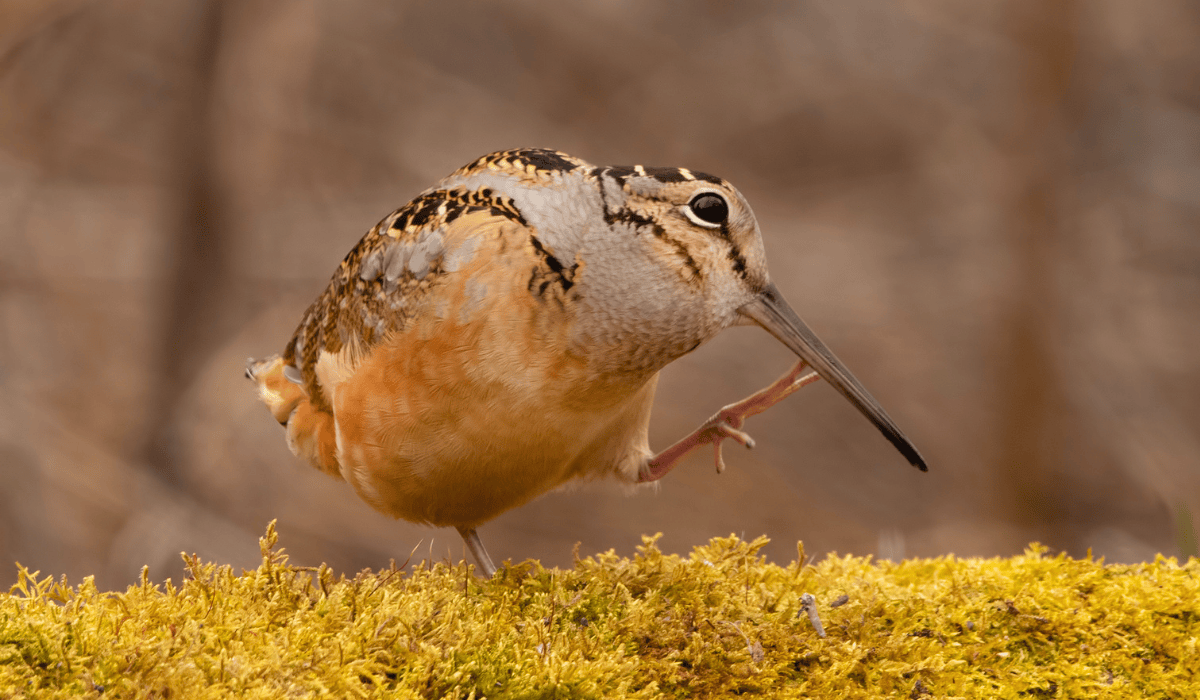
If you’ve been on social media this spring, you may have already met New York City’s most unlikely celebrity. The American Woodcock has returned to Bryant Park in Midtown Manhattan, and this year, they brought the crowds with them.
What Is the American Woodcock?
Also called the “timberdoodle,” the American Woodcock is a compact, round shorebird native to the eastern United States. About 10 inches long and weighing only five to eight ounces, they feature a long bill designed for probing moist soil for earthworms, and enormous eyes set far back on their head. Their most famous trait: a distinctive bobbing walk that looks remarkably like a little dance.
Crowds of up to 50 people or more have been forming daily at Bryant Park to watch a woodcock forage and strut in the park’s planted beds and mulched areas. Videos edited to music have flooded TikTok and Instagram, drawing even more visitors. Bryant Park’s operations team reports this is the most attention the woodcocks have ever received.
The woodcock’s presence in Midtown is no accident. New York City sits along the Atlantic Flyway, and urban green spaces like Bryant Park serve as critical stopovers where migrating birds can rest and refuel. The park’s moist, mulched planting beds are an ideal micro-habitat for earthworm foraging—exactly what a northward-bound woodcock needs.
Bryant Park has scheduled guided bird walks in April 2026, open to all with no registration required. The woodcocks typically remain through mid-April before continuing north toward breeding grounds in Canada. Beyond Bryant Park, woodcocks and other migratory birds also turn up in Washington Square Park, Morningside Park, Madison Square Park, and Tompkins Square Park during spring migration.
The woodcock’s fame also points to a serious conservation concern: window collisions claim an estimated one billion birds in the United States every year. Urban parks matter not just as entertainment, but as survival infrastructure for millions of migratory animals. Protecting and expanding green space in our cities is a genuine conservation imperative.
8 Bird Watching Tips for Beginners (and Everyone Else)
You don’t need a plane ticket to Cape May or a pre-dawn expedition to a national wildlife refuge to be a birder. One of the most democratizing truths about bird watching is this: it can begin wherever you happen to be standing right now. Here are the essential bird watching tips for beginners and experienced naturalists alike.
Start Where You Are
House sparrows, starlings, and pigeons are easy to dismiss, but watching them closely—really watching—reveals extraordinary complexity of behavior. Begin with what’s present, and your eye for birds will sharpen on its own. A backyard feeder, a local park, or even a window ledge is a perfectly valid starting point.
Download Merlin Bird ID
This free app from the Cornell Lab of Ornithology can identify birds by sight or by sound—it listens to birdsong around you and identifies species in real time. It is, genuinely, a superpower. Pair it with eBird to explore what’s been seen near you and log your own sightings. Both are free, and together they are the most powerful starter toolkit available.
Find Your Local Green Space
City parks, cemeteries, community gardens, stream corridors, and suburban backyards all attract birds. Any area with trees, shrubs, water, or a mix of open ground and cover is worth exploring. You may be surprised by what birds live nearby—even a small urban park can host dozens of species during migration.
Go Out at Dawn
The first hours after sunrise—especially in spring and fall—are when birds are most active and vocal. An early morning walk that feels unremarkable in the afternoon can be transformed at 6 a.m. Bring coffee. It’s worth it.
Join a Local Bird Walk or Club
Nonprofit organizations, local bird alliances, and nature centers offer free and low-cost guided walks led by experienced birders who are almost universally delighted to share their knowledge. Community birding is one of the friendliest subcultures you will encounter. It’s also one of the fastest ways to learn.
Make Your Yard Bird-Friendly
Native plants attract native insects, which in turn attract birds. A simple bird feeder or a shallow dish of fresh water can draw a surprising variety of species. Keeping cats indoors and making windows visible to birds with decals or screens are among the most impactful individual actions for bird conservation.
Slow Down and Listen
Most beginners scan frantically for movement. Experienced birders stand still and let the birds reveal themselves. Close your eyes, listen to what’s singing, and then open them—you may find the source closer than you expected. Learning common bird calls is one of the highest-value skills a birder can develop.
Keep a Life List
A simple note in your phone (or in a notebook) of every species you’ve seen is the beginning of a life list—one of birding’s most enduring and quietly addictive traditions. Experienced birders have traveled to every continent in pursuit of new species; your list can begin with the robin in your garden. Every bird counts.
Why Bird Watching Matters: Conservation and Connection
Bird watching is joyful. It is also, increasingly, an act of witness to something deeply concerning. North America has nearly 30 percent of its birds since 1970—a staggering decline that reflects the broader degradation of the ecosystems all life depends on. Habitat loss, window collisions, outdoor cats, pesticide use, and climate change are all contributing factors.
But here is something important: the people who care most about birds are the people who have spent time watching them. Every moment of genuine attention paid to a living wild animal is the seed of something larger. Bird watching builds the constituency that conservation depends on.
World Animal Protection works every day to ensure wild animals have the habitat, the safety, and the future they deserve. If this guide has inspired you, consider making a gift to support that work. Every donation helps protect the birds, the flyways, and the wild places that make mornings worth waking up early for. Donate today.