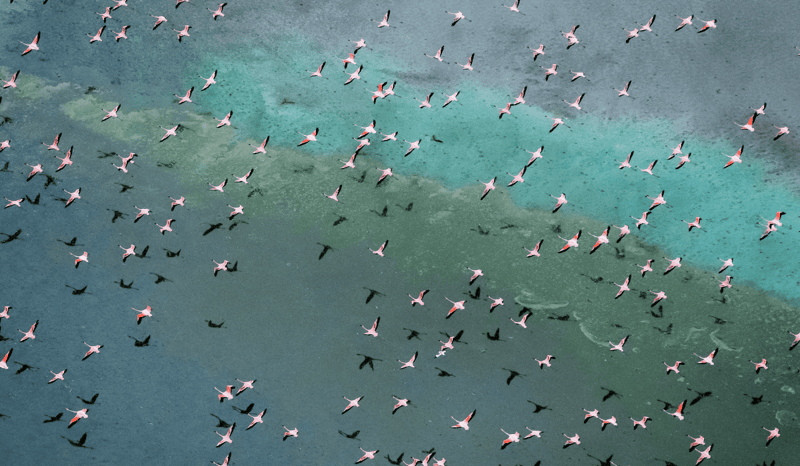
Every spring, billions of animals answer an ancient call—crossing continents, oceans, and skies.
Right now, as winter loosens its grip, something extraordinary is unfolding across North America. Billions of birds are lifting from their wintering grounds in Central and South America, tilting their bodies northward, and committing themselves to journeys of thousands of miles. Monarch butterflies are stirring. Humpback whales are turning their great bodies toward feeding grounds. Pacific salmon are pressing upstream. Caribou herds are moving as one.
Migration is an identity—the very essence of what animals are—and it is one of the most imperiled freedoms on Earth.
The Ancient Rhythm of Migration
Fall and spring migration is the planet’s oldest and most reliable clock. For tens of millions of years, migratory animals have navigated by stars, magnetic fields, the angle of sunlight, and memory encoded in their very DNA. The ruby-throated hummingbird crosses the entire Gulf of Mexico in a single nonstop flight—500 miles over open water on a body weighing less than a nickel. The bar-tailed godwit flies nonstop from Alaska to New Zealand: more than 7,000 miles without food, water, or rest.
These journeys are not accidents of evolution. They are masterworks and the stakes are staggering: roughly four billion birds migrate through the United States in the fall alone, yet since 1970, some migratory bird populations, such as grassland and aridland species, have declined by more than an estimated 40 percent. Across all biomes, migratory bird populations have declined by 3 billion individuals, or an estimated 30 percent. More than 350 species are protected under US law, yet the losses continue. Perhaps nowhere is the collapse more visible than with the monarch butterfly—a species whose population has fallen by nearly one billion individuals over the past two decades.
Migratory animals pollinate wildflowers, carry nutrients across continents, control insect populations, and seed forests. Migration is not peripheral to nature. It is nature at its most essential.
A Landmark Moment: The Global Community Responds
Recently, the world sent a powerful signal that the international community is taking the plight of migratory animals seriously. At the UN Convention on the Conservation of Migratory Species of Wild Animals (CMS) COP15 summit in Campo Verde, Brazil—bringing together representatives from 132 countries and the European Union—40 new species were granted international protection. Countries party to the treaty are now legally obligated to protect these species, conserve their habitats, and remove obstacles to their migration routes.
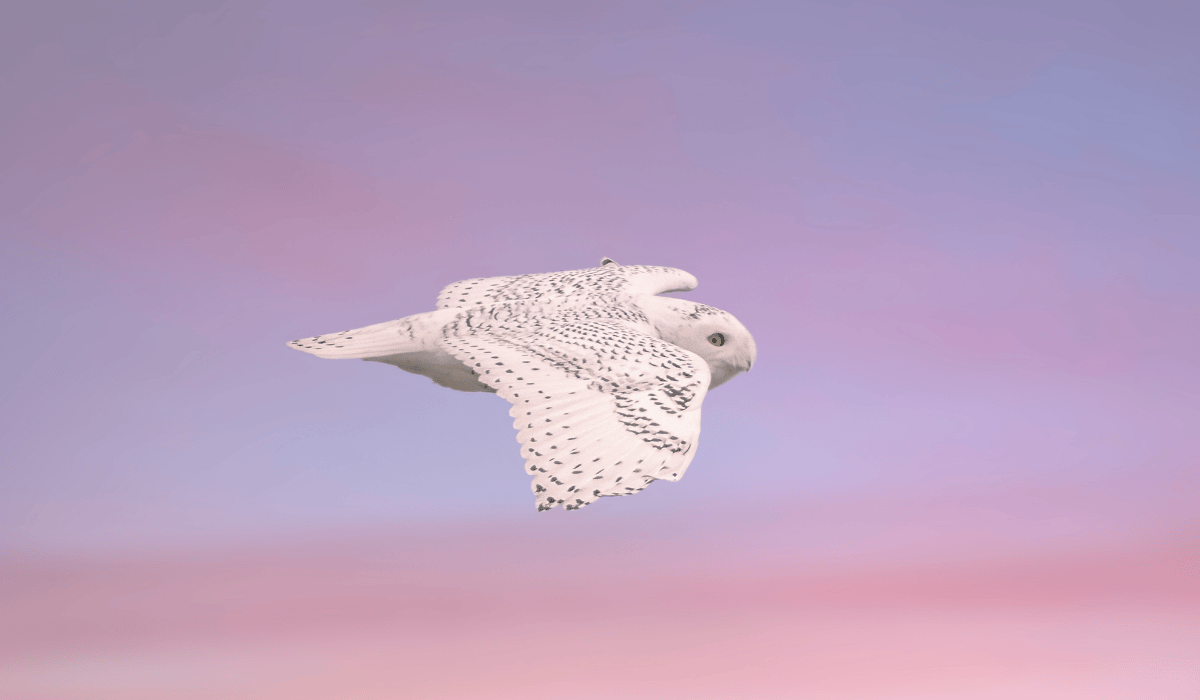
The newly protected roster spans the breadth of the animal kingdom: the snowy owl, the great hammerhead shark, the cheetah, the giant otter, the striped hyena, and the Hudsonian godwit, among others. The snowy owl—familiar to many as the beloved Harry Potter companion, Hedwig— undertakes dramatic migratory irruptions southward in winter, appearing across US states when Arctic prey populations dip. This new protection status recognizes how precarious even seemingly familiar species have become. The Hudsonian godwit, a long-beaked shorebird, is among those now considered threatened with extinction, while the great hammerhead shark faces severe pressure from overfishing across their ocean migration routes.
The news carries a sobering counterweight. According to a report released ahead of the summit, nearly half of all species catalogued by the CMS are showing signs of declining populations, and close to one in four face extinction worldwide. A separate UN assessment warned that migratory freshwater fish populations—species that sustain river health and the livelihoods of millions of people—are in freefall, threatened by habitat destruction, overfishing, and water pollution from the Amazon to the Danube. Even more strikingly, migratory freshwater fish populations have declined by approximately 81 percent since 1970, with 97 percent of CMS-listed species threatened with extinction.
What Threatens Migratory Animals Today
Despite their resilience, migratory animals are among the most vulnerable beings on Earth because their survival depends not on any single place, but on the integrity of entire corridors spanning thousands of miles. A threat anywhere along the route can collapse a journey that took millions of years to evolve.
Habitat fragmentation is perhaps the most pervasive force working against them. Development, roads, border walls, and agricultural expansion break apart the stopover sites, breeding grounds, and wintering habitats that migratory animals depend on at every stage of their journey. Light pollution compounds this—billions of birds navigate by stars and are fatally disoriented by city lights, and an estimated one billion birds die annually in the US from building collisions, many during migration.
Climate disruption is reshaping the very timing of migration itself. Rising temperatures are shifting the schedules of insect hatches, plant blooms, and weather windows that migratory animals have relied on for millennia, decoupling ancient synchronies that cannot easily adapt. Physical barriers—dams blocking fish, fences cutting across mammal corridors, poorly sited wind infrastructure threatening birds and bats—add further obstacles. And the pesticide and pollution burden is immense: neonicotinoid pesticides devastate the insect populations that fuel migratory songbirds, while plastic pollution and ocean contaminants threaten sea turtles and marine mammals along their routes.
Migration as a Right, Not a Privilege
At World Animal Protection, we know that animals are sentient beings with inherent worth and that the conditions necessary for them to live according to their nature are not optional extras but fundamental rights. For migratory animals, this means the freedom to move.
That word—freedom—matters. The right to migrate is not simply an ecological concern (though it absolutely is that). It is an ethical one. An orca forcibly prevented from reaching their food source due to human-made dams does not merely fail to thrive; they suffer. A monarch butterfly encountering a landscape stripped of milkweed is not merely inconvenienced; they are denied the conditions for survival that their nature demands.
This Spring, Look Up
On a clear night this April or May, step outside and look at the sky. If you're in a dark enough spot, you may see something breathtaking: a river of birds moving overhead, invisible except for the faint calls they make to stay connected in the darkness. Scientists have recorded billions of individual birds crossing the continental US in a single spring night.
Among them, perhaps, will be a Hudsonian godwit now newly shielded by international law. A snowy owl riding thermals on their winter circuit. Species whose names most of us might never know, but whose journeys make the world more whole.
These travelers ask nothing of us except that we leave the lights low and the path open. After journeys of thousands of miles, they are simply trying to get home—to breed, to raise young, to fulfill the ancient contract that their species has maintained with this planet since long before we arrived.
What You Can Do
The good news: protecting migratory animals is something each of us can participate in, starting this very season. Turning off or dimming lights during peak migration windows in April and May costs nothing and saves countless birds. Planting native species—milkweed for monarchs, berry-bearing shrubs for songbirds—transforms even a small garden into a vital waystation. Applying window decals to prevent bird collisions, eliminating pesticide use, and advocating for wildlife-friendly infrastructure in your community are all meaningful steps. And at the policy level, supporting legislation that protects migratory species and their corridors translates individual concern into lasting structural change.
Small actions, multiplied across communities, add up to safer passage for billions of traveling animals.
Help Protect the Journey
Billions of animals are on the move right now, and they need us in their corner. Your gift funds the campaigns, advocacy, and on-the-ground work that keep migration possible. Donate today.