When trafficked animals get ‘rescued’ by zoos, is it really a happy ending? Two recent wildlife stories reveal how the animal entertainment industry fuels the very crisis it claims to fight.
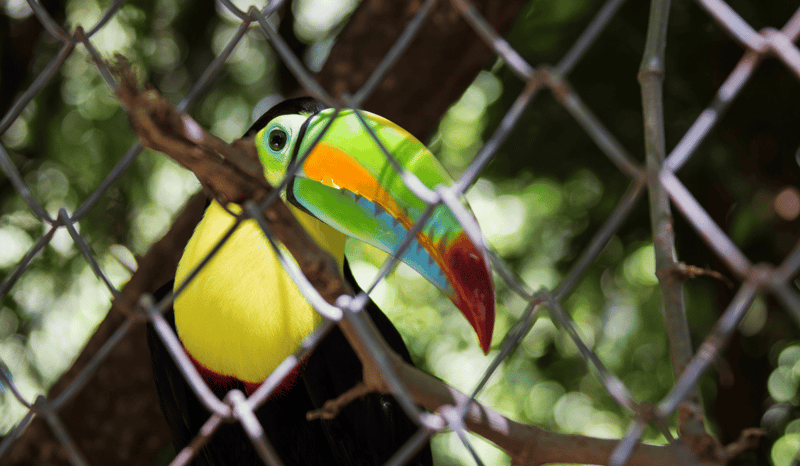
Last week, the Bronx Zoo celebrated the rehabilitation of 14 keel-billed toucans—young birds found duct-taped inside a car dashboard, sedated and malnourished, at the US-Mexico border. It is a genuinely moving story of survival. The animal care teams who nursed those birds back to health deserve recognition for their dedication.
But before we click share and feel good about it, let’s ask a harder question: why were those birds worth $5,000 each on the black market in the first place?
And simultaneously, in Orlando, a facility called Sloth World was importing wild-caught sloths from Guyana and Peru—legally—to offer $49 up-close encounters with an animal scientists say is profoundly harmed by human handling. At least 33 of those sloths are confirmed dead. The 13 survivors were transferred to the Central Florida Zoo & Botanical Gardens—an AZA-accredited institution—where Florida has now opened a criminal investigation, but the surviving animals have simply moved from one captive system to another. The zoo has said it will determine “long-term placement” for the animals, with some potentially remaining on exhibit. The cycle, in other words, did not end with Sloth World’s closure.
These two stories look different on the surface. One features a celebrated zoo. The other, a shady tourist trap, but the thread running through both is the same: the animal entertainment industry—from the world’s most accredited aquariums to roadside encounter attractions—creates and sustains the market that makes poaching and trafficking profitable.
At World Animal Protection, we cannot ignore that connection.
The Demand Loop Nobody Talks About
Here is what we know about the toucans: each bird carried a black market retail value of $5,000. Traffickers do not set prices in a vacuum. That number reflects what someone, somewhere, is willing to pay to own, display, or encounter a wild animal. And that appetite—for the rare, the colorful, the charismatic—is fed every single day by an industry that has normalized wild animals as entertainment.
When millions of people pay to see toucans and sloths behind glass, or hold them for a photo, those encounters send a signal: these animals have value as spectacles. Poachers and traffickers are simply filling that demand through a different supply chain.
The Sloth World case makes this explicit. Its operator imported sloths through fully legal channels, exploiting massive regulatory gaps that allow wild animals to enter the US and die in captivity without anyone being required to report a single death. What made this legal? The same framework that treats wild animals as commercial inventory rather than living beings with rights to their natural habitat.
More than 1,100 wild-caught sloths entered the US between 2011 and 2021, with over 98 percent arriving through the port of Miami. That pipeline does not exist because of a few bad actors. It exists because demand does.
The AZA Stamp Does Not Change the Equation
We know what comes next: the Bronx Zoo is AZA-accredited. It is not Sloth World. Accredited facilities, we are told, “prioritize animal welfare, contribute to conservation breeding, and educate the public.”
At World Animal Protection US, we respectfully but firmly disagree that accreditation solves the underlying problem. As we have written before, keeping wild animals in captivity is not conservation, regardless of how well the facility is run. An animal living in a zoo enclosure, however enriched, is not living the life they were born to live. They cannot roam their natural range, engage in natural behaviors, or contribute to the genetic and ecological health of their wild population.
And critically: accredited zoos still depend on paying visitors to sustain their operations. That business model—where charismatic wild animals are the draw—is structurally indistinguishable from the model that drives the wild pet and animal attraction trades. Modern zoos rely on the idea that wild animals exist for human viewing pleasure. We’ve explored this at length, and the conclusion is clear: zoos, even “good ones,” reinforce the cultural assumption that humans can do whatever they want with wild animals, like keep them on display or force them to breakdance for cheering crowds.
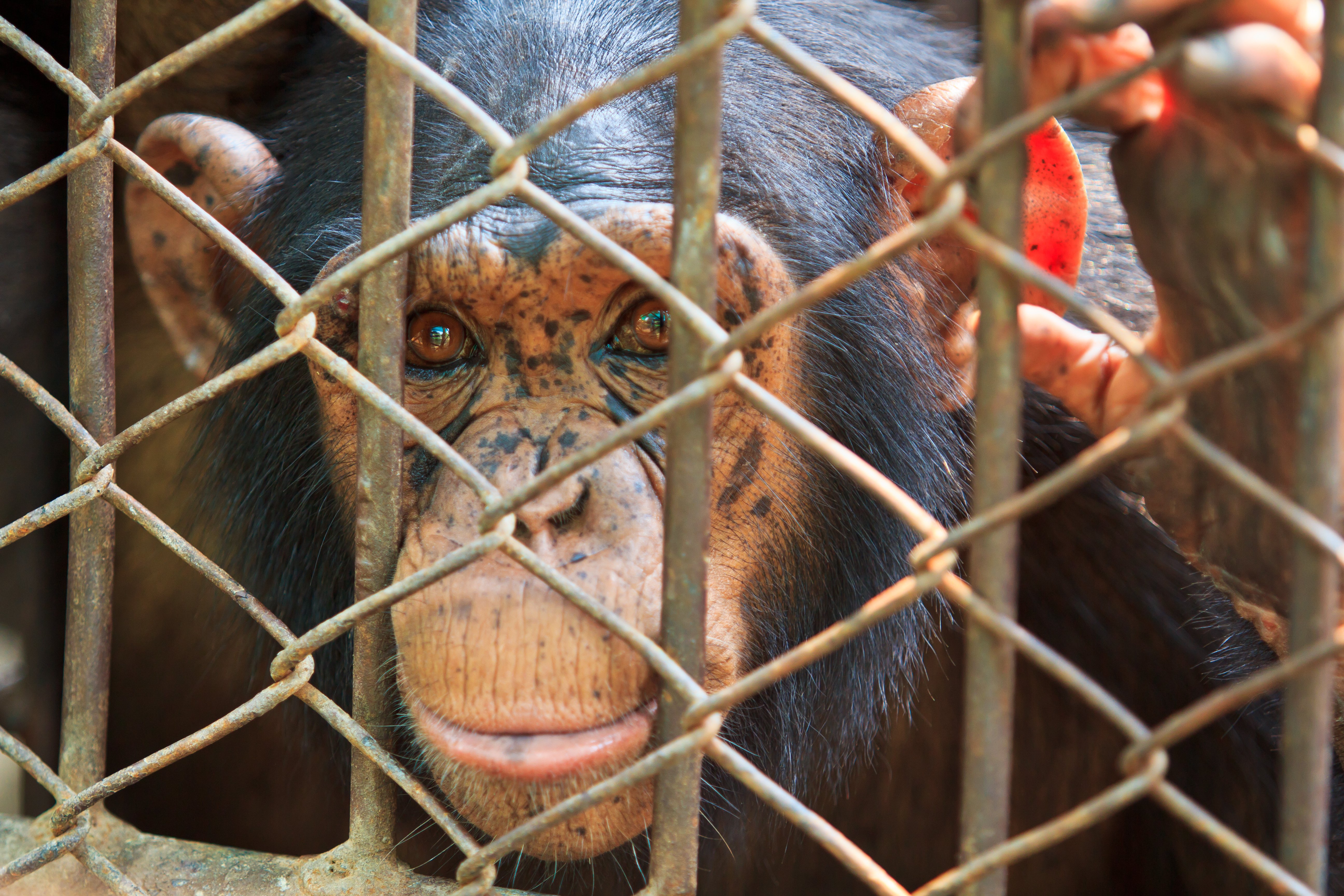
The Sloth World aftermath illustrates this perfectly. When the story broke, and public outrage peaked, the Central Florida Zoo stepped in as the hero—taking in the 13 (now 11) survivors, issuing compassionate press statements, and framing the transfer as an act of rescue. And perhaps it was, in the immediate sense, but the zoo also announced it would assume ownership of the animals and determine which ones would remain on exhibit. Wild animals who were ripped from South American rainforests, survived a trafficking operation, and then endured mass deaths in a warehouse—their final destination is a zoo exhibit. The institution that benefits from their permanent captivity gets to call itself the solution.
Notice too what happened to the toucans after rehabilitation: four stayed at the Bronx Zoo—two are now on public exhibit. Ten went to other AZA institutions for “conservation breeding and education programs.” The zoo said the birds cannot be returned to the wild. Once a trafficked animal enters the captive system, they almost never leave it. The animal that was ripped from the wild becomes permanent “inventory,” generating goodwill and foot traffic for institutions that can now call themselves conservation heroes. This is the same model SeaWorld, also an AZA-accredited institution, uses to justify keeping marine mammals like dolphins captive.
We do not question the sincerity of the care those animals receive. We question the system that benefits from their permanent captivity.
If Not Zoos, Then What?
When a wild animal cannot be returned to the wild, sanctuaries—true sanctuaries—are the answer. Unlike zoos, accredited wildlife sanctuaries do not breed animals for display, do not sell tickets premised on encounter value, and do not exist to generate revenue from animal spectacle. Their mission is the animal’s well-being, full stop.
The distinction matters enormously when we talk about where rescued animals should go. A toucan living out their days in a genuine sanctuary is not the same as one placed in a “World of Birds” exhibit. The first is a life of dignity. The second is a life of performance, however “comfortable” the cage.
The Real Work: Wild Animals Belong in the Wild
At World Animal Protection US, our position is not simply “zoos bad.” It is something more demanding: wild animals are worth more to all of us—to ecosystems, to biodiversity, to the planet—in the wild than in captivity.
That is why we work with partners around the world, not just to rescue animals, but to rehabilitate and release them back where they belong. We recently shared the story of Xamã, the first male jaguar successfully released back into the wild—a milestone that took years of careful rehabilitation work, and that would have been impossible if the default response had been to hand him to a zoo.
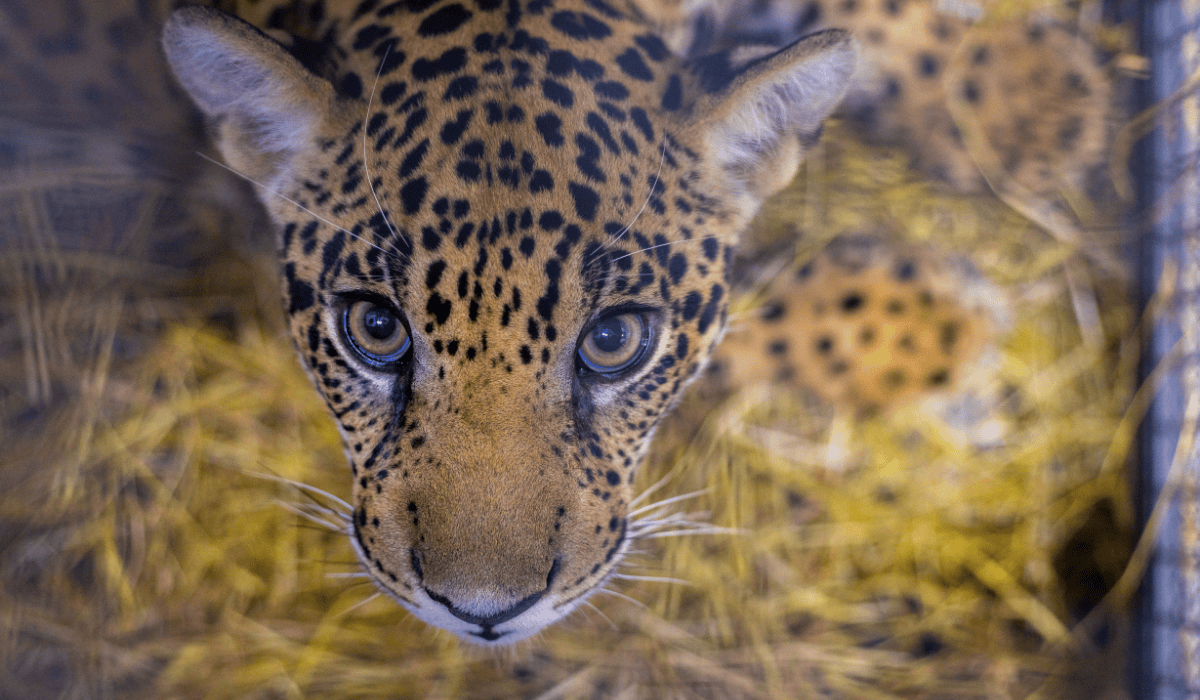
Xamã the jaguar.
We have also worked to dismantle trafficking networks at their source. Our work supporting anti-trafficking efforts for pangolins—one of the world’s most trafficked mammals—shows what is possible when law enforcement, communities, and conservation organizations work together to dry up supply rather than just prosecute individual smugglers.
We are also proud of cases like Amba, whose story reflects what happens when animals rescued from exploitation are given the chance to recover on their own terms, not ours.
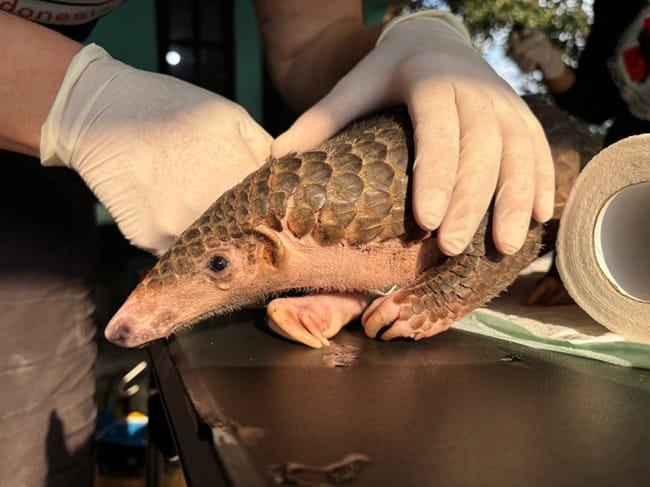
Amba the pangolin.
The goal is always the same: break the pipeline at every link. Stop poaching at the source. Fight the demand that makes trafficking profitable. Ensure that when rescue is possible, the end goal is freedom, not a new enclosure.
What You Can Do
The toucans’ story will fade from the news cycle. The Sloth World investigation will move through courts slowly and quietly. And tomorrow, millions of people will buy zoo tickets, book wildlife encounter experiences, and share photos holding animals that are suffering in ways invisible to the camera.
Changing this requires sustained pressure on the systems that make it profitable and sustained support for the organizations doing the hard, unglamorous work of rescue, rehabilitation, and release.
If you believe wild animals belong in the wild, please consider donating to World Animal Protection today. Your support directly funds our work combating wildlife trafficking, partnering with communities to protect animals in their natural habitats, and advocating for the policy changes that close the loopholes Sloth World—and the broader animal entertainment industry—has exploited for decades.