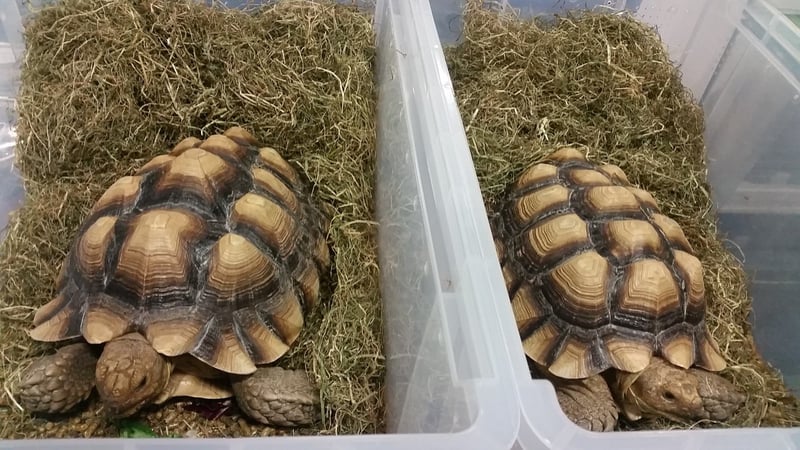
For five years, World Animal Protection has been calling on PetSmart—one of the largest pet retail chains in North America—to end the sale of wild animals in its stores.
In April 2026, PetSmart published its 2025 Corporate Social Responsibility (CSR) report with a meaningful announcement: the company no longer sells turtles or tortoises. The same report confirms the phase-out of Bahamian anoles and red claw crabs. For World Animal Protection, which has been pressing PetSmart on this issue for years through research, petitions, coalition-building, and direct engagement, these commitments represent a genuine and hard-won step forward.
They also represent only one step. The campaign continues.
Why This Matters: The Problem With Selling Wild Animals
Animals like turtles, tortoises, and other reptiles are not domesticated and have wild needs and behaviors. As ectotherms, they depend entirely on their surrounding environment to regulate body temperature and behavior—requirements that home enclosures and retail tanks routinely fail to meet. Research has found that more than 70% of reptilian and amphibian illnesses stem from inadequate care, and one study suggests death rates in the pet trade as high as 81% annually.
The problem does not begin at the point of sale. A study published in Nature Communications found that over 35% of all reptile species are traded online, with roughly 90% of traded species and half of traded individuals sourced directly from the wild. Three-quarters of this trade involves species not covered by international regulation, and unsustainable wildlife trade has already driven at least 21 reptile species to extinction. When a major retailer removes species from its shelves, it reduces demand across the entire supply chain—from wild collection and breeding operations to transport and retail—and that has real, positive consequences for animals and ecosystems.
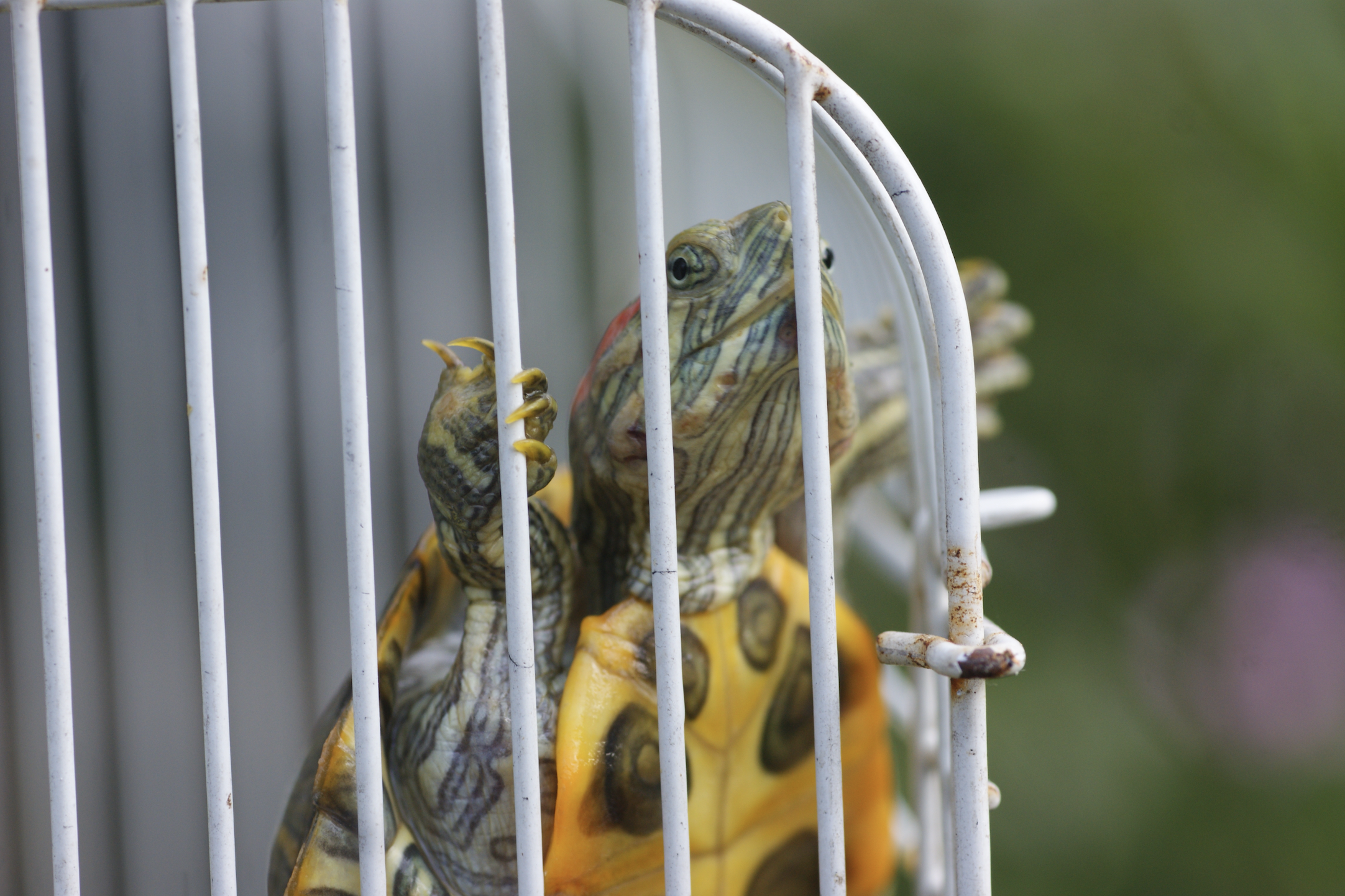
The problems are not limited to what happens in customers’ homes. In 2022, a VICE News investigation revealed deeply troubling conditions inside PetSmart stores. Employees, working with labor rights group United for Respect, described chronic understaffing, inadequate animal care, and animals dying in stores—with freezers reportedly overflowing with dead animals. World Animal Protection documented and amplified these accounts, arguing that the harms caused by PetSmart’s animal sales were not hypothetical, but actively occurring under the company's own roof.
Years of Advocacy Behind This Milestone
The commitments in PetSmart’s 2025 CSR report are the product of sustained, multi-channel advocacy spanning nearly a decade. Key milestones include:
- 2018: World Animal Protection hosted its first workshop training enforcement officers and shelters on the animal welfare and public health risks of wild animals as pets. PetSmart was invited but did not participate.
- 2019–2020: The organization launched a landmark report, Suffering in Silence, on the global ball python trade, documenting the destructiveness of that supply chain. We shared this with PetSmart.
- 2021: World Animal Protection publicly launched its campaign urging PetSmart to stop selling wild animals. A petition with 50,000 signatures was delivered to PetSmart’s Phoenix, Arizona headquarters and to the company’s Canadian office. Supporters across the US and Canada made their voices heard directly to the company.
- 2021: We helped deliver United for Respect’s petitions to BC Partners, the private equity firm that owns PetSmart, urging them to address the poor treatment of workers and animals in their stores.
- 2022: Following the VICE exposé, dozens of animal protection and conservation organizations, veterinarians, and scientists joined World Animal Protection in calling on PetSmart to reform its practices—adding expert and institutional weight to the public pressure campaign. World Animal Protection also held its first in-person meeting at PetSmart’s corporate headquarters in Arizona.
- 2023: World Animal Protection supporters mailed physical postcards to PetSmart and Petco executives, bringing the campaign into the offices of the companies’ leadership. PetSmart publicly named World Animal Protection in its CSR report as a collaborating organization advancing animal welfare.
- 2025: PetSmart published a formal Animal Welfare Policy—explicitly citing World Animal Protection—and announced the phase-out of Cuban False Chameleons, Fancy Bearded Dragons, and several snake species.
- April 2026: PetSmart’s 2025 CSR confirms turtles and tortoises are no longer sold, and that Bahaman anoles and red claw crabs are being phased out.
PetSmart’s Animal Welfare Policy now states:
“Our approach is informed by our in-house veterinary experts, industry leaders, and partnerships with respected animal welfare organizations, like World Animal Protection. These collaborations, combined with the latest scientific research, help us continually assess what makes a suitable pet.”
This explicit, public acknowledgment—embedded in a corporate policy document—creates accountability. It establishes a standard against which PetSmart’s future decisions will be measured by advocates, customers, and the public.
What Customers Think
The campaign has been grounded in consumer data from the start. Polling commissioned by World Animal Protection in 2020 found that PetSmart’s own customer base had moved well ahead of the company’s policies:
- 92% of PetSmart’s Canadian customers expressed concern that selling reptiles and amphibians as pets can harm the animals.
- 90% said they do not believe reptiles and amphibians should be kept as pets because they suffer in captivity.
- 91% said they want PetSmart to be transparent about where its animals come from.
- 90% said pet stores should improve animal welfare standards and be honest about how difficult it is to keep wild animals as pets.
These are not marginal findings. They reflect near-consensus among the very consumers PetSmart depends on, and they underscore that the business case for change aligns with the ethical one.
The Campaign Is Not Over
Progress on turtles, tortoises, and several other species is real and worth recognizing, but it does not mark the end of the campaign. Birds, chinchillas, as well as reptiles and amphibians—including ball pythons, geckos, and frogs—continue to be sold at PetSmart locations across the United States. Over 6 million US households currently have at least one reptile, a number that has grown in step with retail availability and social media communities that normalize wild animal ownership—demand that comes at a documented cost to wild populations.
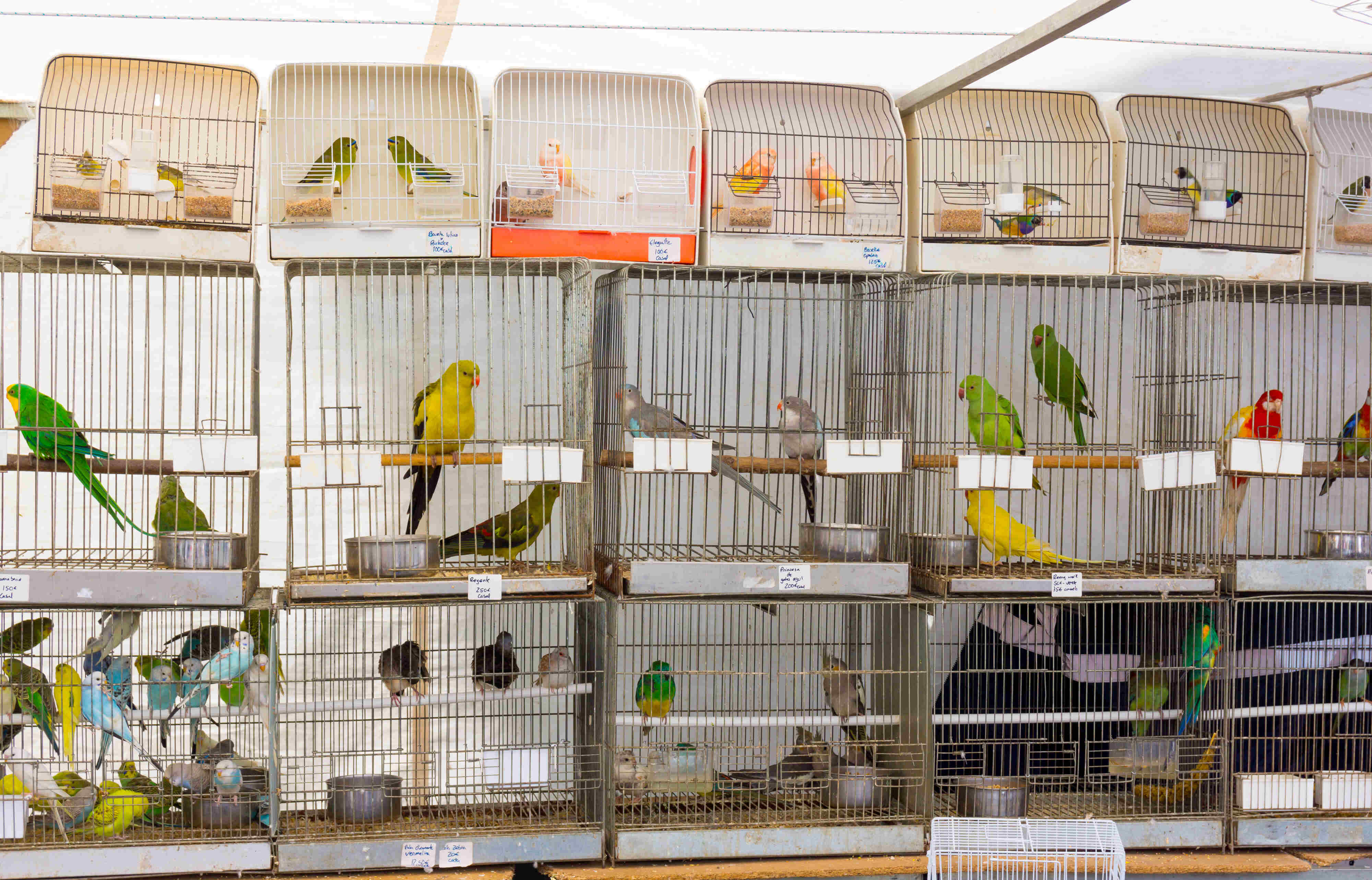
World Animal Protection will continue to engage with PetSmart directly, constructively, and with high expectations. The goal remains a full commitment from PetSmart to phase out the sale of in its stores. Petco, the other major pet retail chain in the United States, remains under similar pressure.
You can help this effort by urging both PetSmart and Petco to end all animal sales directly. The voices of customers and concerned citizens have demonstrably shaped PetSmart’s policy trajectory, and they will continue to matter as this campaign moves forward.