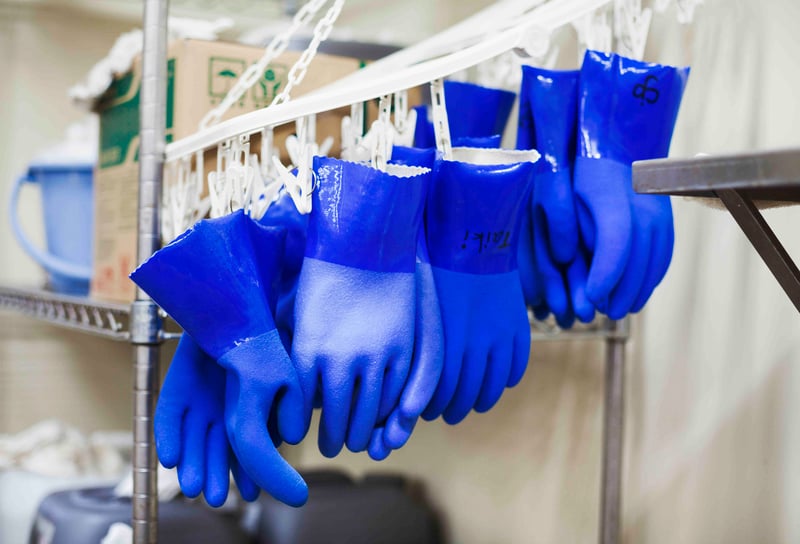
For the first time in 40 years, US meatpacking workers have gone on strike after failed union negotiations.
Approximately 3,800 workers at a JBS-owned slaughterhouse plant in Greeley, Colorado, walked off the job Monday, March 16—the first strike at a US cow slaughterhouse in 40 years. Hundreds braved the cold to picket line outside, holding signs urging the public to rethink supporting JBS.
Union leaders say the strike is a stand against JBS’s retaliation and unfair labor practices during contract negotiations. Workers argue the company prioritizes profit over the people who make that profit possible, and that JBS tried to intimidate workers to quit the union in one-on-one meetings.
“They don’t really value their workers, and we’re the ones who help them get all their profit,” said Leticia Avalos, a union steward and Greeley native who has worked at the Swift Beef Co. plant since 2020, in a statement to AP. “We’re fighting not just for ourselves, but for every worker who’s ever been treated like a replaceable cog.”
The strike, in the heart of JBS USA’s headquarters in Greeley, Colorado, shines a spotlight on the human cost behind America’s largest meatpacker—and why workers’ rights matter as much as what ends up on our plates.
Factory Farming Corporations V. Workers’ Rights
The factory farming industry has long been notorious for mistreating its workers—and JBS is no exception. In the US, meatpacking employees are three times more likely to suffer a serious injury than the average worker—and workers in cow and pig processing plants face nearly seven times the risk of repetitive strain injuries.
Slaughtering animals, the very work done at the Swift Beef plant, ranks among the most dangerous jobs in the country. Amputations in the industry average around two per week.
Rising slaughter line speeds, accelerated at the start of the COVID-19 pandemic under President Donald Trump, have pushed workers to the breaking point. Kim Cordova, president of UFCW Local 7, reported that the Greeley, Colorado plant ramped up the production line from 390 to 420 animals per hour, while reducing hours and creating an unsafe work environment. Workers on high-speed slaughter lines in the meat industry often have been forced to urinate on the line, wear diapers, or go without water—suffering severe dehydration—because bathroom breaks are often denied.
It’s a brutal industry, and JBS’s workers are paying the price. According to Local Union 7, JBS “charged workers $1,100 or more to offset the company’s expenses for personal protective equipment needed to ensure worker safety.”
Exploiting Immigrant Workers
In 2024, the Local 7 union—now leading the strike—condemned JBS USA for its treatment of Haitian employees at the Greeley, Colorado plant. According to a Wall Street Journal report, JBS housed workers in hotel rooms with up to eight people crammed into a single room. Workers were forced to sleep and cook on the floors, and when the motel cut ties with JBS, the company had to cover $40,000 in damages.
Other Haitian employees—legally authorized to work in the US—were packed into a duplex rented by a JBS HR supervisor, with up to 30 people in one home. The building was sometimes left without heat or water, and workers were charged to live there. The landlord eventually fined the supervisor for overcrowding.
JBS also used a Haitian-born man to bring other Haitian workers from across the country to Greeley, threatening arrest for anyone who complained about the conditions. Union representatives say the company knew about this exploitation—and paid for workers to live in squalor.
JBS: A Corporate Powerhouse Under Scrutiny
The Swift Beef plant is owned by JBS USA, part of the global giant JBS — the world’s largest meat producer. But JBS’s corporate footprint goes well beyond processing cows for meat:
- Greenwashing and accountability avoidance: JBS has been sued by New York State for misleading environmental claims about its sustainability commitments, spotlighting how corporations often promote “green” goals without credible plans or transparency.
- Tax avoidance while expanding markets: Reports show that JBS has exploited offshore structures to avoid paying millions in taxes even as it gains greater access to US capital markets—a reminder that its financial strategies often prioritize shareholder returns over worker or community welfare.
- Profiting from child labor: In 2025, JBS USA struck an agreement with the US Department of Labor to “assist” communities affected by illegal child labor. This followed revelations that children were being forced to perform dangerous work—including during overnight shifts—at JBS facilities and supply chains across Colorado, Iowa, Minnesota, and Nebraska. At least four underaged workers were working for a third party (hired by JBS) in the Greeley JBS facility.
- Profit from environmental harm: Investigations have documented connections between JBS’s supply chains and deforestation, habitat destruction, and cruelty—revealing how deeply industrial meat production is tied to environmental loss and animal suffering.
- Profiting from a global pandemic: At the start of COVID-19, JBS refused to slow its operations, even as slaughterhouses and meatpacking plants became pandemic hotspots. This decision put nearly 78,000 American workers at serious risk (and hundreds of thousands globally), prioritizing profits over people’s health and safety.
Animal Cruelty at the Heart of JBS’s Factory Farming Empire
JBS isn’t just one of the world’s largest meat companies—it’s also a global symbol of systemic animal abuse. Across its operations, animals are treated as commodities, confined in unbearable conditions, and subjected to practices that prioritize profit over everything else.
Chickens are packed so tightly they can’t spread their wings, piglets endure painful procedures without pain relief, and cows and lambs are routinely stressed and drugged to survive factory farming. Slaughterhouses kill animals at massive volumes, with many not properly stunned, meaning they feel every second of their painful, unnecessary deaths. According to a 2023 World Animal Protection report, JBS slaughters more than 13 million chickens, 128,000 pigs, and 77,000 cows around the world every day.
Help Stop JBS
Every purchase of JBS meat fuels a system that exploits animals, workers, and the planet. Stand with workers, animals, and the planet. Donate to World Animal Protection today to help hold JBS accountable for its harmful practices and push for a more humane, sustainable future.