1.48 Billion Chicken Wings—and the Hidden Suffering Behind This "Super" Sunday
Blog
Americans are set to eat 1.48 billion chicken wings during the Big Game on Sunday—but behind every bite, millions of chickens suffer in industrial farming.
Every year, Americans look forward to the final championship game of the football season—the touchdowns, the halftime show hype, the snacks piled high on every table. This year, the game will feature the Seattle Seahawks vs. the New England Patriots, and fans everywhere will be celebrating the end of the football season.
According to the National Chicken Council’s annual Chicken Wing Report, Americans are projected to eat 1.48 billion chicken wings this Sunday. That’s about 10 million more wings than last year’s game and 30 million more since 2024. Since each chicken has two wings, that projected figure means approximately 740 million chickens are slaughtered just to satisfy wing cravings in a single sporting event.
A Football Stadium-Sized Problem
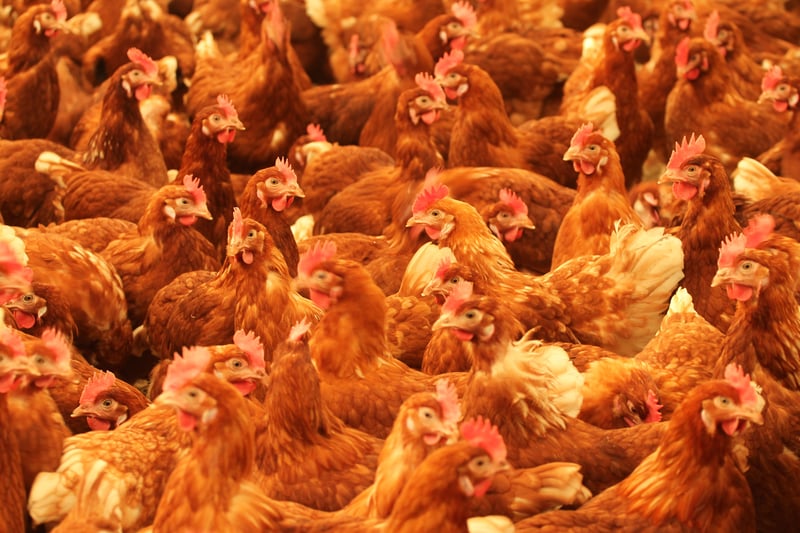
For many, the Big Game is about tradition—but that tradition comes at a steep cost to animals. Chicken wings, often treated as the unquestioned “MVP” of the snack table, are the result of millions of chickens living short, miserable lives of intense confinement, stress, and suffering. While we celebrate with friends, enjoy the game, and cheer for our favorite teams, these sentient animals pay the price for a system built on their exploitation.
Almost all chickens raised for meat in the US spend their entire lives in factory farming systems, crowded into spaces so tight they can barely move, never seeing grass or sunlight, and suffering from painful health problems. Basic welfare protections under federal law often don’t apply, leaving these animals with little hope for relief.
How Did We Get Here?
The annual Big Game wing projection is a dramatic example of how deeply entrenched chicken consumption is in American food culture.
When 1.48 billion wings are consumed:
- Laid end to end, they would stretch roughly 27 times from Gillette Stadium (Patriots home) to Lumen Field (Seahawks home).
- To eat them all at one wing every 30 seconds would take one person until the year 3430 to finish.
- That translates to 740 million chickens killed for just a few hours of game time.
Chickens are sentient beings—capable of feeling pain, fear, and comfort. They form social bonds, explore their environment, and have preferences for what they do and don’t like. Yet, unlike many other farmed animals, chickens lack meaningful federal protections during their lives. And because the Humane Methods of Slaughter Act doesn’t apply to birds, they also lack basic safeguards at slaughter. This means that the process of killing them for food involves significant, avoidable suffering.
What You Can Do
You don’t have to stop enjoying football or great company to make choices that reduce harm:
- Explore plant-based wing alternatives. There are delicious plant-based recipes to enjoy during the Big Game—from cauliflower bites to jackfruit “wings”—that bring the flavor without the cruelty.
- Support policies that protect farmed animals. Urge your federal legislators to fund and pass measures that promote plant-based agriculture and improve welfare standards for all farmed animals.
- Join World Animal Protection’s volunteer community. Be part of a growing network of people who are turning compassion into action—raising awareness, advocating for change, and helping build a food system that protects animals, people, and the planet.