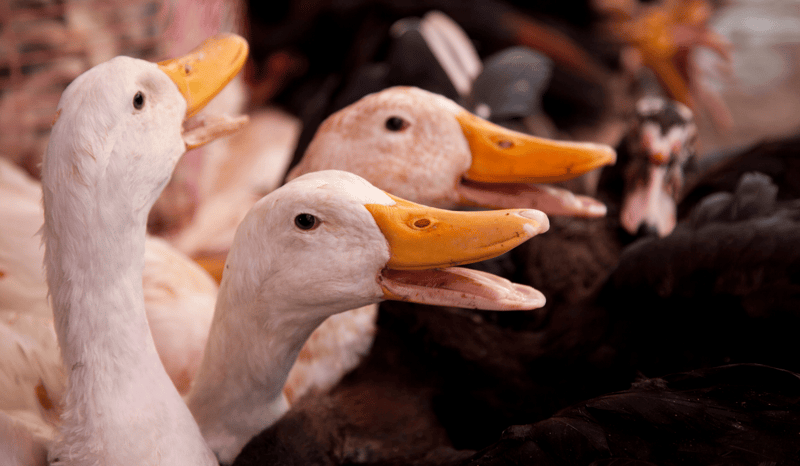
It’s time we see foie gras for what it really is: a product of animal cruelty that has no place in a compassionate, sustainable food system.
Foie gras might sound fancy on a menu, often marketed as a luxurious delicacy, but behind the facade is a painful reality for ducks and geese. This product comes at a high cost—physical suffering, stress, and environmental harm—making it incompatible with a compassionate, sustainable food system.
What Is Foie Gras?
Foie gras—French for “fatty liver”—is made from the liver of ducks or geese that have been artificially fattened through a process called gavage, or force-feeding. During gavage, a metal tube is inserted down the bird’s throat to pump large quantities of food directly into their stomach. This enlarges the liver to several times its normal size, creating the specific texture associated with foie gras—at tremendous cost to the animals’ health.
The enlarged liver can cause organ failure, difficulty breathing, mobility problems, and severe distress. Many birds collapse under the weight of their distended livers, suffer neck injuries, or die before they even reach slaughter. Imagine being overfed until you could hardly move, all for a dish labeled “luxury.”
The Impact on Animals
Force-feeding is inherently cruel and causes lifelong suffering:
- Physical harm: Birds develop painful injuries to their throats, esophagus, and internal organs.
- Stress and confinement: Ducks and geese are often kept in small cages or pens, unable to swim, forage, or stretch their wings.
- Short, cruel lives: Many are slaughtered at just a few months old, after enduring continuous pain and stress.
There is simply no humane way to produce foie gras—any attempt still results in extreme suffering.
Environmental Consequences
Foie gras production also takes a toll on the environment. Intensive farming practices contribute to water pollution, high water usage, and greenhouse gas emissions, impacting not just animals but the planet as a whole.
Bans and Progress
The good news is that awareness is growing. Countries including the UK, Germany, and Israel have banned foie gras production on animal welfare grounds. In the United States, cities like New York City and states like California have banned its sale. These victories are the result of tireless campaigning by advocates, veterinarians, and animal protection organizations who believe no animal should suffer for a gourmet appetizer.
A Better Way Forward
As more people learn the truth about foie gras, demand for cruelty-free alternatives is rising. Chefs around the world are creating plant-based dishes that mimic the flavor and texture of foie gras—showing that indulgence doesn’t have to come at the cost of animal suffering.
What You Can Do
- Say no to foie gras: Avoid buying or consuming products made from force-fed birds.
- Support bans: Encourage local and national policies that prohibit foie gras production or sale.
- Choose compassionate alternatives: Plant-based foie gras options exist that taste delicious without harming animals.
- Spread awareness: Share the truth about foie gras and its impact on animals and the environment.
Foie gras is not a symbol of luxury—it’s a symbol of pain. By choosing alternatives and refusing to support this cruel industry, we can protect ducks and geese, reduce environmental harm, and move toward a more compassionate world for all animals.