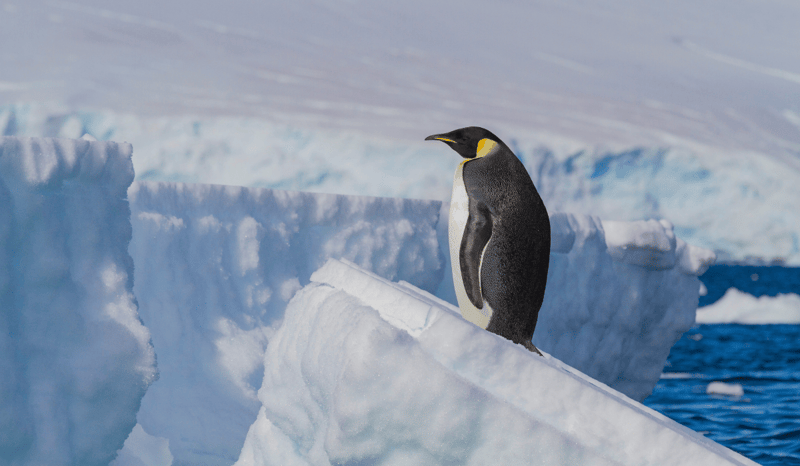
Emperor penguins have just been declared Endangered. Climate change is the culprit—and we need to talk about what that really means.
On April 9, 2026, the International Union for Conservation of Nature (IUCN) officially uplisted the emperor penguin from “Near Threatened” to “Endangered” on its Red List of Threatened Species—the world’s most authoritative measure of extinction risk. The verdict was unambiguous: human-induced climate change is the primary driver.
The numbers are stark:
- The emperor penguin population fell by nearly 10% between 2009 and 2018 alone—a loss of more than 20,000 adult birds.
- Antarctic sea ice has been hitting record lows since 2016, and the trend is accelerating.
- Without dramatic reductions in greenhouse gas emissions, the emperor penguin population is projected to be cut in half by the 2080s.
- The Antarctic fur seal was also declared Endangered this week—their population has plummeted more than 50% since 1999, from 2.1 million to under 944,000 mature seals.
Why Emperor Penguins Are So Vulnerable
To understand why emperor penguins are in such grave danger, you need to understand their relationship with sea ice—specifically, what scientists call “fast ice.”
Fast ice is sea ice that is locked—“fastened”—to Antarctica’s coastline, ocean floor, or grounded icebergs. It is the foundation of emperor penguin life. They breed on it. They raise their chicks on it. They molt on it. For nine months out of every year, fast ice is their entire world.
Here’s the critical detail that most people don’t know: during molting season, emperor penguin feathers are not waterproof. For several weeks each year, while they shed and regrow their insulating plumage, falling into the ocean isn’t just an inconvenience—it’s a death sentence. They drown or freeze to death upon returning to land.
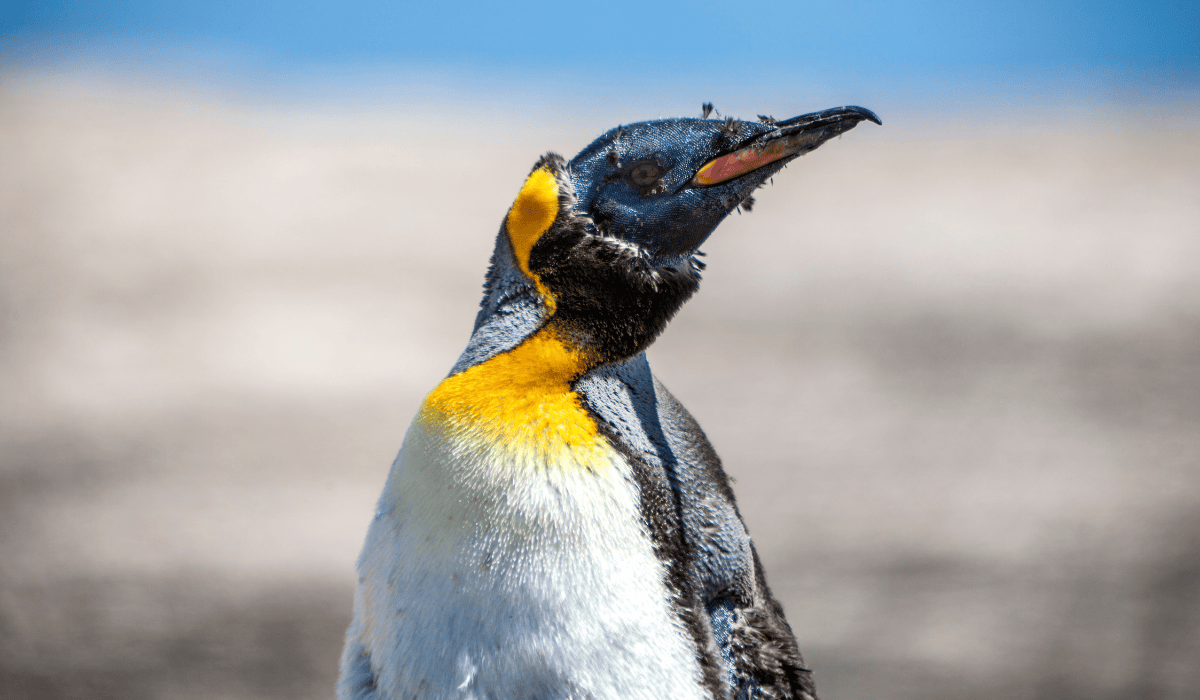
And for the chicks? Their fluffy gray down offers zero water resistance. They depend entirely on the stability of that fast ice platform until they’ve grown their adult feathers—a process that takes months. When the ice breaks up too early due to warming ocean temperatures, they fall in before they can swim. Entire colonies have collapsed into the sea.
In 2022, four out of five known emperor penguin breeding sites in West Antarctica’s Bellingshausen Sea failed catastrophically due to sea ice loss. Thousands of chicks drowned. Scientists described it as a mass mortality event.
A Sentinel Species Is Sending Us a Warning
Scientists use the term “sentinel species” for animals whose health reflects the health of their broader ecosystem. Emperor penguins are a sentinel for the entire Antarctic, and what they’re telling us should stop all of us in our tracks.
“Emperor penguins are a sentinel species that tell us about our changing world and how well we are controlling greenhouse gas emissions that lead to climate change,” said Dr. Philip Trathan of the IUCN SSC Penguin Specialist Group in a press release.
Antarctica is often described as the planet’s “frozen guardian”—a continent that stabilizes global climate, houses irreplaceable ecosystems, and buffers rising sea levels. As it melts, the consequences ripple far beyond the penguins. But the penguins are the most visible face of that collapse. They are the ones we can see—on satellite imagery, waddling on ice that shrinks a little more each year.
Animals Are Paying for a Crisis They Did Not Create
Emperor penguins have never burned a drop of fossil fuel. They have never deforested an acre of land. They have never driven up greenhouse gas emissions. They have done nothing—absolutely nothing—to cause the crisis that is now threatening their existence. Yet they are drowning in it, literally.
At World Animal Protection, we’ve seen this pattern over and over again. It’s the same story we witnessed during Australia’s catastrophic bushfires, when more than 3 billion animals were killed or displaced. The same story as the farmed animals who drowned locked inside barn cages during Hurricane Florence. The same story as the polar bears, the coral reef fish, and the migratory birds, whose ancient routes no longer align with the seasons they evolved alongside.
Animals are too often the forgotten victims of the climate crisis. They have no vote, no voice in the halls of government, no seat at any negotiating table.
The Connection You’re Not Hearing About: Factory Farming and the Climate
When people talk about what’s melting Antarctica, the conversation usually lands on cars, planes, and power plants. Those are real contributors, but there’s a massive driver of the climate crisis that rarely gets named in the same breath as drowning penguin chicks: Factory farming.
Every year, more than 80 billion land animals are raised and slaughtered in industrial factory farms worldwide. That system—the one that produces the “cheap” meat, dairy, and eggs filling supermarket shelves—is one of the single largest drivers of greenhouse gas emissions on the planet. Animal agriculture is responsible for at least 14.5% of all global greenhouse gas emissions, according to the UN Food and Agriculture Organization (FAO). Some estimates put it even higher.
The connection is direct. More factory farming means more emissions. More emissions means more warming. More warming means more sea ice loss. More sea ice loss means more penguin chicks drowning in the Southern Ocean.
Factory farming is also a profound animal cruelty catastrophe in its own right. The animals inside those systems—pigs in gestation crates, chickens packed into sheds so tightly they cannot spread their wings, cows confined to concrete lots—suffer every single day of their lives. And when climate disasters strike, they are the first to be left behind. No evacuation plan. No escape route.
We cannot save emperor penguins while ignoring the industrial food system that is helping to melt their home. These crises are not separate. They are the same crisis, wearing different hats.
What Needs to Happen Now
The experts who compiled the IUCN assessment are clear: the only path to saving emperor penguins is dramatic, urgent reductions in global greenhouse gas emissions. There is no conservation workaround for a melting continent.
BirdLife International, which coordinated the emperor penguin assessment, is calling on governments to designate the species as an Antarctic Specially Protected Species at the 48th Antarctic Treaty Consultative Meeting in Hiroshima this May—a step that would offer additional safeguards from human pressures, including tourism and shipping, while the bigger battle over emissions is fought.
It is not enough, but it is a start.
As Martin Harper, CEO of BirdLife International, noted in the IUCN press release: “The emperor penguin’s move to Endangered is a stark warning: climate change is accelerating the extinction crisis before our eyes. Governments must act now to urgently decarbonize our economies.”
We Only Get One Chance to Change This
The emperor penguin has survived Antarctic winters that would kill most living beings on Earth. For millions of years, they have endured some of the harshest conditions our planet can produce. What they cannot survive is us—or rather, our indifference.
If you care about animals and believe that every being on this planet has a right to exist, then you cannot separate that belief from your stance on climate change. The two are inseparable. Protecting animals is climate action.
Support World Animal Protection’s fight for animals on the climate front lines. Donate to support our work today.