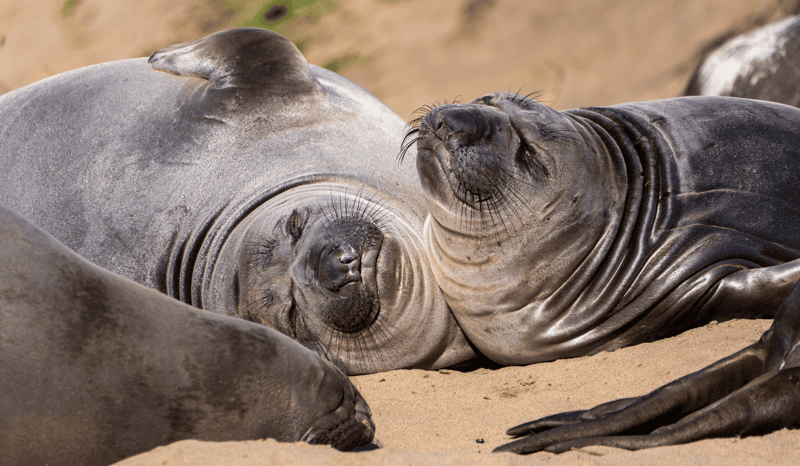
Bird Flu Spreads to Iconic California Elephant Seals at Año Nuevo State Park
Blog
The H5N1 bird flu virus is continuing to wreak havoc around the globe, with wild animals enduring the devastating effects of the virus.
The wild southern elephant seals at Año Nuevo State Park are now facing a new and deadly threat. Researchers from the University of California, Davis and University of California, Santa Cruz have confirmed that the H5N1 avian influenza virus—commonly known as bird flu—has reached this iconic colony.
In February alone, 30 elephant seals were found dead after exhibiting neurological and respiratory symptoms consistent with the virus. Twenty-nine were recently weaned pups, and the other was an adult male. Laboratory testing confirmed H5N1 in seven of the pups. As of March 15, the toll has continued to rise: nine additional elephant seals, along with a sea lion and an otter, have also died at Año Nuevo from the virus, testing confirmed.
This outbreak is not happening in isolation.
In late 2022, southern elephant seal populations across South America and several sub-Antarctic islands were devastated after H5N1 swept through colonies. Tens of thousands of animals are believed to have died. Between 2022 and 2024, more than 30,000 sea lions in Peru and Chile succumbed to the virus, along with roughly 1,300 sea lions and fur seals in Argentina.
Marine mammals are not the only wildlife suffering. The virus—believed to spread primarily through migrating bird populations—has carved a visible path of loss across the United States.
On Long Island, between 680 and 800 geese were found dead in a single pond in East Hampton, with additional birds in neighboring towns testing positive for H5N1. A snowy owl was also confirmed dead from the virus. In response, the East Hampton Town Trustees have urged residents not to touch sick or deceased wildlife and to keep companion animals away from areas where birds congregate, since H5N1 can spread through feces and other bodily fluids.
According to the New York State Department of Environmental Conservation, winter creates prime conditions for transmission. As temperatures drop, geese cluster together in large flocks to conserve warmth—allowing the virus to spread more easily between birds. In spring, when flocks disperse into smaller groups and breeding pairs, transmission risk decreases.
While many bird species are vulnerable, black vultures appear to be especially susceptible. Researchers at the University of Georgia found that more than four out of every five dead black vultures examined tested positive for highly pathogenic avian influenza. Of the 134 black vultures tested across seven states in 2022 and 2023, more than 84 percent were infected with H5N1. Scientists warn that the true toll is likely far higher.
Because black vultures are indiscriminate scavengers, they are frequently exposed to infected carcasses. This sustained transmission gives the virus more opportunities to replicate and potentially mutate and become more virulent, raising concerns that it could continue to jump species and pose greater risks to vulnerable animals, including humans. Still, researchers have detected antibodies in some surviving birds, offering a measure of hope that not all infections are fatal.
“This virus is scary. It’s changing. And it’s doing continual damage to our wildlife—on top of all the other challenges these wildlife already face,” said Nicole Nemeth, lead author of the study and a researcher with the University of Georgia’s Southeastern Cooperative Wildlife Disease Study, in comments to Futurity.
And while the virus continues to move through wild populations, it is also spreading through the United States’ factory farming system. Since 2024, two people in the US have died from H5N1, and 71 individuals have been infected. The overwhelming majority were dairy or commercial farm workers with close contact to infected animals.
This moment underscores how interconnected animal, environmental, and human health truly are. When viruses are allowed to circulate widely—whether in crowded industrial farms or among stressed wildlife populations—the consequences ripple outward. The global zoonotic pandemic we are witnessing is not just a wildlife tragedy. It is a warning.
For more information on the H5N1 virus and how to protect yourself, companion animals, and your local wildlife, please read our comprehensive H5N1 guide.