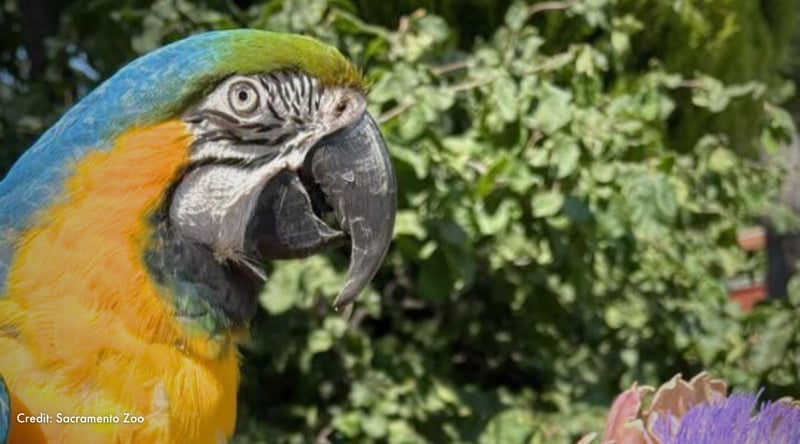
Julio the Blue and Gold Macaw (c.1991-2025)
Obituary
Julio died while undergoing a medical procedure at the Sacramento Zoo, after spending nearly his entire life at the zoo.
Julio, a 34-year-old blue-and-gold macaw, died at the Sacramento Zoo from cardiac arrest while he was under anesthesia for a veterinary procedure. He was transferred to the zoo in 1992. Julio was quickly put into the zoo’s “ambassador” program, where he was used to entertain children and visitors through stage performances, presentations, and interactions.
Macaws live in the tropical rainforests of Central and South America. Deeply social, they live in groups of 10 to 30 birds. Macaws communicate through different vocalizations, including calls, squawks, and screams. Macaws mate for life, forming a strong relationship with their partner. Both parents share the responsibility of caring for their babies. There are 17 species of macaws, some of which are endangered. Habitat loss, climate change, and the pet trade are driving these birds to extinction. Several species, such as the Spix’s macaw, are extinct in the wild.
Macaws, like all parrots, suffer in captivity. For an animal whose body is designed to soar through the sky, enclosures and cages are millions of times smaller than their expansive homes in the wild. Enclosures also don’t approximate the rich diversity of sounds, smells, and textures that the rainforest provides. Isolated from their flock, many parrots in captivity endure severe psychological suffering and engage in destructive behaviors like biting and self-mutilation through feather plucking. Whether kept as a “pet” or used as a tourist attraction, macaws and all parrots suffer in captivity. World Animal Protection urges everyone who loves macaws and parrots to avoid zoos and enjoy them in the wild or at accredited sanctuaries.