The Wildlife Trade Is Making the Next Pandemic More Likely and We’re Running Out of Time to Act
Blog
A Yale study proves the wildlife trade accelerates disease spillover to humans.
A landmark new study published in Science by researchers at Yale University has put a hard number on something animal advocates have long warned about: the global wildlife trade is actively accelerating the spread of infectious diseases from animals to humans—and the longer it goes unchecked, the worse the risk gets.
The findings are stark. Traded mammals are about 50 percent more likely to share pathogens with humans than species that aren’t traded. Among traded mammals, 41 percent are known to share at least one disease with people; among non-traded mammals, that drops to just six percent. And for every 10 years an animal spends circulating through wildlife markets and trade networks, that animal shares an average of one additional pathogen with humans.
“Wildlife trade has been affecting our health much faster and for much longer than we thought,” said Dr. Colin Carlson, assistant professor of epidemiology at the Yale School of Public Health and co-author of the study. “For decades, we've seen outbreak after outbreak starting in the wildlife trade, but so far, that hasn’t been enough to build a case for action. Now we can say with confidence, wildlife trade is always risky for human health.”
This isn’t a hypothetical future threat. SARS, COVID-19, and H5N1 avian influenza all had animal origins. Those conditions exist all over the world right now.
What the Research Found
The Yale team analyzed data from more than 6,400 mammal species worldwide. About one-quarter of those species have appeared in the global wildlife trade—as live animals, fur, meat, or traditional medicines. Using statistical models that controlled for habitat, diet, and proximity to humans, the researchers confirmed that trade itself is driving the risk, not just the fact that we study traded animals more closely.
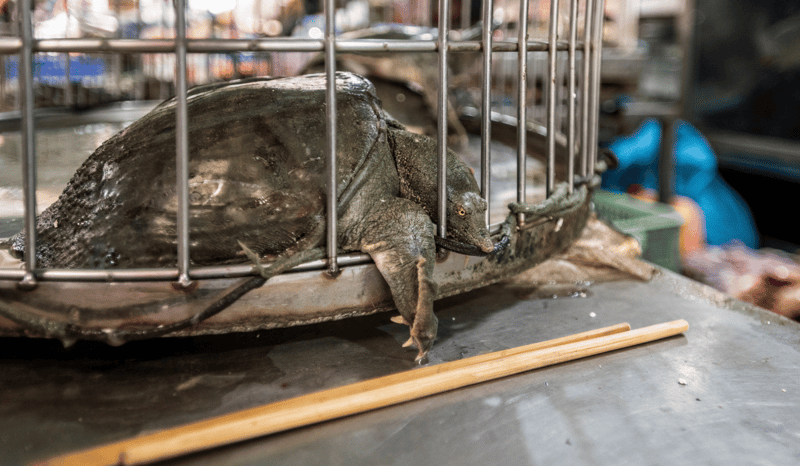
The danger is highest where animals are sold alive. Pet markets, live food markets, and research facilities pack animals from different regions and species together under stressful, unsanitary conditions—combinations that simply don't exist in nature. As we’ve documented extensively, the problem extends far beyond overseas wet markets. The illegal wildlife trade compounds the risk further, with species involved in illegal trade sharing even more pathogens with humans than those moving through legal channels—and the US plays a larger role in this trade than most people realize.
“The conditions that sparked the COVID-19 pandemic exist all over the world,” Carlson noted. “Animals are packed together in poor health, in combinations that don’t exist in nature, spending hours a day with people who might not even wear a mask or gloves.”
The study also found that risk grows the longer a species is in trade. Each decade of exposure adds, on average, another pathogen bridge between that animal and us.
Why This Matters for Every Animal
This research is significant not just as a public health warning, but as an animal protection one. The animals moving through the global wildlife trade aren’t abstractions—they are sentient beings experiencing fear, stress, and suffering at every stage of capture, transport, and sale. That suffering isn't incidental to the disease risk. It’s central to it. Stress suppresses immune systems. Crowding accelerates transmission. Cruelty and pandemic risk are two sides of the same coin.
When we exploit wildlife—pulling animals from their habitats, breeding them intensively, stacking them in crates and cages, selling them across borders—we don’t just harm those animals. We destabilize the systems that protect all of us. We’ve been sounding this alarm since before COVID-19, and this study confirms the urgency has only grown. Ending the wildlife trade is one of the critical reasons we keep fighting for animals, and for all of us.
Help Us Keep Fighting
Donate to World Animal Protection today and stand with us in the fight to keep wild animals safe in the wild. Every dollar funds the campaigns, research, and advocacy that protect animals wherever they need us most.