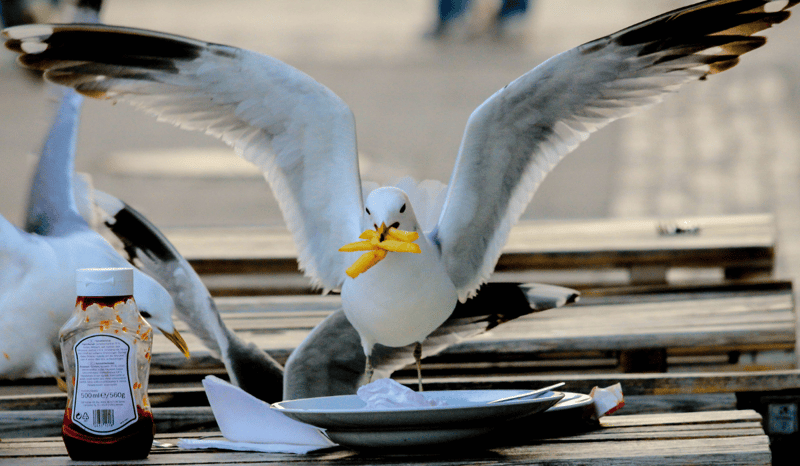
Ever had a gull steal your snack? Discover the surprising science behind this behavior—and how we can better coexist with wildlife.
If you’ve ever tried to enjoy lunch near the water—or even in a city park—you may have experienced the unmistakable shadow of wings overhead. In a flash, a gull swoops in and snatches a sandwich, a fry, or the last bite of your pretzel.
It’s easy to laugh about it later (once the surprise wears off), but these moments often leave people wondering: Why are gulls so bold? And maybe even more commonly: What happened to make them behave this way?
The truth is that gulls aren’t villains of the seaside snack scene. They’re survivors—highly intelligent, adaptable animals responding to the world we’ve created around them.
Clever Birds in a Changing World
Gulls are incredibly resourceful birds. Their ability to live in many different environments—from coastlines and wetlands to busy city streets—has helped them thrive in a rapidly changing world.
Part of that adaptability includes a behavior scientists call kleptoparasitism—a strategy in which animals steal food from others. In the wild, gulls often chase other birds until they drop their catch. Around people, that same instinct may translate into swooping in for a slice of pizza or a bag of chips.
Researchers have even discovered that gulls watch humans closely when deciding whether to approach food. Some studies suggest they are more likely to target items they see people actively eating, showing just how observant and quick-learning these birds can be.
So when a gull snatches your fries, it’s not random—it’s the result of learning, observation, and adaptation.
Not Every Gull Is a Snack Thief
Despite their reputation, most gulls don’t actually steal food from people. In research experiments, only a small percentage of gulls were willing to approach human food at all.
Those who do often learn the behavior through experience. If a gull succeeds once, they’re more likely to try again, but there’s an important piece of the story we can’t ignore: human activity plays a big role in shaping this behavior.
When food scraps are left behind, trash bins overflow, or people intentionally feed birds, gulls quickly learn that human spaces are reliable places to find easy meals. Over time, that leads to bolder birds and more encounters.
In many ways, we’re unintentionally teaching them.
Our Choices Shape Their World
Gulls didn’t evolve to eat fries or boardwalk snacks. Their natural diets include fish and shellfish, but as shorelines develop and human waste becomes more accessible, gulls adapt. What we see as nuisance behavior is often wildlife doing what animals have always done—finding ways to survive in changing environments.
Instead of blaming the birds, it’s worth asking how we can share space with them more thoughtfully.
Simple Ways to Coexist with Gulls
Living alongside wildlife doesn’t mean giving up your beach picnic. Small actions can make a big difference in reducing conflict and keeping animals wild.
Secure your food and dispose of waste properly. Keeping snacks covered and using sealed trash bins helps prevent gulls from associating people with easy food.
Avoid feeding gulls. Feeding wildlife may feel harmless, but it encourages animals to rely on human food and approach people more often.
Stay aware of your surroundings. Gulls are less likely to attempt a food grab when people are watching them.
Give birds space during nesting season. Like many animals, gulls can be protective when raising chicks. Respecting nesting areas helps keep both people and birds safe.
Help Protect Animals Everywhere
At World Animal Protection, we believe every animal deserves freedom and respect. Your support helps us protect animals from cruelty, safeguard wildlife habitats, and promote solutions that allow people and animals to coexist safely.
Donate today to World Animal Protection and help protect animals wherever they need us most.