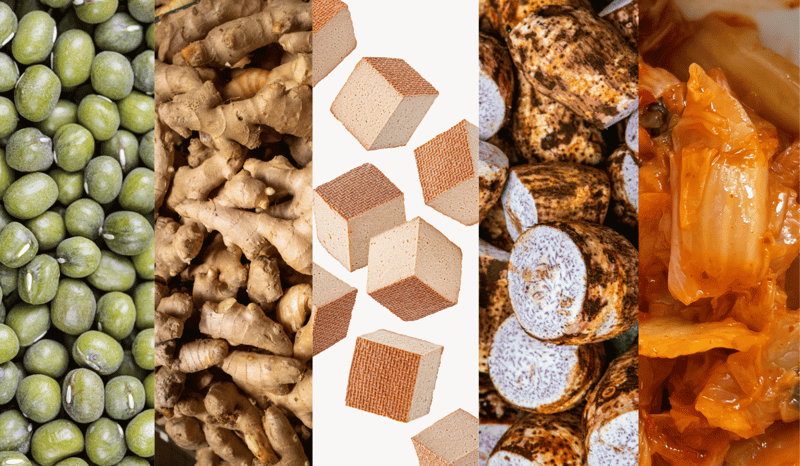
We’re celebrating Asian American Pacific Islander Heritage Month by highlighting plant-based ingredients crucial to various AAPI cuisines.
Plant-based eating is often framed in the United States as a modern development or reserved only for certain demographics. But in many Asian American and Pacific Islander (AAPI) communities, plant-forward cooking isn’t new at all.
This month’s theme for Asian American and Pacific Islander Heritage Month is “Power in Unity: Strengthening Communities Together,” which invites us to look at the threads that connect diverse communities. And what better connector than food? Many AAPI cuisines have long centered plant-based ingredients—not as substitutes, but as staples.
Ingredients That Connect
Rice, noodles, and grains form the foundation. Whether it’s a bowl of jasmine rice, sticky rice shared at celebrations, or hand-pulled noodles enjoyed among family, these staples are both a base and a symbol of togetherness.
Long before plant-based meat alternatives filled grocery store shelves, ingredients like tofu, tempeh, lentils, and mung beans provided accessible, nourishing sources of protein. These foods are not replacements. They are traditions in their own right, shaped by generations of knowledge. From bok choy and eggplant to taro, jackfruit, and seaweed, AAPI cuisine ingredients reflect a deep relationship with local ecosystems. These ingredients emphasize the reality that what we eat is intimately tied to the land and water around us.
Fermented foods like miso, kimchi, and pickled vegetables, along with spices and aromatics like ginger, garlic, turmeric, and lemongrass, add depth and complexity to every dish. These flavors carry history that is preserved, shared, and passed down.
Unity on the Plate
Ultimately, food in many AAPI cultures is about connection. Meals are often shared, served family-style, and rooted in the idea that everyone at the table is cared for.
Recognizing the plant-based foundations of AAPI cuisines challenges narratives about what “normal” or “traditional” eating looks like. It creates space to honor cultures that have long prioritized plants, not as a trend, but as a way of life.
It also reinforces something deeper: that the choices we make about food are connected to larger systems that affect animals, the environment, and each other.