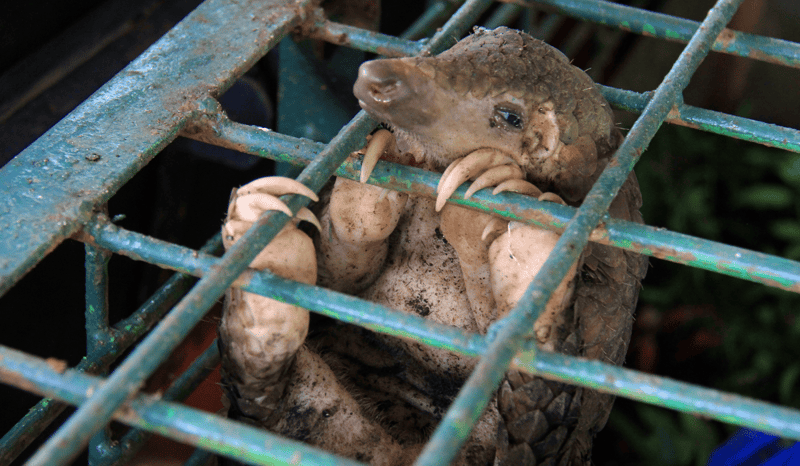
World Animal Protection, in partnership with JAAN Indonesia, has dismantled an online pangolin trafficking ring.
Pangolins are the most trafficked wild mammals on Earth. Despite international protections, criminal networks continue to exploit them at alarming rates, and increasingly, that trade is conducted online, in plain view of millions of users on mainstream social media platforms.
Thanks to the dedication of our partners at JAAN Indonesia and the ongoing support of our donors, a significant online pangolin trafficking operation has been successfully dismantled.
The Investigation
For several months, undercover investigators monitored two key intermediaries who were using platforms such as Facebook to facilitate the sale of protected species. These individuals were not just opportunistic traders—they operated with deliberate efficiency, cycling animals rapidly from hunters to buyers while actively evading law enforcement.
Modern wildlife crime has evolved. Pangolin trafficking no longer occurs exclusively in remote forests or clandestine markets; it thrives in digital environments that are fast-moving, high-volume, and difficult to monitor without sustained, specialized investigation. Our team followed the evidence wherever it led.
The Operation
Following weeks of coordinated surveillance, authorities conducted a sting operation across rural central Java. Two key traffickers were arrested, and five kilograms (approximately 11.2 pounds) of pangolin scales were seized as evidence.
The weight of that seizure carries significance beyond its physical measure. This quantity represents multiple pangolins killed for a trade sustained by unproven medicinal claims and luxury consumption. All eight pangolin species are now classified as threatened with extinction, driven primarily by this illegal trade. Indonesia sits at the center of this global crisis, and enforcement actions of this scale are essential to disrupting it.
This operation matters for three interconnected reasons:
- Disrupting the supply chain. By targeting the intermediaries—rather than low-level actors—this operation severed a critical link between forest hunters and urban buyers, weakening the broader network.
- Removing a specialist. One suspect was known specifically for pangolin trafficking. His arrest removes a skilled operator from the network and protects animals he would otherwise have targeted.
- Establishing legal precedent. This prosecution demonstrates clearly that social media platforms offer no protection from the law. Digital visibility does not equate to legal immunity.
A Painful Loss
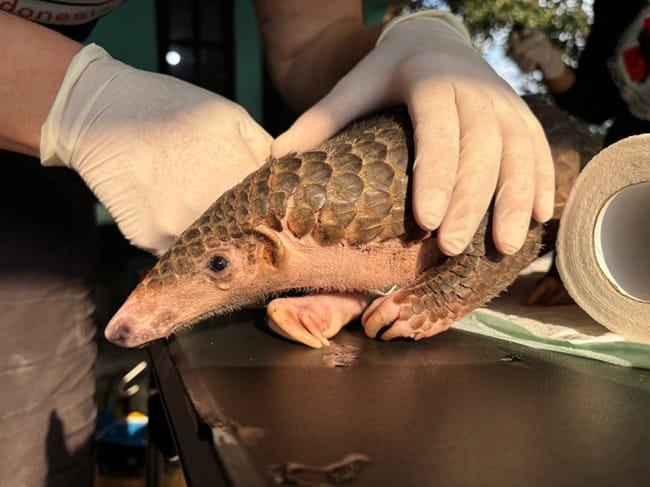
Amba the pangolin.
While we recently were able to successfully rescue and rehabilitate a pangolin, Amba, from a recent trafficking bust, this operation has unfortunately yielded a different result. Despite the rapid intervention of our team, two pangolins did not survive. One was found dead at the scene; the other died shortly after confiscation.
Pangolins are physiologically and psychologically sensitive animals. The cumulative trauma of capture, confinement, transport, and prolonged stress places extraordinary demands on their systems. Even when rescued, recovery is far from certain.
This is the hidden dimension of wildlife trafficking—one that extends beyond species-level statistics to the suffering of individual animals. It is a sobering reminder that our primary objective must be prevention: stopping pangolins from being taken from the wild before intervention ever becomes necessary.
Why This Work Cannot Wait
Pangolins are not simply a conservation concern—they are ecologically vital. As prolific insect consumers, they regulate populations and contribute to forest health. The loss of pangolin populations has measurable consequences for the ecosystems they inhabit.
Sustained protection requires a multi-faceted approach: undercover investigations, law enforcement collaboration, community engagement, digital monitoring, and prosecutorial support. None of this is possible without long-term investment. The dismantling of this trafficking ring is evidence that such investment produces results, but the work is far from over.
Support the Work That Protects Pangolins
Every contribution to World Animal Protection helps fund the investigations, partnerships, and field operations that make outcomes like this possible. Pangolins are running out of time, and the organizations committed to protecting them need sustained, reliable support to continue. Donate to protect pangolins today.