Scales From 2,200 Pangolins Seized in Singapore: What It Tells Us About the Crisis We’re Fighting to Stop
Blog
Singapore’s record-breaking interception of illegally trafficked Sunda pangolin scales is a stark reminder that enforcement alone cannot save the world’s most trafficked mammal, but it is an essential part of trying.
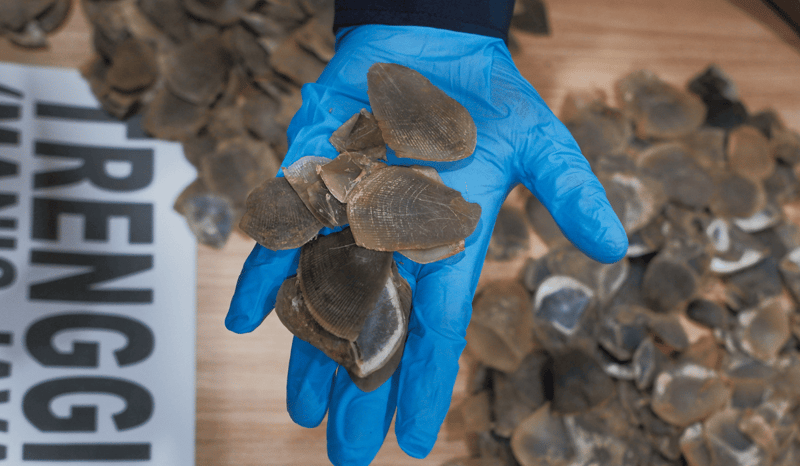
In late December 2025, authorities in Singapore intercepted a truck carrying sea cargo that had been falsely declared as “dried fish skin.” What they found instead was 830 kilograms—roughly 1,800 pounds—of Asian pangolin scales packed into 30 bags. Singapore’s National Parks Board confirmed on March 28, 2026, that the shipment was transiting from Indonesia to Cambodia, and that preliminary investigations place the scales’ origin in Indonesia. The seizure is the largest of its kind ever recorded in Singapore.
To understand the magnitude of that number, consider this: wildlife forensic experts estimate that those 830 kilograms represent the scales of more than 2,200 individual pangolins. Not a statistic. Not an abstraction. Two thousand, two hundred animals—each one captured, brutally killed, and dismembered.
The scales were identified as belonging to the Sunda pangolin, a critically endangered species native to Southeast Asia, including Singapore itself. IUCN estimates that Sunda pangolin populations have declined by more than 50% over the past decade, driven overwhelmingly by illegal trade.
The Anatomy of a Trafficking Route
The route this shipment traveled—Indonesia to Singapore to Cambodia—is consistent with well-documented trafficking corridors through which pangolin products move from source countries in Southeast Asia to consumer markets, primarily in East Asia. Indonesia sits at the center of this global crisis, functioning simultaneously as a source country for Sunda pangolins and as a transit hub for pangolins smuggled from Africa.
Singapore’s role as one of the world’s busiest shipping ports makes it both a target and a critical choke point. By releasing a concurrent national report on its role in tackling illegal wildlife trade in the shipping sector, Singapore’s authorities signaled an important institutional commitment to enforcement. That commitment matters, but the traffickers adapt. This shipment’s concealment inside cargo falsely labeled as dried fish skin reflects a calculated attempt to exploit the sheer volume of goods moving through Singapore’s ports daily.
Deception is a defining feature of modern wildlife crime. In our recent pangolin trafficking operation, criminal networks have evolved beyond the forest and the market stall. They operate online, through encrypted messaging platforms and mainstream social media. They mislabel shipments. They cycle animals rapidly from hunters to buyers. Each layer of concealment is a deliberate adaptation, and dismantling these networks requires equally sophisticated, sustained responses.
Behind the Demand: Scales, Science, and Suffering
Pangolin scales are composed of keratin—the same protein that makes up human fingernails. Their use in Traditional Chinese Medicine (TCM) has been promoted as a treatment for a range of conditions, despite the complete absence of clinical evidence supporting these claims. Although China removed pangolin scales from its approved TCM pharmacopeia in 2020, exceptions and ambiguities in enforcement have kept illegal demand alive. Pangolins are also hunted for their meat, which is considered a luxury food in parts of East and Southeast Asia, and for the pet trade.
All eight species of pangolin are now classified as threatened with extinction. The four Asian species—including the Sunda and Chinese pangolin—are listed as Critically Endangered or Endangered. The four African species are increasingly under pressure as Asian populations have been so severely depleted that traffickers have expanded sourcing to the African continent. The trade is global, organized, and relentless.
What a seizure of 2,200 pangolins’ worth of scales cannot convey is the individual suffering that preceded it. Pangolins are physiologically and psychologically sensitive animals. Capture and confinement are profoundly traumatic experiences. Many do not survive the journey from forest to market. We have witnessed this firsthand: in our recent online trafficking operation in Central Java, despite rapid intervention by our partners at JAAN Indonesia, two pangolins did not survive—one found dead at the scene, the other dying shortly after confiscation.
From Crisis to Cautious Hope: The Story of Amba
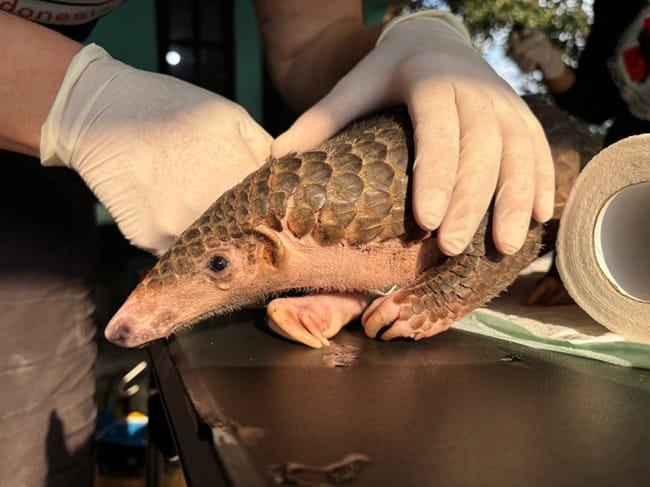
We also know what survival looks like. In August 2025, our partners at the Jakarta Animal Aid Network (JAAN) rescued a pangolin named Amba from a trafficking bust in Central Java — 80 kilograms of scales were also seized in the same operation. Amba arrived at JAAN's rehabilitation center covered in ticks but otherwise healthy. In the months since, he has become confident, curious, and, by all accounts, something of an escape artist.
Amba’s story is one of remarkable resilience, but it is also a reminder of how much infrastructure, expertise, and investment are required to give one pangolin a fighting chance at returning to the wild. Amba’s rehabilitation will take the better part of a year. Not every rescued animal is as fortunate. Preventing pangolins from being taken from the wild in the first place must remain the primary objective.
What Effective Protection Actually Requires
Seizures like Singapore’s are necessary. They remove product from the supply chain, create legal deterrents, and generate data that helps enforcement agencies understand trafficking patterns, but they are not sufficient on their own. The 2,200 pangolins represented by those 830 kilograms were already dead.
Protecting pangolins requires action across the entire chain:
- Upstream: Community engagement and alternative livelihoods in source countries to reduce the incentive to poach.
- Midstream: Undercover investigations, digital monitoring of online markets, and law enforcement collaboration to disrupt trafficking networks before products reach port.
- At the border: Intelligence-led interdiction that goes beyond random inspection because traffickers count on volume and concealment to overwhelm enforcement capacity.
- Downstream: Demand reduction campaigns in consumer markets and prosecutorial support to ensure that arrests translate into meaningful legal consequences.
This is the framework that World Animal Protection, in partnership with JAAN Indonesia and law enforcement partners, is working to implement on the ground. In 2025 and into 2026, we have been expanding our three-phase approach—investigation, arrest, and release—with a particular focus on dismantling the intermediary networks that connect forest hunters to urban buyers.
Support the Work That Protects Pangolins
Every contribution to World Animal Protection funds the investigations, field operations, and rehabilitation partnerships that make outcomes like Amba's possible. By joining The Wild Side as a monthly donor, you ensure that our team can respond at a moment's notice—whether that means funding an undercover operation in Indonesia or providing care for a rescued animal who desperately needs it.