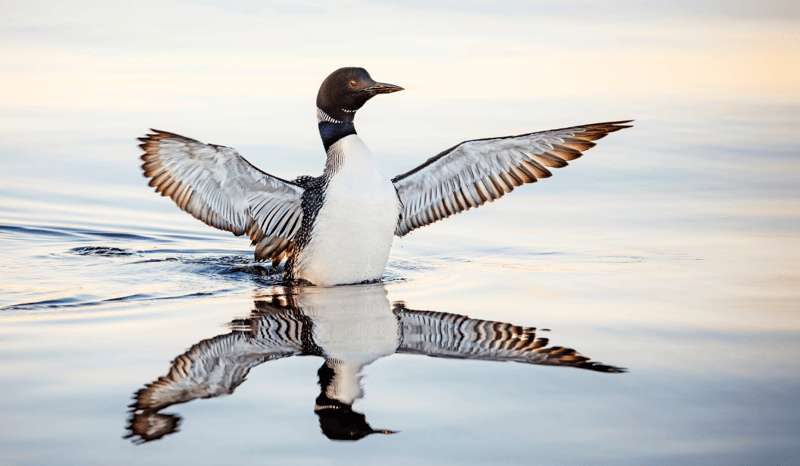
Learn fun facts about “wolf birds” (common loons), discover why they’re among the most iconic birds in North America, and how Heated Rivalry fans can protect them.
If you’ve ever heard an eerie, echoing call drifting across a quiet lake at dusk, you already know: loons have main-character energy. These iconic waterbirds are symbols of wild places, deep resilience, and—if you’re a Heated Rivalry fan—maybe even a certain emotional support lakeside vibe.
Here are a few fascinating facts about loons that might surprise you, and why protecting their habitats matters more than ever.
1. Loons Are Homebodies (in the Best Way)
Loons have an impressive sense of place. Many return to the same lake year after year to breed for their approximately 30-year lifespan, often within just a few feet of where they nested before. That kind of loyalty makes their lakes more than just scenery—they’re home.
It’s a bit like finding your person and your place and refusing to let either go. (Yes, we’re looking at you, Shane and Ilya.)
2. They’re Strong Swimmers—but Awkward on Land
Loons are built to live on water (sometimes even near cottages). Their legs sit far back on their bodies, making them powerful divers and swimmers. Underwater, they’re graceful and efficient, diving upwards of 250 feet deep. On land? They’re a bit clumsy.
This is why loons almost always nest right at the water’s edge—and why shoreline development can be so dangerous. A small change to a lake’s edge can mean a big problem for a bird who can’t just “walk it off.”
3. Loons Don’t Mate for Life (And That’s Okay)
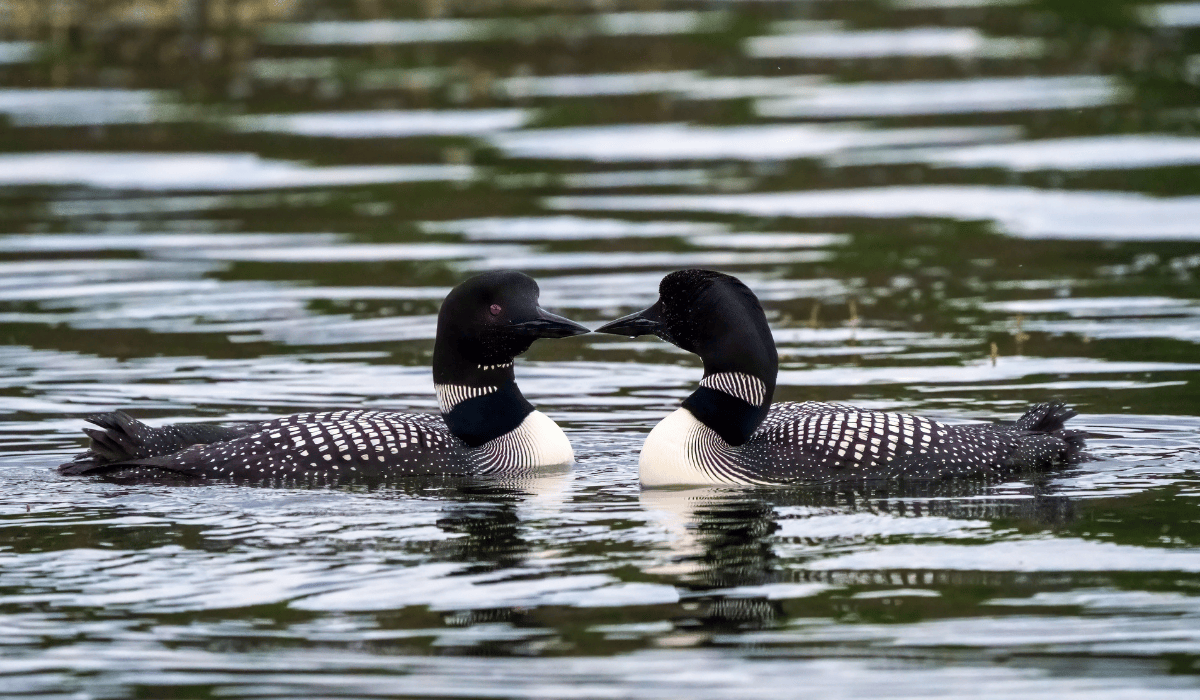
Despite popular belief, loons don’t necessarily mate for life. They often return to the same lake and may reunite with the same partner, but if something changes, they adapt.
It’s a reminder that nature doesn’t follow rigid rules. Relationships, territories, and survival all depend on circumstance, not tradition.
4. Common Loons Are Minnesota’s State Bird
Minnesotans are deeply devoted to protecting loons, so much so that they designated the common loon as the state bird in 1961, solidifying their place in Minnesota's identity.
As the “Land of 10,000 Lakes,” loons are iconic to Minnesotans, who often associate loons and their calls with enjoyable summer memories lakeside.
5. Their Calls Are More Than Just Spooky Soundtracks
Their haunting calls echo like wolves across the water, causing some to refer to these animals as “wolf birds.” They have several distinct calls with specific purposes, including territorial defense, locating a partner, or signaling distress.
Healthy lakes mean loons can keep calling to one another. No static. No interference. Just connection.
6. Loons Can Fly 75 Miles Per Hour
The fact that loons can fly as fast as Shane’s car can drive from the airport to the cottage might actually be the most mind-blowing thing about these animals!
According to the National Loon Center, loons can fly up to 75 miles per hour and migrate at altitudes anywhere between 3,000 and 5,000 feet.
7. Chicks Ride on Their Parents’ Backs
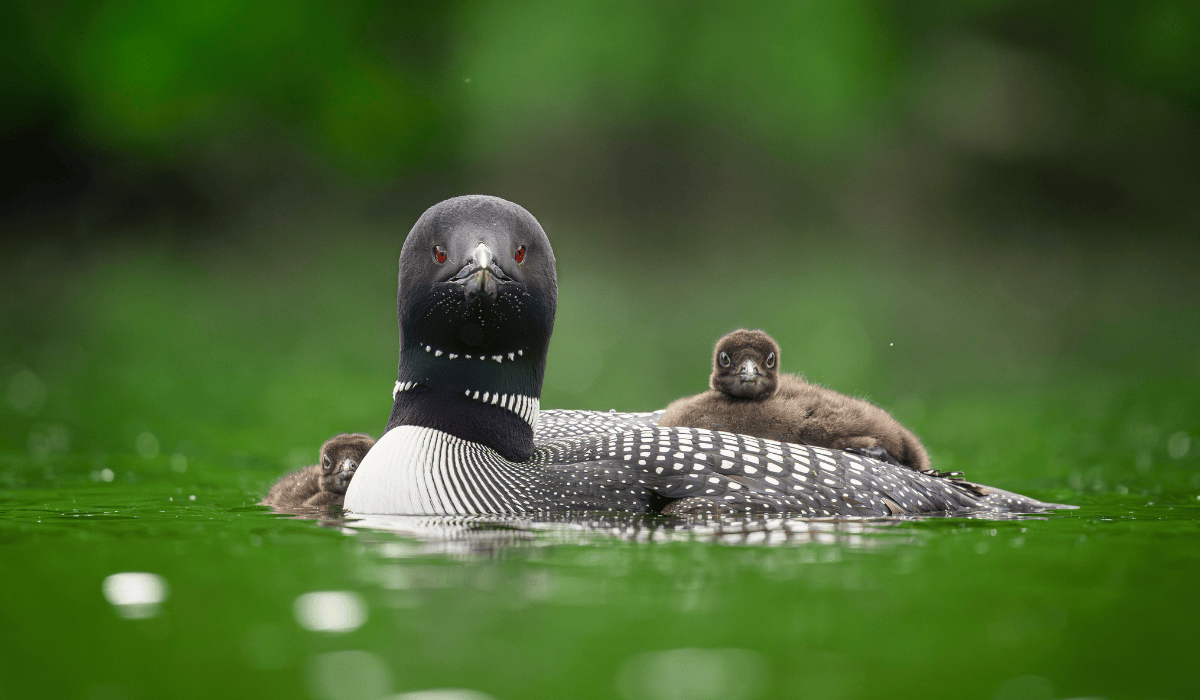
One of the most heart-melting loon facts: young chicks often ride on their parents’ backs during their first weeks of life. It keeps them warm, safe from predators, and close to food.
It’s tender. It’s protective. It’s the kind of quiet care that makes you believe in long-term commitment—at least to raising the next generation.
8. Loons Are Sentinels of Lake Health
Because loons rely on clean water and healthy fish populations, their presence is a strong indicator of a thriving ecosystem. When loons disappear, it’s often a sign that something deeper is wrong.
Protecting loons means protecting entire freshwater systems—benefiting people, wildlife, and communities alike.
9. Human Activity Is Their Biggest Threat
From lead fishing tackle to climate change and shoreline development, loons face growing challenges caused by human activity. These aren’t distant threats—they’re happening now, on lakes across the US.
The good news? Many of these dangers are preventable. Stronger protections, smarter policies, and collective action can give loons the space they need to thrive.
Protect Loons For Years to Come
Loons remind us what’s at stake when we protect wild places: connection, resilience, and the freedom to return home year after year. Whether you love them for their calls, their parenting skills, or their quiet devotion to the lakes they love, one thing is clear—loons are worth protecting.
Want to protect loons and other animals? Join The Wild Side today to help sustain our work protecting animals wherever they need it most.