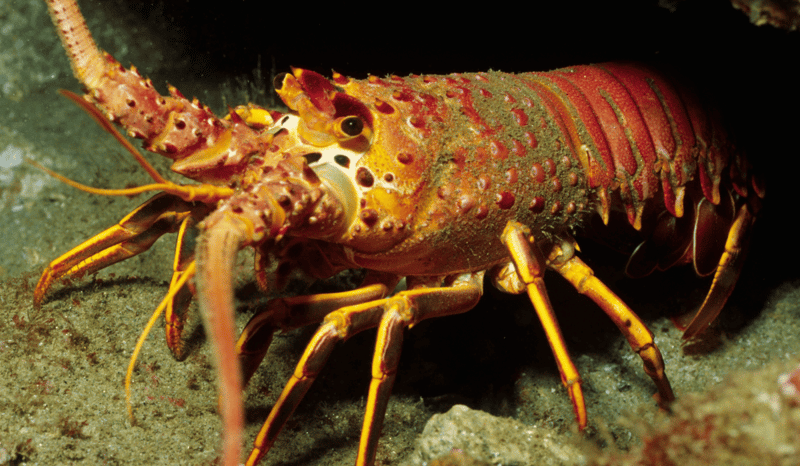
Groundbreaking new research published in “Scientific Reports” confirms what animal advocates have long suspected: lobsters experience real pain, not just reflexes.
The next time you walk past a restaurant tank lined with rubber-banded claws and listless, stacked bodies, consider this: those animals feel the same distress you would in their position. A landmark new study from the University of Gothenburg has added the most compelling evidence yet that crustaceans—such as the lobsters at the center of a billion-dollar US seafood industry—are sentient beings capable of suffering.
The study examined how Norway lobsters (Nephrops norvegicus) respond to electric shocks. When exposed to underwater shocks, the animals reacted with a forceful tail-flip—an escape behavior. That alone isn’t remarkable. What is remarkable is what happened next.
Key Finding
Researchers administered two human pain-relief medications—aspirin and lidocaine—to the lobsters before applying the same electrical shocks. In both cases, the escape responses were significantly reduced or stopped entirely. Aspirin was injected; lidocaine was dissolved in the water and absorbed through the animals’ bodies. The drugs worked. Which means the lobsters weren’t just reflexively twitching. They were processing something that functions like pain—and the pain was being dulled by analgesics.
“The fact that painkillers developed for humans also work on Norway lobsters,” the researchers noted, strengthens the argument that these animals possess genuine pain-processing systems, according to ScienceAlert’s coverage of the findings.
The research builds on a growing scientific consensus. Earlier work at the University of Gothenburg, published in the journal Biology, used electrophysiological equipment to detect nerve-cell reactions in shore crabs’ brains during painful stimuli, finding that crabs possess nociceptors that detect damaging stimuli and send signals directly to the central nervous system. Lead researcher Eleftherios Kasiouras concluded: “We can assume that shrimp, crayfish, and lobsters can also send external signals about painful stimuli to their brain.”
“There is already evidence that decapod crustaceans exhibit signs of discomfort and stress when exposed to injuries such as forced removal of a claw. Our latest experiments show that Norway lobsters react adversely to electric shocks, which are painful to humans.”
— Dr. Lynne Sneddon, University of Gothenburg
The science is also increasingly nuanced. Research on hermit crabs has shown that decapods can weigh competing threats—for example, enduring an electric shock rather than abandoning a preferred shell when a predator is nearby. That kind of trade-off requires internal processing, memory, and decision-making. That’s not a reflex. That’s an experience.
The Scale of the Problem
Understanding lobster pain isn’t just philosophically important. It has enormous real-world stakes because the lobster industry operates at a staggering scale.
- Tens of millions of lobsters killed annually in Maine alone
- $740M estimated value of Maine's lobster catch
- 0 federal US animal welfare protections covering lobsters or crustaceans
Maine alone produces more than 110 million pounds of lobster meat annually, valued at roughly $740 million. Tens of millions of these animals pass through the supply chain—trapped, transported, stored in tanks, and most often boiled alive—every single year. And virtually none of them have any legal protection.
As the Washington Post has reported, neither fish nor crustaceans are covered under the federal Animal Welfare Act, and they are largely exempt from state animal cruelty laws as well. In the United States, a dog has extensive legal protections. A lobster has none.
The World Is Moving—We Need to Catch Up
Other countries are beginning to act on this science. The United Kingdom passed the Animal Welfare (Sentience) Act 2022, which legally recognizes decapod crustaceans—including lobsters, crabs, and shrimp—as sentient beings. Switzerland has already banned the practice of boiling lobsters alive without stunning them first. Researchers in the UK are now calling for a ban on boiling lobsters alive under existing welfare-at-slaughter laws.
In Australia, a seafood company was convicted of animal cruelty for dismembering lobsters alive—the first case of its kind in the world. After the conviction, the RSPCA’s Steve Coleman said: “With the scientific community proving lobsters feel pain, and the legislation backing that up, we’re excited to see such progress in the space of animal welfare.”
The United States, home to one of the world’s largest lobster industries, has produced no equivalent legal action. That gap between scientific understanding and legal protection is exactly where World Animal Protection operates.
What World Animal Protection Is Doing
At World Animal Protection, sentience is at the heart of everything we do. We believe that the capacity to suffer—not species, not size, not economic value—is the foundation of an animal’s right to protection. The science on lobsters has crossed a threshold that demands a response.
Our work includes pushing for policy change at the federal and state levels to extend meaningful animal welfare protections to aquatic invertebrates; partnering with scientists and researchers to keep the evidence in front of lawmakers and industry leaders; and educating the public about the real experiences of animals too often dismissed as unfeeling or “too different” to matter.
Researcher Gemma Carder, who has worked with World Animal Protection and serves as a scientific advisor for Crustacean Compassion, conducted a landmark investigation into lobster welfare in UK food outlets. Scoring 325 lobsters on restraints, stocking density, lighting, and shelter, she found that basic welfare requirements were not being met in the vast majority of cases. Her conclusion: research findings must be used to drive legislative change.
What You Can Do
Science gives us knowledge. Advocacy turns that knowledge into change. Here’s how you can be part of the movement to protect animals who can no longer be scientifically dismissed as unfeeling:
- Stay informed: Share this science with your networks. Public awareness is the foundation of policy change, and most people simply don't know what the research shows about crustacean sentience.
- Contact your representatives: Ask your US Senators and Congressional representatives to support legislation that extends animal welfare protections to aquatic invertebrates. If it’s on the agenda in the UK and Switzerland, it belongs on the agenda here too.
- Make conscious choices: Consider reducing or eliminating consumption of lobster and other crustaceans.
- Support World Animal Protection: Our campaigns to end animal cruelty depend on the generosity of people who believe, as we do, that no animal's suffering should be acceptable. Your donation funds the advocacy and the legal pressure that creates real change.
*A note from the author on animal testing:
This blog cites studies in which lobsters and crabs were subjected to electric shocks and other painful stimuli in laboratory settings. World Animal Protection does not support animal testing, and we want to be transparent about that tension here.
Our position is grounded in a core belief: animals are sentient beings whose suffering matters, in every context—including the laboratory. We recognize the painful irony that some of the most important evidence for crustacean sentience was gathered through experiments that caused those animals harm. We do not endorse that approach, and we advocate for the development and adoption of non-invasive, humane research methods across all fields of science.
We cite this research because the findings are real, significant, and urgently needed to drive policy change that will protect millions of animals from ongoing, large-scale suffering in the food industry. In our view, acknowledging the science—while being honest about its costs—is more responsible than ignoring evidence that can save lives.
We remain committed to a future where no animal, in any setting, is made to suffer in the name of human knowledge or human appetite.