The Climate Crisis Is Coming for Every Animal on Earth—And JBS Is Pouring Fuel on the Fire
Blog
A new study warns that one-third of animal habitats face climate disaster by 2085.
A sweeping new study published in Nature Ecology & Evolution just delivered one of the most sobering assessments of wildlife’s future we’ve seen: by 2085, more than a third of all land-animal habitats on Earth could face multiple, compounding climate disasters—heatwaves, wildfires, droughts, and floods hitting the same places in rapid succession.
This isn’t a distant hypothetical. It's a trajectory we’re already on and the factory farming industry, led by the world’s largest meat producer JBS, is one of the biggest forces driving us there.
What the Science Is Telling Us
Researchers at Germany’s Potsdam Institute for Climate Impact Research (PIK) mapped the ranges of thousands of land vertebrates—mammals, birds, reptiles, and amphibians—against projected climate extremes. What they found is alarming in its scale and specificity.
- Heat is the most pervasive threat: Under a medium-high emissions scenario, heatwaves will sweep over 74 percent of all current land-vertebrate habitat by 2050. By 2085, that number climbs to 93 percent—leaving virtually no cool refuge within known animal ranges. High-risk regions include the Amazon basin, Africa, and Southeast Asia.
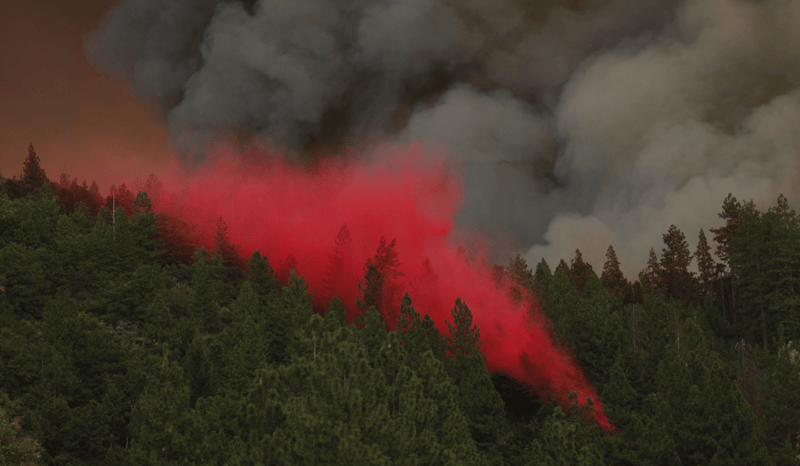
- Wildfire ranks second: The study’s fire projections were notably high—a larger threat than researchers initially anticipated. Wildfires don’t just kill animals outright; they strip away the food, shelter, and breeding grounds animals need to recover. The 2019–2020 Australian megafires offer a grim preview: where drought had hit before the flames, plant and animal declines were 27-40% greater than in areas that experienced fire alone.
- Drought hits unevenly but deeply: While drought affects a smaller overall percentage of habitat—roughly 8 percent by 2050 and 14 percent by 2085—it is particularly devastating for amphibians, many of which depend on wet skin, ponds, and damp breeding sites that simply won't exist in a hotter, drier world.
- Floods amplify local risk: River floods affect 3 percent of species ranges by 2050 and 5 percent by 2085—numbers that sound small until you consider how concentrated that damage is along specific river systems that are home to irreplaceable biodiversity.
The study’s lead researcher, Stefanie Heinicke, put it plainly: “I think climate change, and in particular extreme events, are still really being underestimated when it comes to conservation planning.”
But here is the crucial insight buried in the data: choices still matter enormously. Under a low-emission pathway, multi-event habitat exposure reaches just 9 percent by 2085. Under a higher-emission path, it rises to 44 percent. As Heinicke noted, “There’s still a lot of difference we can make by cutting emissions as fast as we can from today.”
That gap—between 9 percent and 44 percent—represents hundreds of thousands of animal populations. It represents the Amazon. It represents the Cerrado. It represents species we haven’t even named yet.
And it is a gap that companies like JBS are actively widening.
The Factory Farming Connection: Who Is Driving This Crisis?
Factory farming is responsible for roughly 14.5 percent of all greenhouse gas emissions, 70 percent of freshwater consumption, and a 60 percent decline in wildlife populations globally. Half of Earth’s habitable land is used for agriculture—and of that, 77 percent goes to either raising animals or growing crops to feed them. This isn’t a side issue. Industrial animal agriculture is one of the primary engines of the climate crisis that this new research is warning us about.
At the top of that industrial pyramid sits JBS—a Brazilian corporation that is the world’s largest meat producer and, by any honest accounting, one of the greatest single contributors to planetary destruction around today.
A 2023 World Animal Protection report found that pig and chicken production from JBS alone generates greenhouse gas emissions equivalent to 14 million cars on the road every year—more than double the second-largest factory farming emitter. That doesn’t even include beef production, which the EPA identified as the largest contributor to methane emissions from enteric fermentation, accounting for 71 percent of that category in 2022.
In 2021, JBS reported over 71 million tons of total emissions, more than many entire countries.
JBS Is Burning Down the Future While Claiming to Be Green
The cruelest irony is that JBS has spent years marketing itself as a sustainability leader, pledging to reach “net zero” greenhouse gas emissions by 2040. In ads, the company promised: “Bacon, chicken wings, and steak with net zero emissions. It's possible.”
It wasn’t. It isn’t.
In 2024, New York State Attorney General Letitia James sued JBS USA for this fraudulent greenwashing. The company had no credible plan, no pathway, and no technology to back up its claims while it simultaneously continued expanding its beef production globally. JBS ultimately settled for $1.1 million, funds that will now support climate-smart agriculture in New York.
But the real cost of JBS’s behavior cannot be measured in a settlement. It is measured in hectares of scorched Cerrado, in rivers too warm for the fish who once filled them, in the compounding disasters this new PIK research warns us are coming for the habitats of thousands of species.
World Animal Protection has documented extensively how JBS uses a complex web of intermediaries to source animal feed from farms involved in illegal land grabs and habitat destruction. Fires are set deliberately to clear land in Brazil’s Cerrado—a biome home to 5 percent of the planet’s animals, including jaguars, giant anteaters, tapirs, and armadillos. That cleared land becomes soy and corn to feed animals packed into JBS factory farms. The fires that the PIK study identifies as the second-greatest threat to animal habitats worldwide. JBS is literally setting them.
The Animals Who Cannot Escape
The PIK study is careful to note that exposure to climate extremes is not the same as extinction—some animals will adapt, some will move, but the researchers are also clear that current range maps don’t account for the human barriers, habitat loss, disease, and displacement that can trap populations in place, unable to flee oncoming disasters.
Those barriers are, in large part, the footprint of industrial agriculture itself.
Meanwhile, the animals inside JBS’s supply chain have no option to flee at all. As we’ve reported before, JBS slaughters a staggering 27 million cows, 47 million pigs, and 4.9 billion chickens raised for meat per year. These animals spend their lives in conditions of extreme confinement.
What Comes Next and What You Can Do
The PIK researchers are clear that the trajectory is not fixed. The difference between a 9 percent and a 44 percent multi-hazard habitat exposure rate is enormous, and it hinges on the emission cuts we make now.
That means holding corporations like JBS accountable. It means demanding that financial institutions stop funding factory farming giants whose emissions and deforestation are incompatible with a livable planet. It means supporting policies like the Farm System Reform Act, which would hold companies like JBS responsible for the harm their practices cause.
And it means making choices at the individual level, too—reducing or eliminating factory-farmed meat from your diet, opting for plant-based alternatives, and asking your grocery store and restaurants where their products come from.
We’re Taking Them On—But We Need Your Help
World Animal Protection US has been exposing JBS’s greenwashing, documenting their abuses, and holding them accountable at every turn. But let’s be honest about what we’re up against: JBS is a multibillion-dollar global corporation. We are a nonprofit fighting for animals and are immeasurably small in comparison.
Every dollar we raise goes directly into that fight—pressuring investors to divest, pushing legislators to act, and making sure the public knows exactly who JBS is and what it’s doing to our planet.
Donate today to fund our fight against JBS and factory farming.