Bird Flu Hits a US Mink Farm for the First Time
Blog
H5N1 bird flu hit a Utah mink farm, killing most of the animals as officials stayed silent. Here’s why the Mink VIRUS Act must pass Congress now.
This summer, H5N1 bird flu was confirmed in farmed minks in Utah, the first time the virus has been found in captive minks in the United States. Documents obtained through a public records request show that the farm is expected to lose about 80 percent of its minks to the disease, and that state officials weren’t sure how to contain it. With no established protocol, one official wrote that the only options were to “watch them die” or seek emergency vaccine approval.
Even now, neither federal nor state officials have released much information about the outbreak, including how many minks were on the farm, whether the virus spread between them, where it came from, or whether any workers were exposed.
This outbreak was predictable, and it won’t be the last unless Congress acts.
Why Mink Farms Are a Pandemic Risk
Bird flu has spent the past several years spreading to more mammals, including cows exploited for dairy, and human cases have been rising. Minks are especially concerning. They can be infected by flu viruses from both birds and humans, which means they can act as a mixing vessel where a new pandemic strain could emerge.
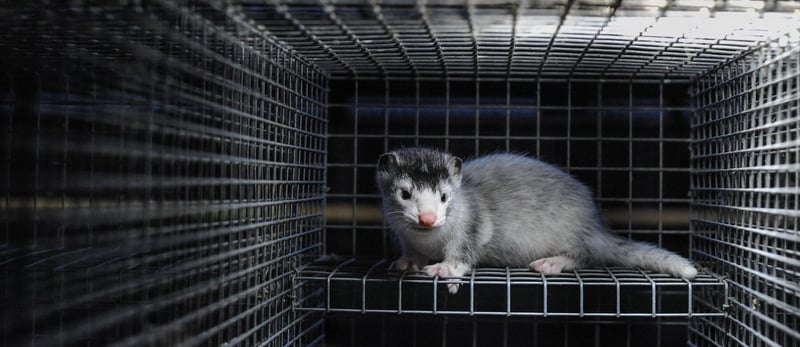
Fur farms give viruses every opportunity to do exactly that. Thousands of minks are packed into rows of wire cages, under constant stress, in close contact with one another and with the workers who handle them. Once a virus gets in, it moves fast. It’s the same dynamic that makes factory farms breeding grounds for disease.
We’ve already seen what happens next: During the COVID-19 pandemic, COVID killed about 12,000 minks in Utah alone. In Michigan, four people were infected with a coronavirus variant linked to a mink farm, including two who had no connection to the farm. And in 2022, H5N1 struck a mink farm in Spain, where researchers found evidence the virus may have spread between minks and carried a mutation with potential public health implications. Fur farms in Finland followed in 2023.
A Lifetime of Suffering in a Cage
In the wild, minks are solitary, semi-aquatic animals. On fur farms, they spend their entire lives in small, barren wire cages, unable to engage in their most basic natural behaviors.
The result is severe psychological distress. Many minks on fur farms pace obsessively or harm themselves, biting their own tails and feet. All of this suffering exists for one reason: to produce fur for fashion that most people don’t support.
A Dying Industry Kept Alive by Taxpayers
The US mink industry is already collapsing. Production has dropped by 80 percent since 2015, and fewer than 70 mink farms remain in the country, most of them in Wisconsin and Utah.
Yet taxpayer dollars continue to prop it up through loan forgiveness and compensation programs for mink farms. Meanwhile, the USDA discontinued its annual Mink Survey last year, leaving the public with even less information about an industry that poses a known disease risk.
The Mink VIRUS Act Would End It
The bipartisan Mink: Vectors for Infection Risk in the United States Act, known as the Mink VIRUS Act (H.R. 2185), would end mink fur farming in the US. Introduced by Rep. Adriano Espaillat of New York, the bill would phase out mink farming over one year and create a grant program to help farm operators transition out of the industry.
It’s a practical solution. It ends the cruelty of keeping minks in cages, removes a known pandemic risk, and supports farmers as they move on to other work.
Take Action
The Utah outbreak is a warning. Congress has a bill ready that would end mink fur farming for good, and your representative needs to hear that you support it.