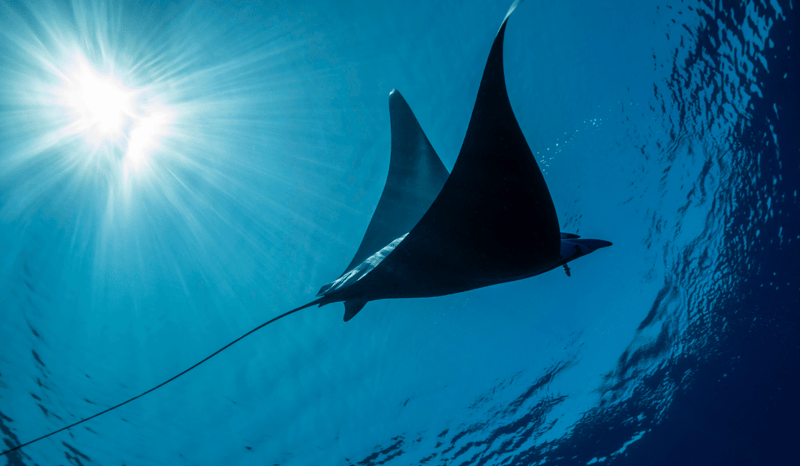
Florida lawmakers are considering the MANTA Protection Act to stop the capture of threatened marine animals for display. Here’s why it matters.
Last summer, a video surfaced that many of us can’t forget.
It showed the capture of a giant manta ray off the coast of Panama City, Florida—an animal so large and graceful that she seems to embody the freedom of the open ocean itself. She was pulled from her home, restrained, and removed from the wild. That manta ray will spend the rest of her life in a tank at SeaWorld Abu Dhabi.
She is a federally threatened species, and yet, her capture was legal.
That reality is exactly why Florida lawmakers are now pushing for the MANTA Protection Act, a bipartisan bill that would finally close a dangerous loophole allowing endangered, threatened, or vulnerable aquatic animals to be taken from state waters for display or so-called “educational” purposes.
This moment matters, not just for manta rays, but for the future of marine wildlife protection in the US.
A Loophole That Costs Animals Their Freedom
Under current Florida law, facilities like SeaWorld can apply for special activity licenses through the Florida Fish and Wildlife Conservation Commission. These permits allow protected animals to be captured and removed from the wild if they’re intended for exhibition or education, even if the species is listed as threatened or endangered at the state or federal level.
That’s how this manta ray was taken.
And while some institutions use rescue and rehabilitation as their guiding principle—stepping in only when animals are injured, stranded, or unable to survive on their own—others continue to treat wild animals as assets to be acquired.
The difference is critical.
Rescue-based facilities prioritize the animal’s long-term well-being and survival, with the goal of release whenever possible. Capturing a healthy, wild animal and confining her to a tank for life does the opposite.
As Rep. Lindsay Cross, one of the bill’s sponsors, put it plainly:
“This female giant manta ray will live the rest of her life in a tank and doesn’t get to experience the gift of being a wild animal.”
That loss is immeasurable.
Why Manta Rays—and Other Marine Species—Need Protection Now
Manta rays are highly intelligent, slow to reproduce, and essential to healthy ocean ecosystems. Many marine species like them are already under immense pressure from climate change, pollution, and overfishing.
Removing even one individual from the wild—especially a breeding-age female—can have lasting consequences for an already fragile population.
The MANTA Protection Act recognizes this reality. If passed and signed into law, it would prohibit the capture of endangered, threatened, or vulnerable aquatic animals from Florida waters for display or education, effective July 1, 2026.
In short: it puts conservation over captivity.
The Bigger Picture: Rethinking Captivity in a Changing World
At World Animal Protection, we believe wild animals belong in the wild. Modern science continues to show us what animals have always known—that confinement cannot replicate the complexity, choice, and freedom of natural habitats.
Capturing threatened marine animals for entertainment or exhibition doesn’t educate the public in the way proponents claim. Real wildlife education and conservation inspire respect, protection, and coexistence—not exploitation.
Florida has an opportunity to lead by example, to show that conservation means safeguarding animals where they belong, not putting them behind glass.
A Future Where Marine Life Is Protected, Not Taken
The MANTA Protection Act is a meaningful step forward. It acknowledges that legal doesn’t always mean ethical—and that laws must evolve as our understanding of animals deepens.
We can’t undo what happened to that manta ray. But we can make sure she’s one of the last.
If you live in Florida, you can use this tool to locate your legislator and urge them to support the MANTA Protection Act.
If you don’t live in Florida, please donate to World Animal Protection today so we can continue fighting to keep all wild animals free, in the wild, where they belong.