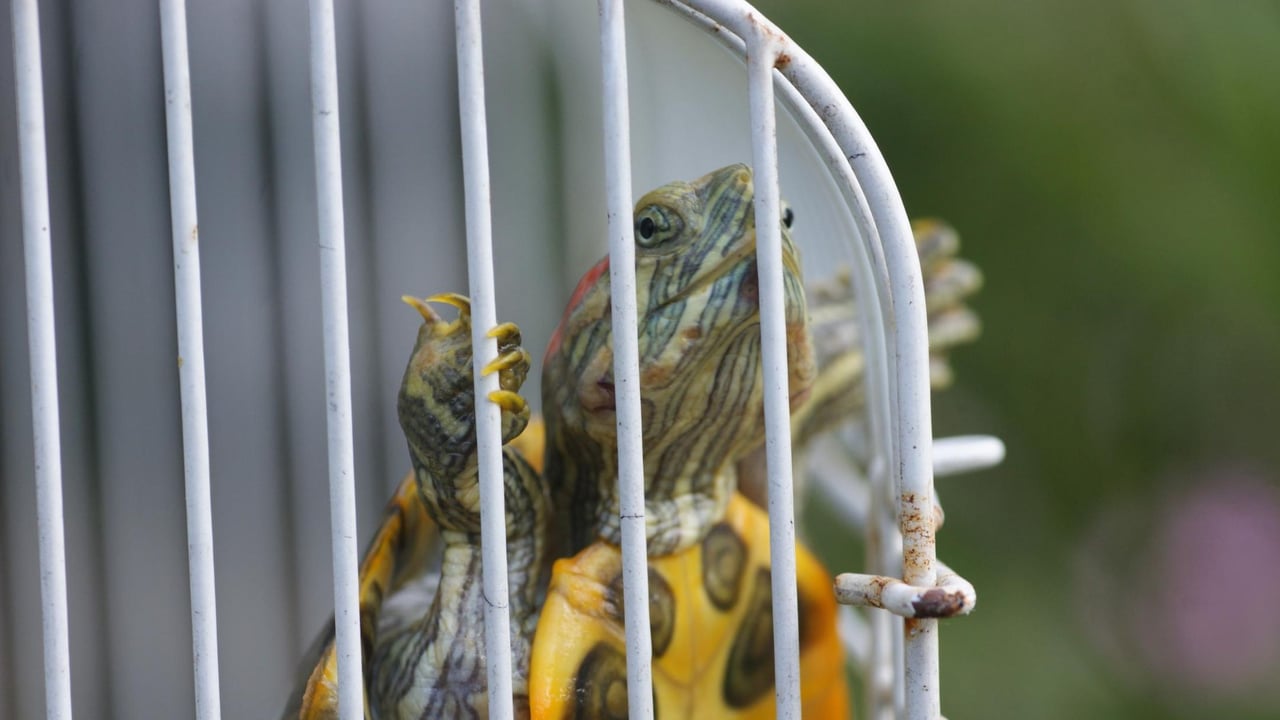
It’s time for the two biggest pet retailers in the US to recognize that animals aren’t products and exit the cruel wildlife trade. Urge PetSmart and Petco to end animal sales.
Animals don’t belong on store shelves. Yet PetSmart and Petco continue to sell animals like turtles, birds, guinea pigs, and hamsters, stacked in cages and tanks near leashes and toys.
But animals aren’t products. And whether they’re caught from the wild or bred in cruel mills, these animals are suffering.
By selling animals, PetSmart and Petco are contributing to the destructive multibillion-dollar wildlife trade that exploits wild animals on an industrial scale. Wild animals belong in the wild, not our homes.
Animal sales create many problems, including:
- Pushing more animals into shelters that struggle to find appropriate placements
- Disrupting ecosystems when animals are abandoned into unfamiliar habitats
- Increasing zoonotic disease risk by pushing humans and animals into greater proximity
Use our quick form to urge PetSmart and Petco to end animal sales.