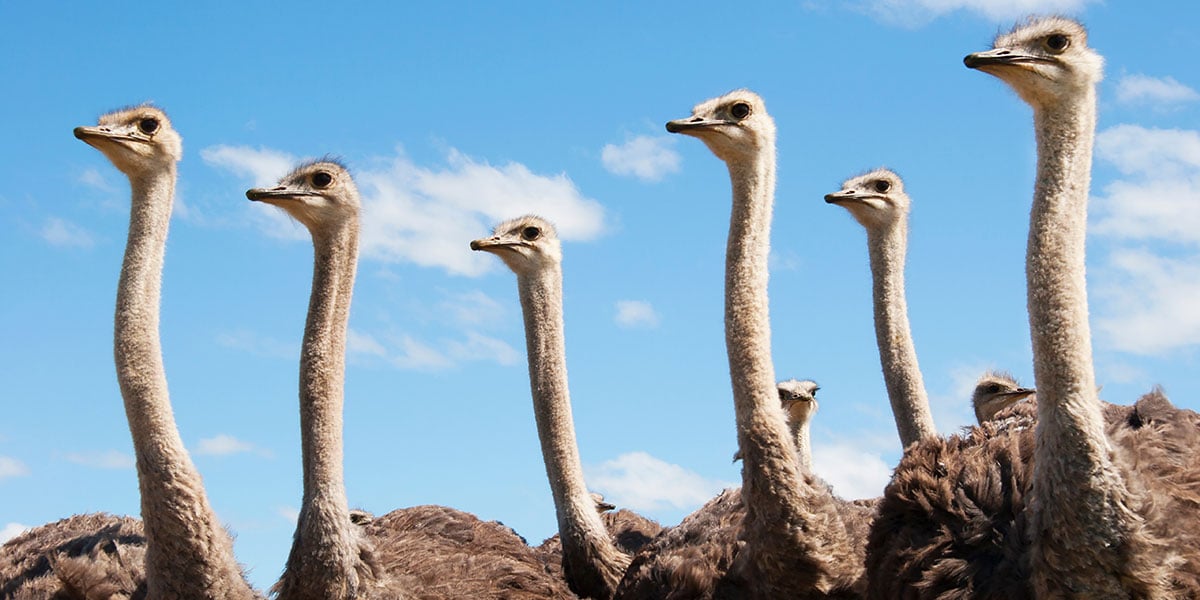
Ostrich Facts: Feathers in Fashion
Did you know that the fashion industry is perhaps one of the worst culprits that exploits and harms animals?
Millions of wild animals are killed annually in the name of profit. While wearing animal furs may no longer be trendy, another equally cruel trend has taken its place—feathers.
From red carpets at the Met Gala and Oscars, to recent collections from Valentino, Chanel and Dior, feathers are everywhere. Luxury fashion houses have boosted the feather trend, with ostrich feathers trickling down to fast fashion giants like Shein.
Most decorative feathers used for fashion come from ostriches. Many people mistakenly believe that ostrich features are cruetly-free. This belief is fueled by a myth that ostriches naturally shed their feathers over time.
The harsh reality is that feather production runs on intensive farming, painful plucking and cutting, and rough handling in an effort to maximise profit at the birds’ expense.
Learn the truth behind ostrich feathers used for fashion, as we expose what really happens to these gentle, social animals kept on ostrich feather farms.
What is an ostrich feather farm?
In the wild, ostriches travel vast distances with their herd. Their long, powerful legs help them run up to 43 miles per hour. On feather farms, ostriches are stuck in barren pens. These deeply social and emotional animals are forced into unnatural herd groups, resulting in aggression and fights. Many ostriches suffer wounds from pecking at each other’s eyes and feathers. They often don’t have access to plants or the food they would eat in the wild, instead being fed lucerne, which doesn’t meet their natural nutritional needs.
Ostriches in farms spend their lives trapped behind fences, while their feathers are often plucked or cut to sell to the fashion industry, before they are eventually killed.
Today, the industrial breeding and slaughter of ostriches for their feathers generates millions of dollars in profit. There are two main kinds of ostrich farms: those that primarily supply high-quality feathers for luxury fashion brands, and those that produce skins, meat, and lower-quality feathers.
Ostrich feathers are often assumed to be a by-product of the meat and skin trade, but feathers are often the most profitable part of the industry, particularly for farms focused on producing feathers for fashion.
Exposing the myth of ‘natural moulting’
Do ostriches lose their feathers naturally?
No. In the wild, ostriches keep their beautiful feathers all year to help protect themselves from harsh weather and cold. They do not go through a natural mass moulting season.
The fashion industry continues to rely on this myth that ostriches regularly shed their feathers, and that any feathers used for fashion have been collected after ostriches naturally lose them.
How are ostrich feathers actually harvested?
Ostrich farms use multiple cruel methods to extract feathers from an ostrich’s skin: live plucking, feather cutting and post-slaughter plucking.
LIVE PLUCKING:
- Live plucking means plucking feathers straight from a live ostrich’s skin. Most of the time, these feathers haven’t had a chance to fully grow and are still immature. There is evidence that this practice incredibly painful for ostriches.
- Feathers can also be plucked from an ostrich after they are slaughtered.
FEATHER CUTTING:
- Feather cutting involves cutting off an ostrich’s feathers above the bloodline.
- Sadly, there is often a second more painful step to feather cutting called ‘shaft removal’. When left alone, an ostrich’s feather shaft will fall out by itself. But to speed up the regrowth of new feathers, farms will prematurely rip out the shaft from an ostrich’s skin. This process can be just as painful as live plucking, meaning there is no real difference between plucking or cutting.
Death is always at the end of the feather production system.
Once an ostrich’s feather quality declines as they get older, or if they get sick, they are often sent to a slaughterhouse. Ostriches bred for lower quality feathers are killed at barely one year old. The devastating truth is ostriches are always eventually killed for their feathers.
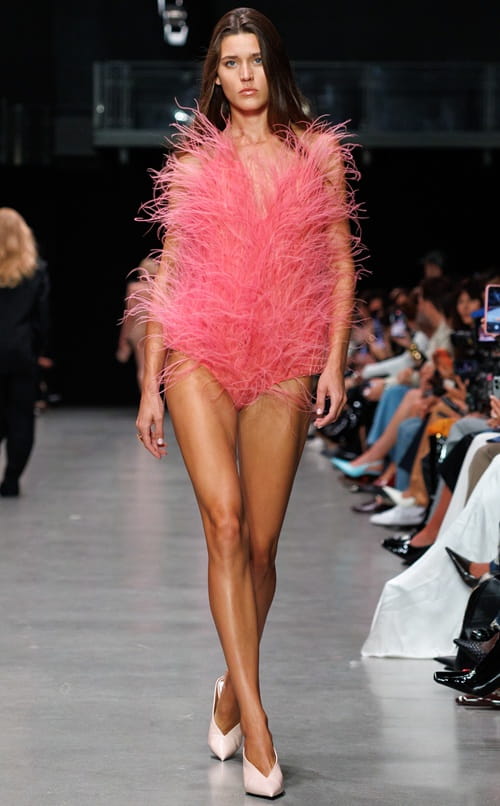
Are there cruelty-free alternatives to feathers?
Some fashion pioneers are proving designers can still achieve the movement and lightness of feathers without the cruelty.
- Stella McCartney launched her 2026 Spring/Summer collection featuring material innovation ‘FEVVERS’. This entirely plant-based material looks incredibly similar to ostrich feathers, achieving the same floaty, fluffy appearance without needless animal suffering.
- GANNI, H&M and ASOS have all put policies in place to ban ostrich feathers from their collections.
- Global Fashion Weeks including Copenhagen Fashion Week, Amsterdam Fashion Week, and Australian Fashion Week, have introduced wildlife-friendly policies that include a ban on ostrich feathers.
You can help protect ostriches from fashion cruelty.
The fashion industry must act now to leave animal exploitation in the past and instead choose wildlife-free materials.
We’re calling on fashion giants to choose a wildlife friendly future. You can take action for ostriches by telling Nordstrom to adopt a wildlife-friendly policy and stop selling feathers.
We envision a future where brands, retailers and fashion week events to adopt clear, time-bound policies to phase out ostrich feathers—and all wild animal materials—for good.
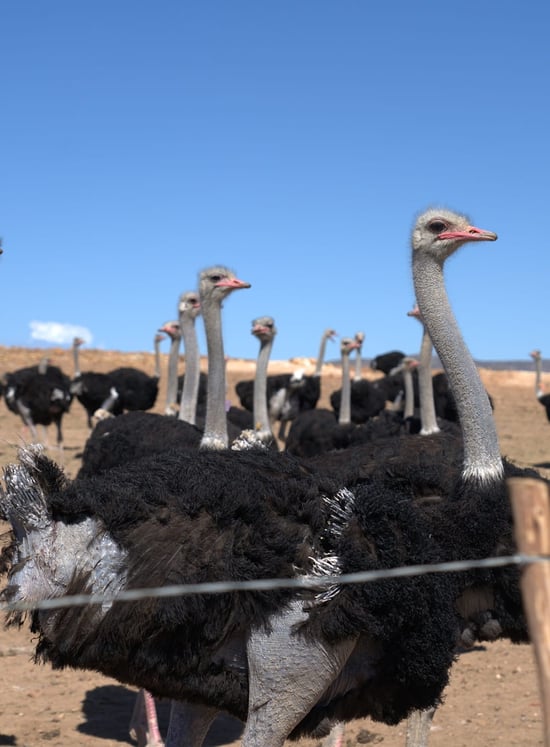

Take Action for Ostriches as Feathers Become Fashion's New Fur.
From feathers to leather to fur, millions of animals are farmed, hunted, and killed every year for the fashion industry.
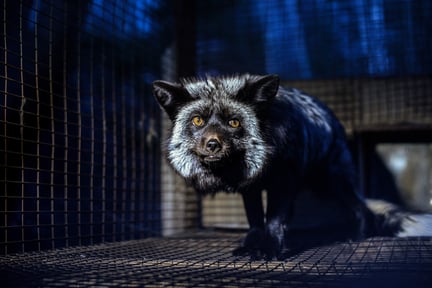
Cruelty Is Out of Fashion
Learn about the push to shift to only sustainable and animal-free clothing and accessories.