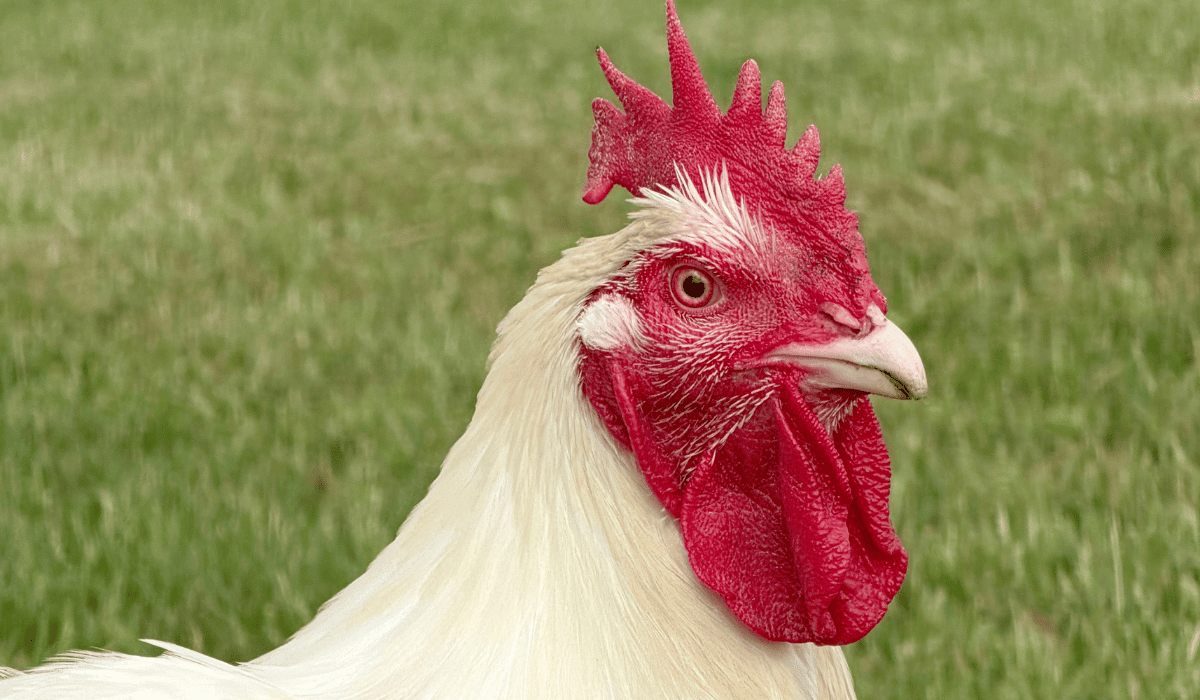
Dennis
Dennis was only five weeks old when he was shoved into a transport crate bound for slaughter. Still a baby, his tiny body had already been pushed beyond what nature ever intended through decades of human manipulation and selective breeding.
Cornish Cross chickens like Dennis are engineered to grow from fragile hatchlings into five-pound birds in just 42 days. Imagine the pain a body must endure growing at such an unnatural rate, bones struggling to support excessive weight, organs forced to keep pace with explosive growth, joints inflamed under the pressure of a life designed entirely around human consumption.
But Dennis was bred for more than rapid growth. Because these chickens are confined by the tens of thousands inside enormous industrial barns, they have also been selectively bred to be unusually docile. In systems where terrified animals are packed tightly together, the industry profits from passivity.
And so, despite everything humans have done to them, Cornish Cross chickens are often among the gentlest, sweetest animals you will ever meet. Dennis is no exception.
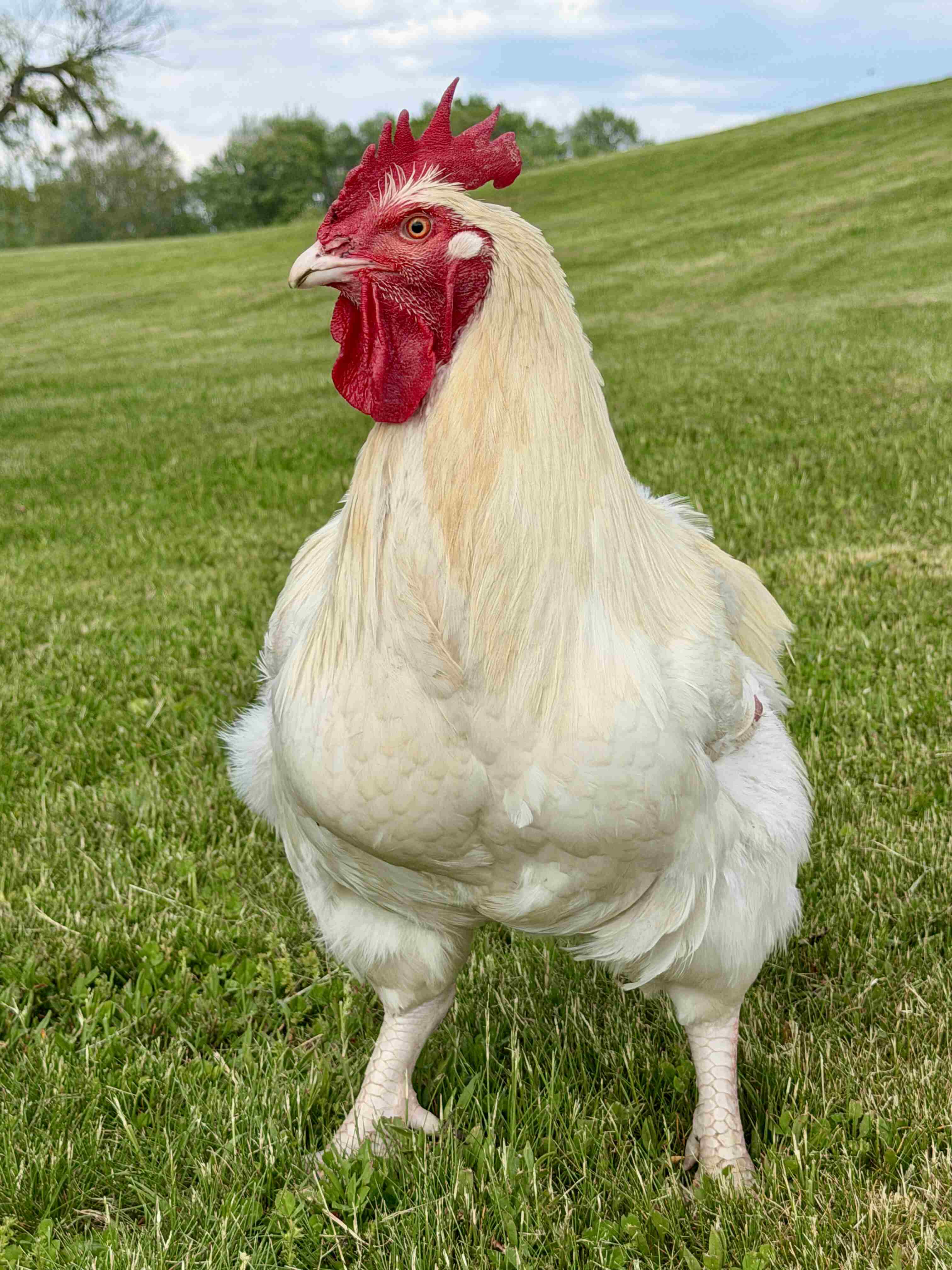
But Dennis never made it to the slaughter line. Before his transport truck reached its final destination, he was pulled from a crate and given a chance to live. Today, Dennis is four years old, an extraordinary age for a Cornish Cross chicken. Birds like him are never meant to survive long enough to grow old. Their bodies were designed for slaughter as babies, not for years of life, friendship, exploration, and peace. Yet with proper veterinary care, nutritious food, safe shelter, and the freedom to move naturally, chickens like Dennis can live long, joyful lives.
And Dennis has done exactly that. He is not a commodity. He is an individual. Dennis watches over his flock carefully, keeping an eye on the hens and other roosters to make sure everyone is safe. Unlike the common myth that roosters are naturally aggressive, many Cornish Cross roosters coexist peacefully because of their exceptionally gentle nature. Dennis moves through his flock with quiet confidence and kindness, respected by the birds around him and beloved by the humans who know him.
Even losing all of his toes to frostbite, a devastating consequence of the breed’s poor circulation and compromised bodies, has not diminished his spirit. He still walks proudly through the grass, balancing carefully, determined to participate fully in the life he fought so hard to have. Dennis stands tall among his flock, friend to all.
His story is heartbreaking because it reveals the unimaginable suffering built into the lives of billions of chickens that society rarely stops to see. But his story is also deeply hopeful. Dennis reminds us that these birds are not production units or food products. They are intelligent, emotional, social individuals who value comfort, safety, companionship, and life itself. Dennis was bred to die before he ever had the chance to truly live.
Instead, he became someone.