Wildlife Services Killed 2.8 Million Animals in 2025—and Dairy Is a Big Reason Why
Blog
New USDA data shows the federal government's wildlife-killing program got nearly 50 percent deadlier in a single year. Much of the increase traces straight back to the dairy industry.
At the end of September, the US Department of Agriculture (USDA) quietly posted its annual data on Wildlife Services, the little-known federal program that shoots, traps, and poisons wild animals across the country.
The numbers are staggering.
In fiscal year 2025, Wildlife Services killed 2,833,285 animals. That's over 900,000 more animals than the year before—an increase of nearly 47 percent—and it pushes the agency's death toll past 60 million animals since 2004.
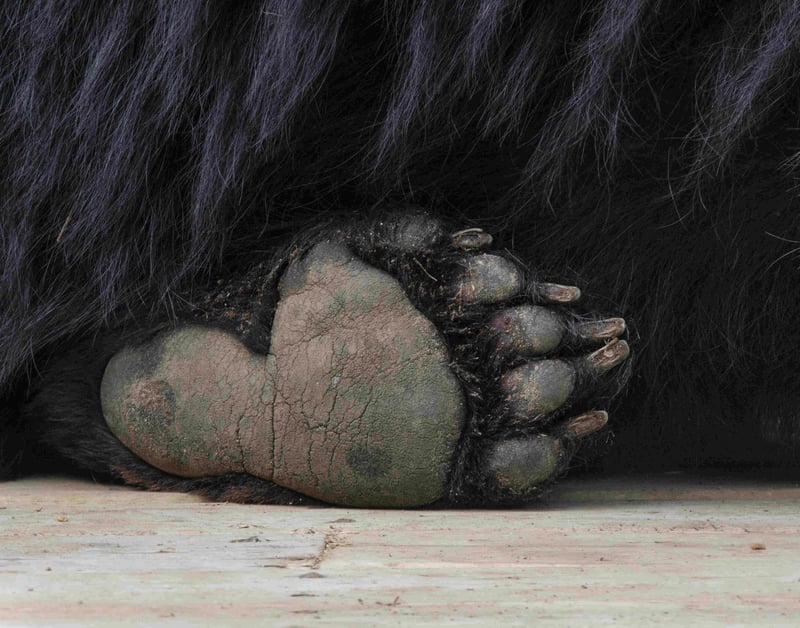
Behind every one of those numbers is an individual: a wolf, a bear, a fox, a hawk. And once again, the industry driving so much of this killing is animal agriculture.
What Is Wildlife Services?
Wildlife Services is a program within the USDA's Animal and Plant Health Inspection Service. It responds to requests from farmers, ranchers, businesses, and government agencies to deal with wild animals deemed a “problem.” In practice, that often means killing them—with aerial gunning, neck snares, steel-jaw traps, glue traps, cyanide bombs, and poison.
The agency openly lists protecting "livestock, row crops, aquaculture, and timber" among its core purposes. Wildlife Services functions as a taxpayer-funded arm of factory farming and other extractive industries, eliminating wild animals who get in the way of industry profits.
How Many Animals Did Wildlife Services Kill in 2025?
According to the agency's own Program Data Report G, Wildlife Services killed 2,833,285 animals in fiscal year 2025, up from 1,928,932 in 2024.
That's roughly 7,760 animals every single day.
The agency also destroyed 36,738 dens and burrows—the places where animals shelter and raise their young.
Why Did the Death Toll Spike? Look at the Dairy Industry.
The single biggest driver of the increase was the mass poisoning of European starlings. Wildlife Services killed 2,150,079 starlings in 2025—roughly three out of every four animals the agency killed all year.
The USDA doesn't hide why. In its own announcement, the agency explains that Nevada producers requested more poison treatments as concerns about highly pathogenic avian influenza (bird flu) rose, and that Wildlife Services ramped up efforts to protect dairy facilities from starlings to reduce bird flu's impact on milk production.
In other words: bird flu has been spreading through crowded US dairy operations since 2024, and rather than change how the industry raises cows to address risks, the government responded by poisoning wild birds by the millions.
The poison of choice is DRC-1339, which kills birds anywhere from three to 80 hours after they eat it by shutting down their heart and kidney function. It is a slow, painful death.
The dairy industry's disease risk problem became a death sentence for more than 2 million birds.
Who Else Did Wildlife Services Kill in 2025?
Starlings weren't the only victims. According to the agency's own data, Wildlife Services also killed:
- 61,383 coyotes, plus 220 coyote dens destroyed
- 23,422 beavers
- 12,109 black vultures
- 8,629 raccoons
- 4,046 prairie dogs, plus more than 29,000 prairie dog burrows destroyed
- 2,292 Virginia opossums
- 1,557 red-tailed hawks
- 1,314 red foxes and 896 gray foxes
- 651 river otters
- 526 bobcats
- 402 black bears
- 333 badgers
- 326 gray wolves
- 167 mountain lions
- 3 grizzly bears
- 3 endangered Mexican gray wolves
- 3 bald eagles
- 743 cats and 122 dogs
The agency even killed three cows—yes, the very animals it claims to be protecting—and a livestock guardian dog.
Wildlife Services also spread zinc phosphide, a rodent poison, on more than 7,500 acres of oats and wheat to kill burrowing animals.
The "Unintentional" Victims
Wildlife Services boasts that its methods are "highly selective." Yet by its own count, the agency "unintentionally" killed 2,246 native animals in 2025—animals who weren't even the target.
Those "accidents" included 518 river otters, 464 raccoons, 239 snapping turtles, 117 coyotes, 11 black bears, three mountain lions, two gray wolves, and three bald eagles—the national bird.
And those are only the deaths that were reported. Former Wildlife Services employee Gary Strader once found a federally protected golden eagle strangled in one of the agency's neck snares. His supervisor's response? Bury the eagle and tell no one.
Indiscriminate traps and poisons don't check what species they've caught. Every snare and every poisoned bait is a death sentence for whoever finds it first.
How Much of Your Tax Money Funds Wildlife Services?
In 2025, Wildlife Services received about $138.3 million in taxpayer money from Congress. On top of that, it collected nearly $124.5 million from "cooperators," a list that includes animal farm producers and agricultural producer groups. All told, that's a budget of roughly $263 million.
Nearly a third of that money—32.99 percent—went directly to protecting agriculture.
This is the system in plain terms: Industry pays a federal agency to kill wild animals on its behalf, and taxpayers cover the rest of the bill.
Don't Fall for the Spin
The USDA's announcement works hard to make these numbers sound reasonable. Here's what it leaves out.
"Most animals were dispersed unharmed." The agency says it scared off nearly 90 percent of the animals it encountered without hurting them. That's proof that nonlethal methods work. So why did it still kill 2.8 million animals?
"Most were invasive species." Wildlife Services points out that 86.7 percent of the animals it killed were classified as invasive, but starlings are only here because people brought them here, and labeling an animal "invasive" doesn't make poisoning them any less cruel. The agency even counts cats and dogs in this category.
The USDA also brushes off the 375,616 native animals it killed as "only 13.3 percent." That's more than 1,000 native wild animals killed every day.
"We donate the meat." The agency notes it donated more than 175 tons of meat from animals it killed. Repackaging killing as charity doesn't change what happened to those animals.
Why Ditching Meat and Dairy Helps Wild Animals, Too
The connection couldn't be clearer. Wolves and coyotes are shot to protect cattle and sheep grazing on public land. Prairie dogs are poisoned out of the grasslands. And this year, more than 2 million birds were poisoned to protect factory farming from a risk exacerbated by its own systems, rather than invest in sustainable solutions.
When you reduce or eliminate meat, dairy, and eggs from your life, you're helping to disrupt a system that relies on exploiting farmed animals, attacking wildlife, and depleting resources to keep increasing profits at all costs.
As long as we fund and support factory farming, Wildlife Services will keep killing on its behalf. A largely plant-based food system means coexistence, not conflict.
Want to Help Protect Wildlife? Start With Your Plate.
By eating more plant-based foods, you're not just sparing farmed animals. You're standing up for the wolves, coyotes, foxes, and birds, too.
Ready to get started? Explore tips, tricks, and recipes, and support on your plant-based journey!