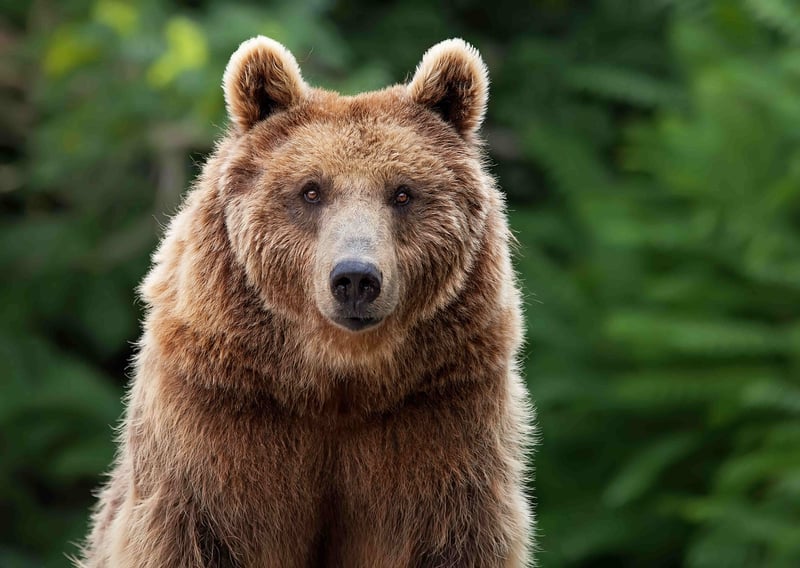
A new federal rule lets trophy hunters lure bears with donuts and shoot them on Alaska’s national preserves.
This summer, I spent nearly two weeks traveling the Alaskan coast, and I came home with my fight for animals renewed. The lesson that stayed with me was a simple one: wild animals don't owe us an appearance.
I spent an entire boat excursion searching for orca and never saw a single fin. A week later, a pod cut through the channel in front of us, completely on their own schedule, headed wherever they had decided to go. Every captain I sailed with throttled down or changed course the second an animal surfaced. The animals set the terms. We adjusted.
That's what respect for wild animals looks like, and it's the exact opposite of what the federal government just signed off on for Alaska's bears.
Bear Baiting Is an Ambush, Not a Hunt
On October 16, the National Park Service finalized a rule that once again allows sport hunters to bait bears on Alaska's national preserves. In plain terms, trophy hunters can now lure bears with donuts and shoot them on some of the most protected wild lands in the country.
Here's how it works: A hunter dumps a pile of human food, such as donuts, bacon grease, meat scraps, or dog food, and keeps restocking it. Black and brown bears find the pile and learn that this spot means an easy meal. Once a bear is reliably coming back, the hunter waits nearby and shoots from close range. Some of the foods used as bait are toxic to the very wildlife eating them.
Bear baiting turns a wild animal's most basic drive, the need to eat, into a trap. The new allowance applies only to sport hunting, which means the prize is a trophy: a head, a hide, a photo to post. That isn't wildlife management. It's cruelty for entertainment.
A Danger to Bears and People Alike
Bears who learn to link people with food don't unlearn it. The Park Service knows this. Just two years ago, the agency prohibited bear baiting on these same preserves because conditioning bears to human-provided food makes dangerous encounters with people more likely. A 2024 peer-reviewed study involving Park Service biologists found that bears guarding bait sites pose a moderate-to-high risk of injuring or killing visitors.
When bears grow bold around people, it's usually the bears who pay for it. Animals who lose their wariness are far more likely to end up labeled as a "problem" and killed.
The scale makes this even worse. Alaska's national preserves span roughly 22 million acres, and the government's own proposal admitted that neither federal nor state officials kept count of how many bears were killed over bait the last time it was allowed. Millions of acres are being reopened to a practice whose toll no one has even measured.
Bears Are Worth More Alive
What struck me most in Alaska was how clearly the whole region understood the value of living animals. Tourism there is built around seeing wildlife thriving in their own habitat, and it pays. Visitors to Alaska's national parks spent $1.5 billion in the state in 2023, supporting more than 21,000 jobs. People travel from every corner of the world to watch brown bears fish for salmon at Katmai or wander the open tundra at Denali.
Help Keep Wild Animals Wild
World Animal Protection works to end the exploitation of wild animals, whether they're confined in a tank for entertainment or lured into rifle range for a trophy. Alaska showed me what's possible when wild animals are left to live on their own terms. Bear baiting drags us backward.
Donate today to help us protect wild animals and keep fighting for a future where they're valued alive, free, and undisturbed.