Preventing the Next Pandemic Requires Protecting Animals and Our Planet
Blog
Our future and the welfare of people depend on the ability of animals and our planet to thrive.
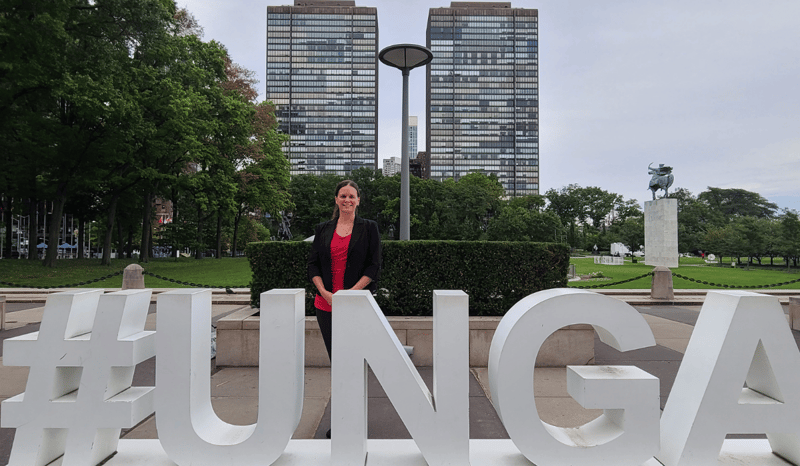
Governments around the world gathered at the United Nations in New York City to discuss global pandemic prevention, preparedness, and response (PPPR). This was only the second United Nations General Assembly High-level Meeting (HLM) on PPPR, and the first since the adoption of the historic WHO Pandemic Agreement last year.
One of the most important aspects of the Pandemic Agreement is its inclusion of One Health—a recognition that human, animal, and environmental health are interconnected. Our future and the welfare of people depend on the ability of animals and our planet to thrive.
Thankfully, following our collective engagement and pressure, One Health is now becoming more mainstream. It featured prominently in remarks at the HLM as countries and other global leaders renewed their commitments for pandemic prevention, preparedness, and response. Although the great majority of countries were supportive, the Political Declaration was unfortunately not adopted during the meeting. But the discussions throughout the day showed positive steps towards preventing a future world health crisis.
Critically, countries recognized that pandemics are not a human health issue alone but an issue that requires a One Health approach to be effective. They recognized that diseases don’t respect borders, and we must share lessons learned and work together to prevent future outbreaks. The Declaration contains some key elements, including the importance of applying a One Health approach to pandemics, and we hope that it will be adopted through the General Assembly later this year. However, the Declaration is not the end goal. More progress is needed on implementation—the actions that will lead to real change.
Preventing pandemics starts long before outbreaks occur
We already know the activities that increase the risk of pandemics. These include destroying natural habitats, exploiting wild animals, losing biodiversity, changing how land is used, and using intensive farming methods. These have been articulated in reports by UNEP/ILRI, IPBES, the One Health High Level Expert Panel, and others. By focusing on prevention and addressing these drivers, we can help stop pandemics at their source.
Many refer to the triple planetary crisis of biodiversity loss, climate change, and pollution. Pandemic prevention can be a triple planetary win—benefiting animals, humans, and the environment. Improving how we treat animals provides co-benefits for biodiversity protection and climate change mitigation. Human activities don’t just damage ecosystems; they create the perfect storm for viruses to jump from animals to humans. The more humans encroach on natural habitats, commercially trade wildlife, and intensify farming, the more we create situations where pathogens can jump from animals to humans— increasing the chances of new pandemics. It is therefore essential that global powers consider these drivers as they debate important global issues.
Prevention is more than surveillance. Improving integrated surveillance is important, but it is insufficient on its own to prevent pandemics. Surveillance cannot always fully identify new pathogens, detect asymptomatic animals, or prevent pathogen mutation and emergence. This is why pandemic prevention needs to expand beyond detecting diseases once they have emerged. The proper application of One Health includes improving animal health and welfare. This must be more prominent in our global plans to have meaningful action to prevent the next pandemic.
A focus on supporting prevention also supports equity and social benefits by ensuring that people living in vulnerable situations, especially those most exposed to pathogens of spillover potential, are supported and better able to protect themselves and their animals from disease outbreaks. Local communities are essential partners in One Health strategies. Their intimate knowledge of local ecosystems, animal behavior, cultural insights, and environmental changes is crucial for identifying and mitigating zoonotic spillover risks. Often, local communities are the first to observe unusual events or disease outbreaks before they are reported through official channels.
Now is the time to leverage this knowledge and take action. We need to implement the Pandemic Agreement, the One Health Joint Plan of Action, and other strategies with an emphasis on preventing pandemics at their source.
Animals play a critical role in preventing pandemics
Most emerging infectious diseases originate in animals and then spill over to people. There are, unfortunately, already too many examples of this—avian influenza, hantavirus, and Ebola are just some of the diseases that have captured global headlines so far this year alone. Healthy animals help regulate disease. But animals in poor environments, on poor diets, or in other stressful conditions are more susceptible to illness. These poor conditions weaken an animal’s immune system and allow diseases to emerge, mutate, and spread to other animals and to people. Poor animal welfare should be specifically recognized and addressed as one of the drivers of pandemics.
Implementing pandemic prevention through a One Health approach means turning these Declarations and Agreements into on-the-ground action. Aiming these actions at the connections between people, animals, and our planet is key if we are to prevent another global health crisis. Countries must address key pandemic drivers at the human-animal-environment interface, such as wildlife exploitation and trade, intensive farming, biodiversity loss, and habitat destruction, in order for action to be effective.
Millions of animals have already been affected—impacting not only their health and well-being but also human health and well-being, food security, and livelihoods. It’s a stark reminder that pandemics don’t begin in hospitals. They begin in forests, on farms, and in markets. Animal protection is pandemic prevention. To be truly effective, we must consider the role of animals not just as disease hosts, but animals as partners in prevention. We cannot keep doing the same things and expecting different results. Ultimately, pandemic prevention is about changing how we live, farm, and interact with the environment. When we protect animals, we also protect ourselves and the planet.
This blog was authored by Heather Brown, External Affairs Manager at World Animal Protection.