Florida Tightens Manta Ray Capture Rules, But a Full Ban Remains Out of Reach
Blog
Florida said it would protect manta rays. Here’s why advocates say it’s not enough.
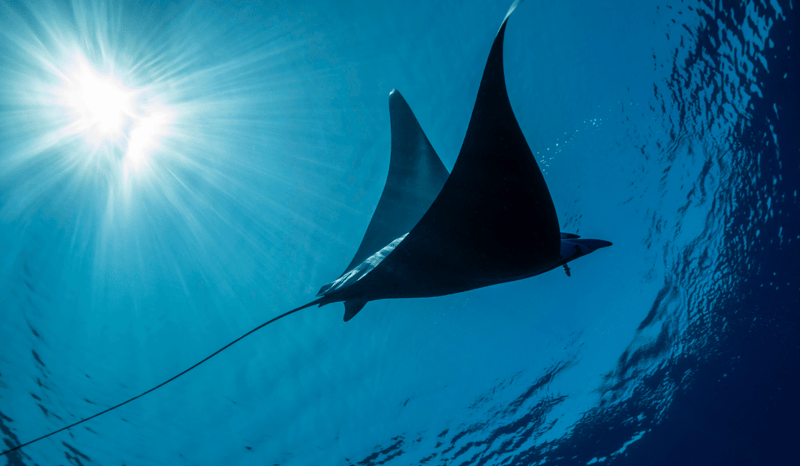
Last summer, a video went viral that many animal lovers found impossible to forget. Filmed off the coast of Panama City Beach, it showed five men hauling a massive, panicking giant manta ray from the Gulf waters into an unmarked boat, before depositing her into what one observer described as a kiddie pool. The captured ray was destined for a permanent exhibit at SeaWorld Abu Dhabi. Her species is federally recognized as threatened, but her capture was entirely legal at the time.
Now, nearly a year later, Florida has finally taken action, though not the sweeping action that conservationists and a bipartisan coalition of lawmakers had hoped for.
What Florida Authorities Actually Decided
On May 14, 2026, the Florida Fish and Wildlife Conservation Commission (FWC) voted to adopt new rules governing the capture of giant manta rays. The commission acknowledged that the existing permitting framework was “broken” and passed two significant changes, effective July 1, 2026.
International exports are now banned. Florida will no longer permit the shipment of giant manta rays—or any federally threatened or endangered marine species captured for exhibition—to facilities outside the United States. The commission cited new obligations under CITES (the Convention on International Trade in Endangered Species) as making such exports “almost impossible” in any case.
Capture limits have been dramatically reduced. Where up to three manta rays could previously be taken per year under a special permit, the new rules allow just one every two years. Crucially, future permits will no longer be rubber-stamped administratively—they must come before the full commission for a public hearing and case-by-case approval.
Why This Matters—And Why It’s Not Enough
The rule changes represent a meaningful shift. Florida remains the only state in the country that permits the capture of giant manta rays at all, and the commission has now acknowledged, publicly and on the record, that the prior system was broken. That acknowledgment matters.
But a complete ban—the outcome that dozens of lawmakers, conservation advocates, and members of the public called for—did not materialize.
A bipartisan group that included US Rep. Brian Mast, state Senators Don Gaetz, Ileana Garcia, and Jason Pizzo, and more than a dozen state representatives had written to the FWC urging it to fully prohibit the capture of manta rays and other federally threatened or endangered marine life for exhibition or educational purposes. The letter came amid a parallel push in the Florida Legislature: the MANTA Protection Act, sponsored by Rep. Lindsay Cross, would have banned the collection and transport of the species statewide. Both the House and Senate versions failed to pass during the 2026 legislative session.
As Rep. Cross put it when introducing the legislation: “This female giant manta ray will live the rest of her life in a tank and doesn't get to experience the gift of being a wild animal.”
The Full Story: Three Rays, One Death, and a Loophole
The viral video from last July was disturbing on its own, but subsequent reporting made the picture even darker. Records obtained by The Orlando Sentinel revealed that the same aquarium supplier, Dynasty Marine Associates, had actually caught two additional manta rays for SeaWorld Abu Dhabi in 2023. One of those rays died—euthanized because of declining health while being held in a tank in the Florida Keys. The Tampa Bay Times further reported that 75 percent of the 25 special activity licenses issued for manta rays since 2019 went to international aquariums.
Read together, these facts reveal something important: this wasn’t an isolated incident. It was a pattern, enabled by a loophole in Florida law that allowed facilities to apply for special activity licenses to capture protected animals under the banner of “education” or “exhibition”—even when those animals were destined for entertainment venues overseas.
SeaWorld has a long history of exploiting marine animals for profit, from the violent capture of Southern Resident orcas—a population now teetering on the brink of extinction—to the confinement of Tilikum, who spent more than 30 years swimming in circles in tanks before dying in 2017. SeaWorld Abu Dhabi opened in 2023 as the first SeaWorld park outside the United States and the first park without orcas. The manta rays were to be among its centerpiece animals.
Captivity Is Not Conservation
Defenders of manta ray capture often frame it in conservation terms: captive rays, they argue, increase public awareness and enable long-term scientific study impossible in the wild, but this framing conflates display with protection.
Giant manta rays are highly intelligent, slow to reproduce, and sensitive to their environment. They travel hundreds of miles in a single journey. They are already under profound pressure from climate change, pollution, and overfishing. No tank—regardless of size or technological sophistication—can replicate the open ocean. Removing even one breeding-age female from a fragile wild population is not conservation. It is extraction.
True conservation means protecting habitats, reducing threats, and allowing animals to live freely. It does not mean removing them from the wild and placing them behind glass so that paying customers can watch them swim in circles.
What Comes Next
The FWC’s new rules are a start, not an end. The commission has acknowledged that the prior system was broken. Bipartisan lawmakers have gone on record calling for stronger protections. The public has spoken loudly and clearly: Florida’s threatened marine wildlife should be conserved, not removed from the wild to supply entertainment markets.
The MANTA Protection Act may have failed in this legislative session, but the conversation is not over. The rule changes that just passed, while incomplete, demonstrate that public pressure and persistent advocacy can shift policy. The work now is to keep pushing for a full ban on the capture of threatened and endangered marine species in Florida waters for any exhibition or entertainment purpose.
We cannot undo what happened to that manta ray, but we can make sure she is one of the last.
Support This Work
Stories like this one don’t end with a rule change. Wild animals need advocates who will keep showing up—in statehouses, at wildlife commission meetings, and in the court of public opinion—until the laws actually match our values.
Donate to World Animal Protection today to support our work ending wildlife exploitation and keeping wild animals where they belong: in the wild.