A new Yale study just linked factory farms to higher cancer rates. The findings should alarm all of us.
A new study from Yale University has found that people living near factory farms face significantly elevated cancer rates, adding to a growing body of evidence that factory farming is not just an animal protection crisis, but a public health one.
What the Study Found
Researchers at Yale analyzed county-level cancer data from 2000 to 2021 in Iowa, California, and Texas, comparing areas with high densities of factory farms (or concentrated animal feeding operations—CAFOs) to similar counties with few or none. According to the study, cancer rates were 4% higher in California and 8% higher in both Iowa and Texas in counties with more industrial animal agriculture. Researchers found positive associations between CAFO density and nearly all cancer types studied.
Iowa’s numbers are especially striking. The state already has the second-highest and fastest-rising cancer rate in the US. Iowa oncologist Dr. Richard Deming said the Yale findings align with what he’s already seeing in an interview with Sentient Media:
“When you know the relationship between CAFOs and nitrates that get into the water, it doesn’t surprise me that it’s another study that supports the data.”
How Factory Farms Pollute Communities
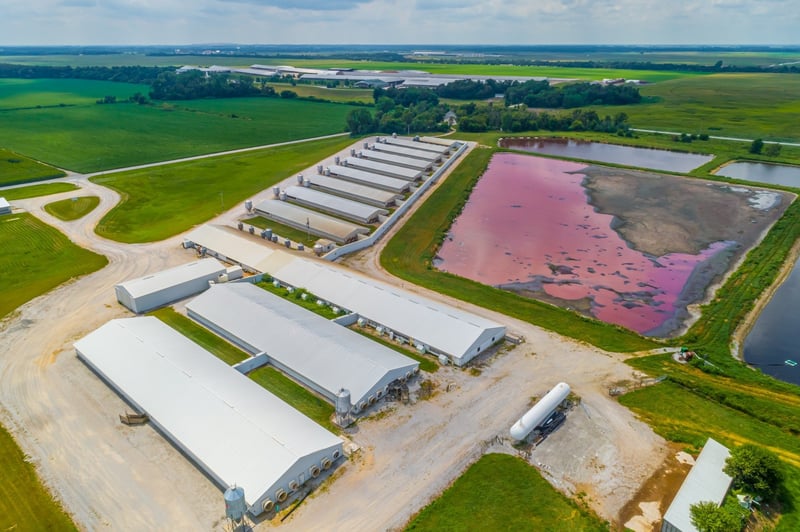
Iowa’s pig factory farms alone produce an estimated 110 billion pounds of manure each year—at least 100 times the fecal waste of Iowa’s entire human population, with nearly all of those pigs raised in factory farms. That waste is stored in outdoor lagoons that release ammonia, hydrogen sulfide, and fine particulate matter into the air, while runoff carries nitrates and pathogens into local water supplies.
Despite these documented risks, as of 2024, fewer than one-third of the nation’s factory farms held the EPA permits required to regulate their water pollution. The majority of factory farms face little to no federal oversight.
Epidemiologist Dr. Naman Shah of the LA County Department of Public Health told Sentient Media:
“The more and more we learn about the health impacts of these businesses, we need a change in regulatory code that really centers the public health responsibility—compared to where it’s traditionally been with the Department of Agriculture, which has just a very different mandate, including promotion of the industry.”
The Bigger Picture
Factory farming harms far more than the animals trapped inside. As documented in World Animal Protection’s report on the hidden health impacts of industrial livestock systems, the consequences ripple out to workers, nearby communities, and broader public health. Nearly 99 percent of farmed animals in the US are raised in these conditions—confined, stressed, and denied every natural behavior—and factory farms are concentrated heavily in lower-income rural communities that already have less access to healthcare.
The animals and the communities living next to these facilities need our help. Donate to World Animal Protection US today to help stop factory farming.