After Years of Suffering, Two Dancing Monkeys Take Their First Steps Into Freedom
Blog
Two monkeys were forced to perform tricks for tourists. After years of suffering, they finally took their first steps into freedom.
For Jono and Unyil, April 21st, 2026 was the day everything changed.
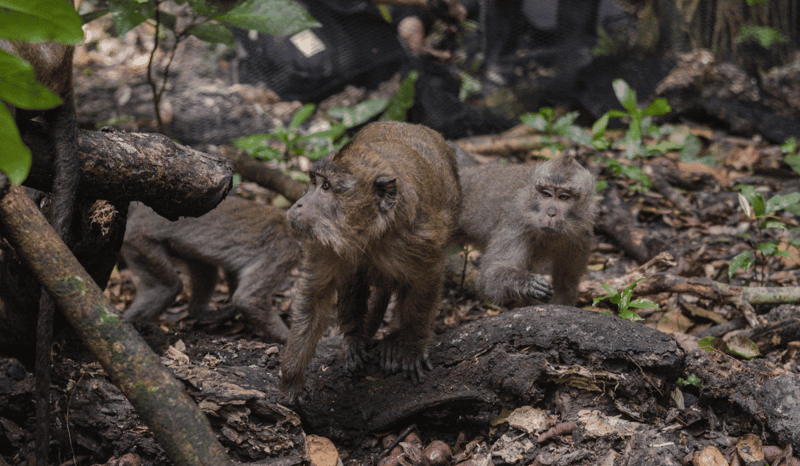
The two long-tailed macaques—one seven years old, one just three—stepped out of their transport crates and into a dense tropical forest on Nasu Burang, a protected island approximately 25 miles off the coast of Java, Indonesia. For Jono, there was no hesitation. He disappeared into the trees almost immediately, as if he had always known where he belonged. Unyil was more cautious, pausing to look around, to inspect his new world carefully, and then to take one last look back at his rescuers before climbing into the canopy.
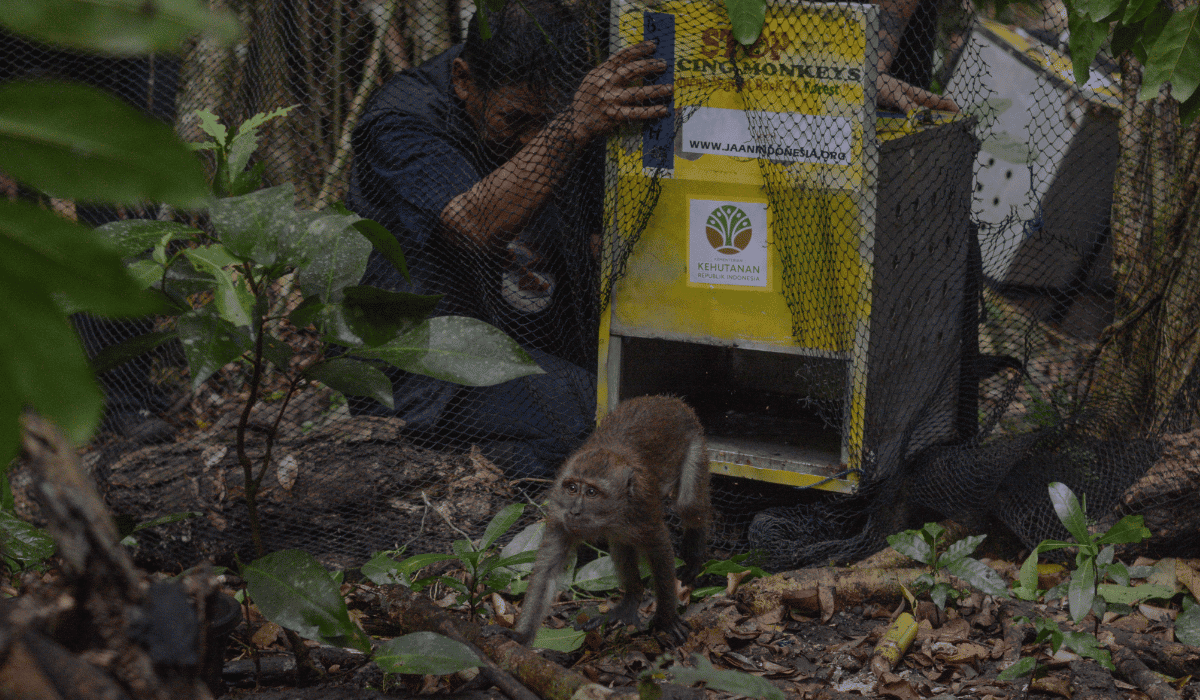
They were free.
These two monkeys are among 46 long-tailed macaques rescued by our partner Jakarta Animal Aid Network (JAAN), with support from World Animal Protection, from Indonesia’s last remaining dancing monkey training center in Cirebon. They are now living wild on a protected island sanctuary.
What They Survived
Before they were rescued, Jono and Unyil had known only suffering.
Jono spent years being forced to walk on stilts—one of the most painful tricks a macaque can be made to perform—as well as ride bikes and push a wooden barrel for the entertainment of tourists and shoppers on Indonesian streets. Like many monkeys exploited for tricks, his teeth were clipped, leaving him with painful dental problems that eventually spread into a serious infection in his nasal passage and ear canal.
Unyi’s story begins even more heartbreakingly. He was stolen from his mother as a baby. During his capture, she was killed. He was then forced into captivity and made to stand upright, wear clothes, hold a bucket to beg for money, and perform tricks, including walking on stilts, playing dead, and assuming prayer positions. He arrived at the rehabilitation center after 14 months of forced performances—underweight, terrified, screaming every time he saw a person.
When they weren’t performing, the two monkeys were chained to poles or confined in small, dark boxes. They could see each other but could not interact or offer comfort to one another.
The Road to Release
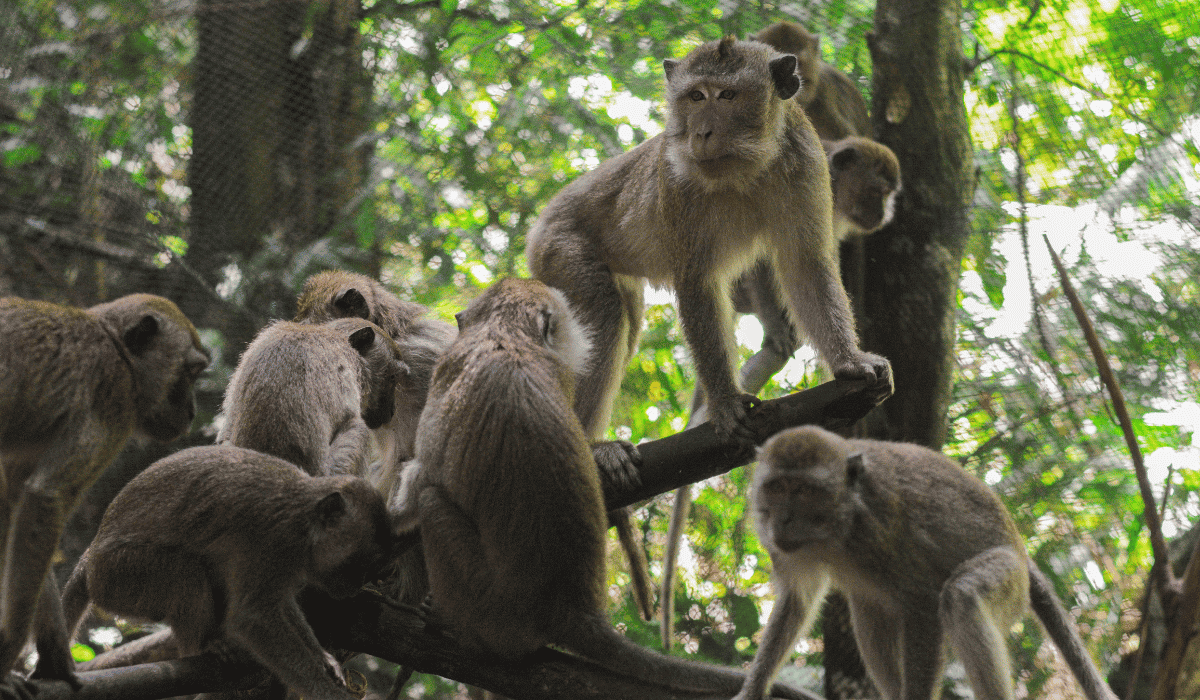
Following their rescue in October 2024, Jono, Unyil, and their fellow macaques spent 18 months at JAAN’s rehabilitation center. There, they received medical care, learned how to forage and survive in the wild, and—slowly—began to heal.
Jono turned out to be calm and curious, with an absolute love of food, especially bananas and mango. Unyil, once terrified of people, transformed into a social and mischievous macaque who bonded with his new companions and developed a fondness for watermelon.
Getting the 46 monkeys to their new home was no small feat. A dedicated rescue team transported the animals by small boat to Nasu Burang—an island chosen in partnership with the Indonesian Government for its tropical forests, coastal forests, and mangroves, and for having no human settlements. They then carried each crate on their backs through nearly two and a half miles of dense jungle to reach the release site.

The monkeys were first placed in a temporary habituation enclosure—a natural area covered with netting—to help them acclimatize gradually. JAAN’s researchers closely monitored them, ensuring they could find food on their own. Once settled, they gained access to the rest of the island.
A Step Forward, But the Work Isn’t Done
The closure of the Cirebon training center is a genuine milestone. This was Indonesia’s last remaining dancing monkey training center, and its dismantlement was made possible through years of collaboration between JAAN, World Animal Protection, and local authorities.
As Dr. Jan Schmidt-Burbach, World Animal Protection’s Director of Wildlife Research and Veterinary Expertise, said:
“Our partners Jakarta Animal Aid Network and local authorities have made great progress in stamping out the dancing monkey trade across much of Indonesia over the last 15 years.”
But the exploitation of monkeys for entertainment continues beyond Indonesia’s borders. Macaques are still widely used for tourism across Southeast Asia and beyond—forced to perform, kept in inhumane conditions, and separated from their families. We look forward to the day we can celebrate a nationwide ban on dancing monkeys, and beyond that, a global one.
For now, Jono is hanging out with other monkeys in his new group. Unyil is eating fruit he found in the jungle. They are living the lives they were always meant to live.
Jono and Unyil are free, but thousands of monkeys like them are still suffering. Please donate today to help us rescue more animals from exploitation and give them the wild life they deserve.
All images courtesy of Jakarta Animal Aid Network.