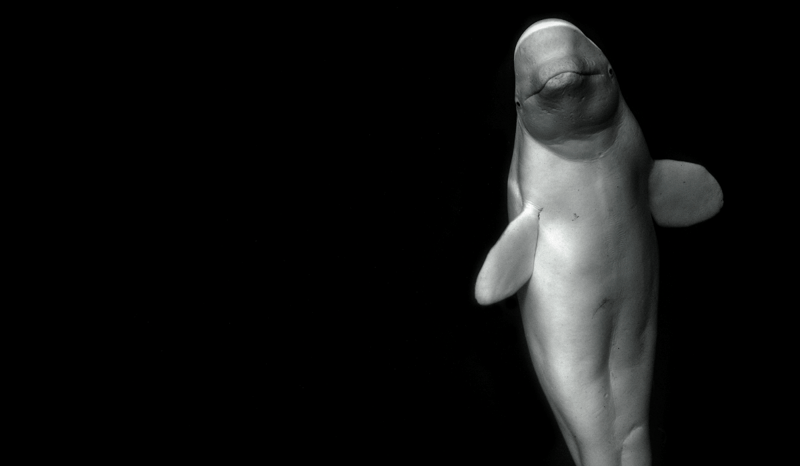
Three belugas, two transferred from Marineland and one impacted by the transfer, have died at Shedd Aquarium.
In early September, Shedd Aquarium in Chicago announced that two more beluga whales in its care have died: Rain, a 20-year-old cetacean who had been at the aquarium for less than a month, and Beethoven, a 34-year-old longtime resident who fathered a calf there in 2024. Their deaths come just eight days after Peekachu, another recently arrived beluga, died suddenly. That's three belugas dead in under two weeks—two of them, Rain and Peekachu, newly transferred from Marineland, and the third, Beethoven, a longtime member of Shedd's resident pod.
Shedd says it doesn't yet know whether these deaths are connected. Necropsies are underway, but we don't need a necropsy to tell us what's actually going on here because we've seen this story before.
A Relocation, Not a “Rescue”
Marineland closed to the public in 2024 after years of documented animal welfare violations, a dwindling paying customer base, and a beluga population that had been dying at an alarming rate—19 belugas and one orca, Kiska, died there between 2019 and 2025. When the park couldn't find a way to unload its remaining 30 belugas (a plan to ship them to China was blocked by Canadian regulators, at which point Marineland threatened to euthanize them instead), five aquariums in the US and Spain stepped in to divide them up. Shedd alone agreed to take 10.
It was framed as a rescue. Nobody wanted to see 30 whales killed because a defunct theme park ran out of money to keep them. But moving a beluga from one concrete tank to another was never going to be a rescue in any real sense. It was damage control for a crisis that Marineland and the Canadian government allowed to happen in the first place, and it came with the same risks that captivity always carries: the risks of transport itself, and the risks of asking an animal that has already endured a lifetime of deprivation to adapt, yet again, to an unfamiliar tank, an unfamiliar pod, and unfamiliar handlers.
This isn't hypothetical. In 2021, five belugas were moved from Marineland to Mystic Aquarium in Connecticut. Three of them died. Animal Justice, the Canadian organization that has tracked Marineland for years, warned before this latest round of transfers that the process was being rushed—and specifically asked for independent health assessments of the remaining whales after Peekachu's death. That request was denied. The transfers continued. Two more belugas are now dead.
The Location Wasn’t the Only Problem
It's worth being precise about what happened here, because the framing matters. These weren't whales who died because Marineland or Shedd are uniquely bad facilities. Shedd has invested heavily in its beluga program and by industry standards is considered a strong operator. That's exactly the point: even a well-resourced, well-regarded aquarium cannot give a beluga what a beluga actually needs. These are animals built to travel dozens of miles a day through open, cold ocean water, in family pods that persist for decades. No tank—not Marineland's, not Shedd's, not anyone's—replicates that. Captivity is the constant. The mortality that follows it is not a coincidence of geography.
Cameron Harsh, Interim Executive Director at World Animal Protection US, put it plainly:
With the tragic deaths of Rain and Peekachu, two belugas have now died after being transferred out of Marineland since the venue’s closure. Transferring these whales from one captive facility to another does not address the fundamental problem: belugas do not thrive in captivity, and they do not exist for entertaining tourists.
The scramble to place animals formerly captive at Marineland and the deaths that have resulted underscore the urgent need to end the exploitation of marine mammals for entertainment forever. We should instead invest in seaside sanctuaries where currently captive cetaceans can live out their lives in the best possible environment. Let's make this the last generation of captive whales and dolphins.
What Needs to Happen Next
Seaside sanctuaries—netted-off coastal coves where cetaceans can live in natural seawater, natural currents, and natural conditions without being asked to perform—already exist as a model, and they are the direction this entire industry needs to move in. Not another transfer agreement, and not another "best available option" between one tank and the next. A real exit ramp from captivity altogether.
Marineland's remaining belugas have now all left the park. Let this be the last generation of whales and dolphins born into, or shuffled between, a life in a tank.