America’s Bloodiest Export: How US Trophy Hunters Are Pushing African Elephants Toward the Brink
Blog
A new report reveals the Trump administration issued over 300 elephant trophy import permits in 2025, and wealthy American hunters are the driving force behind Africa’s elephant crisis.
When Donald Trump called trophy hunting a “horror show” during his first term, many animal advocates dared to hope, but hope has a short shelf life in Washington. A new report released by the Center for Biological Diversity lays bare a deeply alarming reversal, and it has American fingerprints all over it.
In 2025 alone, the Trump administration’s US Fish and Wildlife Service issued more than 300 elephant trophy import permits—nearly three times the 114 imported during all of 2018. Thanks to a permitting spree that began in mid-February 2025, before a new agency director was even in place, the floodgates are open wider than they’ve been in years.
American Trophy Hunters Are Fueling Africa’s Elephant Crisis
The United States is the engine driving the global trophy hunting industry, and wealthy Americans are its primary consumers. According to an IFAW analysis of CITES trade data, the US accounts for 71 percent of global trophy import demand—about 15 times that of the next-highest importing nation. As we’ve documented at World Animal Protection, in 2015, more than 50 percent of all canned-hunted lions in South Africa were killed by Americans. Between 2005 and 2014, over 1.26 million wildlife trophies were imported to the US—roughly 126,000 animals per year. Cecil the Lion? Killed by an American. The demand for elephant tusks, lion skulls, and leopard skins as macabre status symbols? Overwhelmingly American.
And the numbers keep climbing. The permitting data obtained via FOIA shows that permits were being issued to American hunters across six African nations—Botswana, Namibia, South Africa, Tanzania, Zambia, and Zimbabwe. This isn’t a distant, abstract policy debate. This is a slaughter subsidized by American wealth and enabled by American bureaucracy. A 2022 survey found that 76 percent of Americans oppose trophy hunting, yet the administration is charging ahead anyway.
Only 50 Super-Tuskers Remain—And Trophy Hunters Are Targeting Them
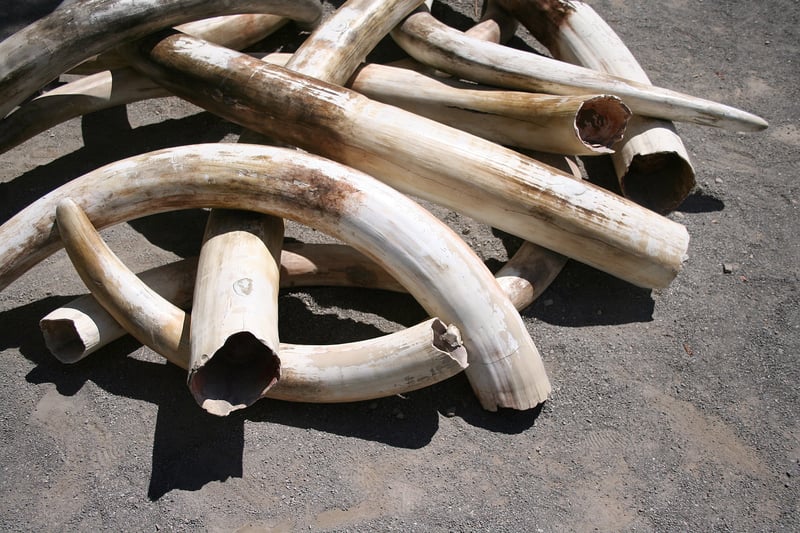
The most heartbreaking revelation in the elephant trophy report involves Africa’s legendary “super-tuskers”—males with tusks weighing 100 pounds or more. Scientists estimate only around 50 remain in all of Africa. These animals are irreplaceable genetic treasures; they pass on the trait for extraordinary tusks to future generations. Losing them doesn't just remove one elephant—it forecloses an entire lineage.
In 2024, at least five males from the Greater Amboseli-West Kilimanjaro population—the longest-studied elephant group on Earth, protected since 1994—were killed for sport in Tanzania. Up to 25 mature bulls from this group now routinely enter active trophy hunting territory. The Center for Biological Diversity has petitioned the US Fish and Wildlife Service to ban imports from this population entirely.
Meanwhile, 219 of the 2025 permits came from Botswana alone. The country’s annual quota allows hunting of over 400 elephants, but local scientists warn the safe limit is around 280. By targeting the largest, oldest males, trophy hunters disrupt family groups and social stability, skew sex ratios, and drive a measurable decline in genetic diversity across entire populations. Research published in Conservation Biology confirms that selective hunting of dominant males creates lasting demographic damage across species.
Dismantling the Last Legal Safeguards on Trophy Hunting
Under the Endangered Species Act, the US government must conduct rigorous scientific review before issuing permits to import elephant trophies. These enhancements and non-detriment findings represent one of the last meaningful checks on the trophy hunting trade. Now, Safari Club International is lobbying the Trump administration to eliminate these ESA requirements entirely for threatened elephants, African lions, and Argali sheep. Strip away those protections, and there is nothing left standing between America's wealthiest hunters and the animals they want to kill.
This is what it looks like when a well-funded lobbying organization writes wildlife policy.
The conservation argument was always a myth. As we’ve documented, very little trophy hunting revenue reaches local communities or conservation programs. A 2019 study found that 40 percent of big game zones in Zambia and 72 percent in Tanzania are now classified as depleted—hunted out by the very industry that claimed to protect them. The animals targeted aren’t surplus—they are the largest, oldest, most reproductively vital individuals in their populations. Removing them doesn’t just take one elephant. It removes a patriarch, a social anchor, a genetic legacy.
The United States cannot claim to care about wildlife conservation while issuing hundreds of elephant trophy import permits a year so that wealthy Americans can pay tens of thousands of dollars to kill some of the planet’s most endangered animals for sport. Wealthy Americans are not obligated to hunt elephants—they are choosing to. And this administration is choosing to make it easier.
Elephants don’t have lobbyists. They have us—and they have you. Donate today to help World Animal Protection fight trophy hunting and protect wild animals everywhere.