Trump officials issued a new directive narrowing endangered species protections, letting loggers and developers harm wildlife.
The Trump administration has issued a new directive that narrows what counts as illegal harm to endangered animals under federal law—and wildlife experts across the political spectrum are raising concerns about what it could mean on the ground.
What Changed
The directive was issued by U.S. Fish and Wildlife Service Director Brian Nesvik, an appointee of the Trump administration, and builds on a rule the administration finalized this past July that redefined "harm" under the Endangered Species Act (ESA). Under the new guidance, timber companies could log forests in the Pacific Northwest even if they know doing so could kill imperiled birds nesting in the trees, and developers could build a dam knowing it would kill salmon—as long as killing the animal isn't the stated purpose of the action.
This directive could allow developers or logging companies to knowingly clear a forest filled with endangered owls or bats, so long as the purpose of their action is timber harvest rather than harming wildlife—essentially saying you can knowingly kill an endangered species as long as you're not killing them for the sake of killing them.
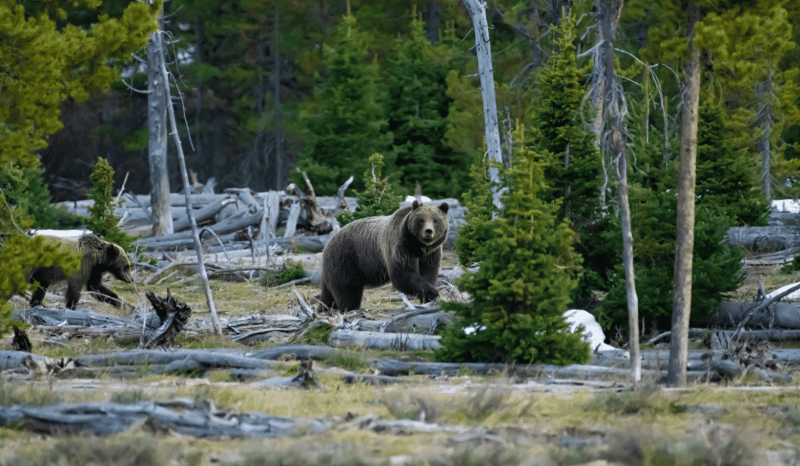
A former federal grizzly bear recovery coordinator noted the guidance could also extend to hunters, who could avoid consequences for killing a protected species like a grizzly bear by claiming they mistook them for an unprotected look-alike, such as a black bear.
The Interior Department, which houses the Fish and Wildlife Service, has pushed back on characterizations of the policy, stating that the ESA's prohibition on "take" continues to prohibit conduct including harassing, pursuing, hunting, shooting, wounding, killing, trapping, capturing or collecting protected wildlife. The directive leans on a dissenting opinion written by former Justice Antonin Scalia in a 1995 Supreme Court case to support the administration's narrower reading of the law. The change will guide how the narrower "harm" definition the administration adopted this summer is put into practice going forward.
A Pattern, Not a One-Off
This is the most drastic step yet in the Trump administration's broader effort to limit the scope of the Endangered Species Act. Since returning to office, the administration has moved on several fronts to reduce federal wildlife protections, including the July rule narrowing the definition of "harm," and a proposal to rescind that same definition altogether. This latest directive builds directly on those earlier actions, extending their reach further than the administration had previously indicated publicly.
Why the Endangered Species Act Matters
The Endangered Species Act is credited with bringing back iconic animals—including the bald eagle, the American alligator, and the California condor—from the brink of extinction. It has been one of the most effective conservation laws in the world for five decades, and its protections have shaped how development, logging, and land use happen in sensitive habitats nationwide.
The law's scope has shifted before, with changes in federal leadership—narrowed and later restored under different administrations. What's notable here is how far this directive goes: legal experts and former federal wildlife officials describe it as one of the most significant reinterpretations of the ESA's core protections in years.
What This Means for Animals
Endangered species don't get a say in how the laws meant to protect them are interpreted. When the definition of harm narrows, the practical protection an animal has—whether a spotted owl, a salmon run, or a grizzly bear—narrows with it. Habitat loss remains one of the leading drivers of extinction, and rules like this one determine how much room industries have to operate in the places animals still call home.
Wherever They Need Us
Policies like this one are decided in memos and legal footnotes, but their impact lands on real animals in real habitats. World Animal Protection US works to defend animals wherever they're threatened—through advocacy, campaigns, and public pressure that hold decision-makers accountable.
Donate today to help us keep fighting for the animals who can't fight this fight alone.