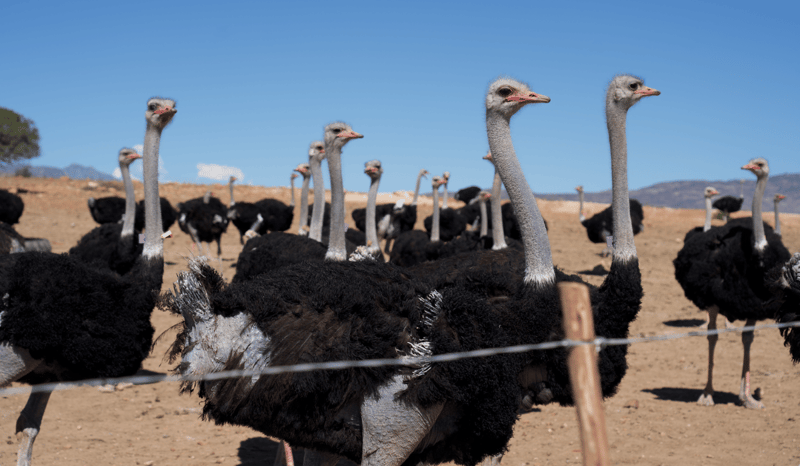
We just released a groundbreaking investigation documenting how ostriches suffer on feather farms to supply the global fashion industry.
Fur is falling out of fashion. Runways are dropping it, retailers are banning it, and shoppers are demanding cruelty-free options. But there's another animal product still hiding in plain sight on fashion week catwalks, in luxury handbags, and on fast-fashion racks: ostrich feathers.
Today, World Animal Protection released its undercover investigation into South Africa's ostrich farms. The footage is difficult to watch—live ostriches having their feathers ripped out by pliers, injured and wounded ostriches, and birds unable to stand. Read Blood Feathers: An Investigation into the Ostrich Feather Industry.
The Natural Molt Lie
There’s nothing natural about taking feathers from ostriches. The fashion industry claims feathers are collected through a “natural molting process.” The truth is that frightened birds are trapped, cut, and their feathers ripped out. Birds on feather farms suffer at every step of the process. Ostriches live 30 to 40 years in the wild, but they’re killed prematurely on feather farms. Ostriches who are bred for “lower-quality” feathers are killed when they’re babies.
Ditch Feathers for Faux
South Africa supplies most of the world’s ostrich feathers, from fast fashion to luxury designers. Whether you’re in Europe, the US, China, or Australia, most of the feathers you see in clothing likely originated from these or similar farms. Several retailers have banned ostrich feathers, as have some fashion weeks. But despite our repeated outreach, major retailers, including Revolve, Nordstrom, Saks Fifth Avenue, Net-a-Porter, and Neiman Marcus, still sell feather cruelty.
Tell Nordstrom to Protect Wild Animals
We’re campaigning for Nordstrom to ditch feathers for good. Send an email to Nordstrom executives and ask them to adopt a wildlife-friendly policy.