Your Dog Could Be Poisoned on a Federal Trail and the Trump Administration Is OK With That
Blog
The Trump administration has quietly reversed a ban on cyanide bombs on public lands—and it’s part of a sweeping rollback of wildlife protections. Here’s what’s at stake for wild animals, companion animals, and people.
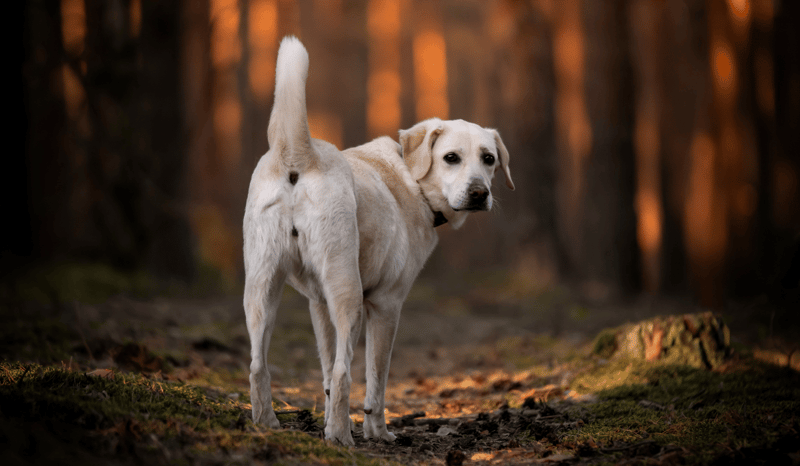
Imagine taking your dog for a hike on public land—land that belongs to all of us—only to have that walk end in tragedy because of a hidden poison trap baited to lure and kill. It sounds unthinkable, but for families, companion animals, and wildlife across the American West, that nightmare just got one step closer to reality.
The New York Times recently confirmed what conservation groups had feared: the Trump administration has quietly reversed a Biden-era ban on the use of M-44 devices—better known as “cyanide bombs”—on Bureau of Land Management (BLM) public lands.
What Is a Cyanide Bomb?
M-44s are spring-loaded traps staked into the ground and baited to attract animals. When a curious animal—or person—tugs on the bait, the device blasts out a powdered sodium cyanide capsule that rapidly converts to deadly hydrogen cyanide gas. Death follows quickly.
The USDA’s own risk assessments have confirmed that each capsule carries enough cyanide to be lethal, and that these devices pose a measurable danger not just to intended animals, but to any animal or person who comes into contact with them.
They were designed to kill coyotes and other native animals that threaten farmed animals, but these devices cannot read the difference between a coyote and an endangered wolf, a companion animal, or a child.
A Cruel and Painful Death
Knowing how M-44s work mechanically is one thing. Understanding what the animal experiences is another, and it’s something proponents of these devices would rather you not think about.
When an animal triggers an M-44, sodium cyanide is absorbed almost instantly through the mouth and airways. It works by blocking the cells’ ability to use oxygen, essentially causing the body to suffocate from the inside out while the heart is still beating. Animals experience seizures, loss of muscle control, and respiratory failure. It is not a clean or painless death.
For a coyote, a fox, or a wolf—animals with the same capacity to feel fear and pain as any companion animal—the suffering can last several agonizing minutes. For non-intended animals like eagles or bears who may receive a partial dose, death can take even longer. There is no “humane” application of a cyanide bomb. The device doesn’t know the difference between an intended kill and a bystander, and it offers no possibility of a quick or dignified end.
This is precisely why so many countries have moved away from sodium cyanide devices entirely, and why the American Veterinary Medical Association sets strict standards around the use of chemical agents in animal euthanasia—standards that M-44 field deployments cannot come close to meeting. Calling these devices a wildlife management tool is a euphemism. They are indiscriminate poison traps, and the suffering they cause is real.
A Danger We Already Knew
This is not a theoretical risk. In 2017, 14-year-old Canyon Mansfield was hiking in the hills behind his Idaho home when he accidentally triggered an M-44. His beloved dog was killed instantly. Canyon was hospitalized. That incident—and others like it—sparked a national outcry and years of advocacy that ultimately led to the Biden administration banning the devices from BLM-managed lands in 2023.
That ban is now effectively gone.
An internal April 2026 memo between BLM and USDA’s Wildlife Services—the federal agency that runs wildlife killing programs largely on behalf of the ranching industry—reopens the door to M-44 deployment on a so-called “case-by-case” basis. The memo will remain in effect until 2031.
Indiscriminate. Unpredictable. Unjustifiable.
The word that keeps coming up from wildlife advocates is indiscriminate, and for good reason.
These devices cannot distinguish between an intended coyote and a companion animal, a passing hiker, or a protected species. Endangered gray wolves, threatened foxes, golden eagles, and countless other non-intended animals have been killed by M-44s over the decades. The devices have also injured and traumatized people who simply had the bad luck of stumbling across one.
The BLM oversees roughly 245 million acres of public land. That’s 245 million acres of trails, campgrounds, rivers, and wild spaces that millions of Americans—and their companion animals—use every year. Bringing cyanide traps back onto that land puts all of them at risk.
As Collette Adkins of the Center for Biological Diversity put it: “These devices are just as easily triggered by an endangered wolf as a targeted coyote. They just should not be used.”
Who Benefits—and Who Bears the Cost?
Proponents argue that M-44s help ranchers protect their farmed animals from native animals like coyotes. Senator John Barrasso of Wyoming praised the reversal, saying “predator losses” account for nearly half of all sheep and lamb deaths in his state.
But the costs of this policy fall on everyone else: on hikers and families who recreate on public land, on companion animal guardians, on the wildlife that makes our ecosystems whole, and on taxpayers who fund a federal agency—Wildlife Services—that kills nearly two million animals a year with very little public transparency or accountability. As we’ve written before, Wildlife Services operates as a taxpayer-funded arm of Big Ag—eliminating native animals not to protect ecosystems, but to protect profit margins.
There are humane, effective alternatives to lethal wildlife control—such as better fencing and non-lethal deterrents. These methods protect animals and people alike. Cyanide bombs protect neither.
Part of a Much Bigger Pattern
The cyanide bomb reversal doesn’t exist in isolation. It’s one piece of a sustained, coordinated rollback of wildlife protections that should alarm anyone who cares about animals or the future of America's public lands.
In January, Interior Secretary Doug Burgum issued an order directing national park, wildlife refuge, and wilderness area managers to remove what he called “unnecessary barriers” to hunting and fishing. The result: hunting restrictions are being lifted at 55 national park sites across the lower 48 states. Former National Park Service officials have been blunt in their criticism. Elaine Leslie, the agency’s former head of biological resources, told the AP the changes don’t reflect science-based management and that public spaces shouldn’t have to be open to every activity, especially when it puts other visitors and wildlife at risk.
Meanwhile, the administration has been mounting a parallel assault on the Endangered Species Act. According to Earthjustice, the administration has proposed redefining “harm” under the ESA to exclude damage to habitat, which would open the door for industries to destroy the places where endangered species live. It has also proposed narrowing the definition of “critical habitat” and allowing economic interests to factor into decisions about whether a species deserves protection at all. A House bill that would have further gutted the ESA was pulled from a vote in April after a public outcry, but advocates warn it could return.
Cyanide bombs that can’t distinguish an endangered wolf from a coyote. National park managers forced to defend every hunting restriction they want to keep. An Endangered Species Act being weakened to serve industry. These are not random policy shifts—they are a blueprint, and wildlife is paying the price.
States Are Saying No—The Federal Government Should Too
It’s telling that even as the federal government moves in this direction, several states have moved in the opposite direction. California, Oregon, Washington, and Idaho have banned or significantly restricted the use of M-44s within their borders. The science, the safety record, and the public sentiment are clear.
World Animal Protection US stands firmly against the use of M-44 cyanide devices on public lands or anywhere else. These weapons of indiscriminate killing have no place in a humane, science-based approach to wildlife management.
What You Can Do
The fight isn’t over. You can make your voice heard:
- Contact your federal representatives and urge them to oppose the reauthorization of M-44 devices on public lands.
- Share this story: Public pressure matters, and many people still don’t know cyanide bombs exist.
- Reduce your demand for factory-farmed meat. As long as Big Ag drives federal wildlife policy, wild animals will be in the crosshairs. Choosing more plant-based foods is one of the most powerful ways to shrink the system that funds Wildlife Services in the first place. Join our free Plant-Powered Changemakers community for recipes, tips, and support on your journey.
Animals and people deserve to be safe on public lands. Together, we can make sure they are.