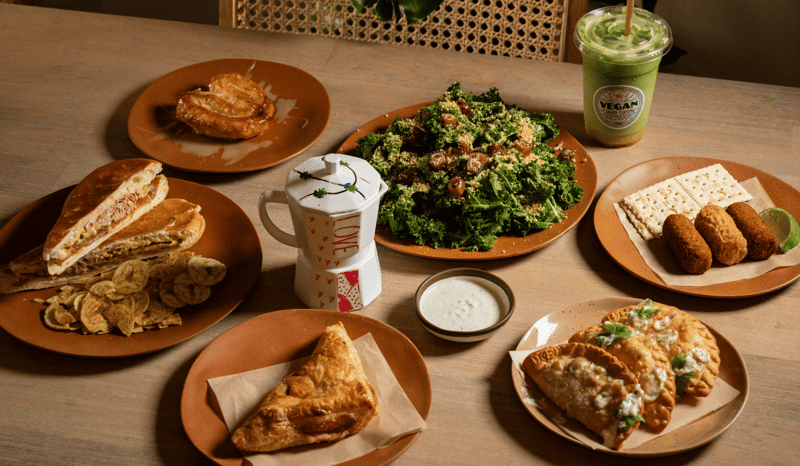
From pastelitos and croquetas to ropa vieja and media noches, Cuban food has found its way onto the table at nearly every birthday party, graduation, and family gathering I can remember.
In the spirit of Hispanic Heritage Month, I decided to spend some time looking into a part of Miami's Cuban culture that I like to think I know very well: the food. I say this because, as a native Miamian, Cuban food has always been a part of the cultural landscape I grew up in. From pastelitos and croquetas to ropa vieja and media noches, it has found its way onto the table at nearly every birthday party, graduation, and family gathering I can remember. And I’m not even Cuban.
But Cuban food, traditionally, has always been made with animal products, and for many people, that's what makes Cuban food, well…Cuban. So, I visited a local restaurant called Vegan Cuban Cuisine to meet co-founder Liz Machado and have her help me answer a very simple question: Can authentic Cuban food be vegan?
The idea began in 2017. Machado, an architect by training, began eating a whole-food, plant-based diet while searching for relief from persistent joint pain. Her husband, Steven Rodriguez, eventually joined her, and the couple began learning more about the environmental and animal welfare impacts of food production.
Then came a family gathering.
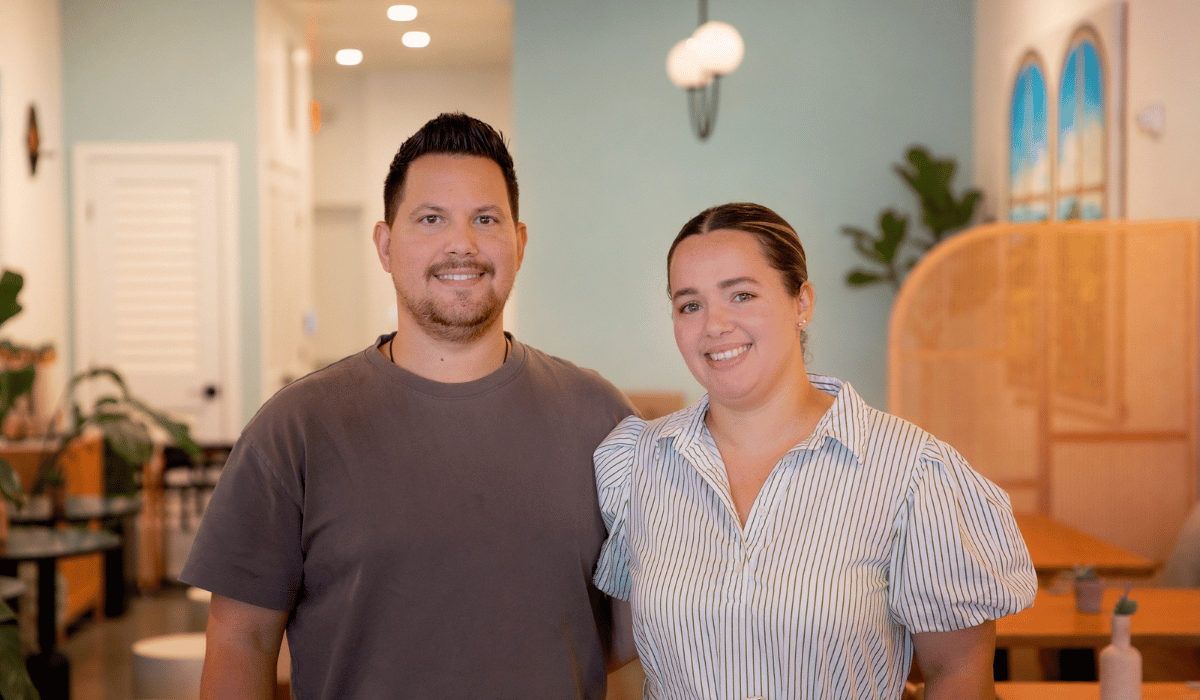
Liz Machado and Steven Rodriguez, founders of Vegan Cuban Cuisine in Miami, Florida.
“We went to a party with the family, and my mother-in-law brought in one of the many traditional Cuban dishes, arroz imperial (imperial rice),” Machado said.
To her surprise, Rodriguez’s mother had taken the traditional Cuban dish and veganized it, replacing the chicken with tofu and the dairy with a potato-starch alternative. What surprised the whole family was how much it still tasted like the dish they knew.
This prompted Machado to begin experimenting with other Cuban staples, using her family as a test kitchen. “Every time they would taste it and it wasn’t right, they’d be like, ‘No, not even close,’” she said. And as the recipes began to improve over time, so did her conviction that making authentic Cuban food vegan could be done. “I realized that what makes Cuban food good is not the animal. It was the seasoning. The love. It was the way we cooked it.”
From that point on, the couple began catering from their home in 2018, followed by setting up a booth at a local farmers market in 2019. And when the pandemic forced many businesses to close in 2020, their operation shifted online. Surprisingly, home deliveries began to grow, and by August of that year, they moved into a physical kitchen, where they had to close on their second day because they simply couldn’t keep up with the orders.
“It was a great problem to have,” Machado said.
The demand soon drew attention beyond Miami. By 2022, The New York Times reported that Machado and Rodriguez were selling roughly 4,000 croquetas a week from their small restaurant. This rapid success helped Vegan Cuban Cuisine earn its rightful place in Miami’s already crowded Cuban restaurant landscape.
But Machado says the restaurant is not exclusively for vegans. In fact, she estimates that at least 60 percent of their customers are not even vegan. Many are simply looking for good authentic Cuban food, with options of familiar staples like croquetas, Cuban sandwiches, and picadillo bowls.

“I just hope that when they go away and they talk about Vegan Cuban Cuisine, they don’t forget to say, ‘I went to a Cuban restaurant,’” she said. “The last thing I want them to think about is whether it’s vegan.”
That approach extends beyond the menu, too. Machado said the restaurant composts kitchen scraps, reduces plastic wherever possible, and uses paper packaging and wooden utensils. The same principle applies to the space itself, with furniture chosen to avoid animal-derived materials. “With our furniture, there’s no need to have animal parts in it, much less our food,” she said.
Now, the founders are looking toward expanding to parts of north Florida and a possible rebranding intended to reach customers who might otherwise dismiss the restaurant simply because the word “vegan” appears in its name.
“We do love our name and people recognize us for our name, but we feel that to be even more open to new customers, the name has to be a little more about what Vegan Cuban Cuisine is, not what it serves,” Machado said. "But it will always be authentic Cuban food. And it will always be vegan.”
Question answered.